

Book Your Appointment Today!
Our staff will reach out to you shortly
Thank you! Your submission has been received!
Oops! Something went wrong while submitting the form.


Finding affordable dental care in Houston can feel daunting, especially when quality care often comes with a significant price tag. This guide provides actionable steps and clear information to help you secure excellent dental services without draining your bank account. With the right strategy, you can take control of your dental health expenses.

If you've ever experienced sticker shock from a dental bill, you're not alone. The search for affordable dental care in Houston presents unique challenges that can make necessary treatment seem out of reach. This common struggle can be overwhelming, sometimes forcing individuals to postpone essential care.
This isn't just a perception; it's rooted in economic realities. The high cost of living in a major metropolitan area like Houston directly impacts the operational expenses of dental practices. Factors like steep commercial rent, competitive staff wages, and investments in advanced technology contribute to the overhead, which in turn influences patient pricing.
Although Texas has a high number of dentists, the cost dynamics in a large city are different. In 2025, dental care costs in Houston reflect these urban economic pressures and the realities of healthcare access.
Despite the statewide availability of dentists, cities like Houston see average procedure costs hovering around $315, placing Texas among the top 10 most expensive states for dental care. This is largely driven by metropolitan expenses. For instance, a deep cleaning in Texas can be significantly more expensive than in states where the same procedure might cost less than $600 for the whole mouth. You can learn more about these regional cost differences and the factors behind them.
Understanding why care is expensive is the first step toward finding a solution. The good news is that you have more control than you might think. By understanding how the system works, you can make it work for you.
This guide will provide practical, real-world strategies to overcome these financial hurdles. We will cover:
Key Insight: Finding affordable dental care in Houston isn't about locating the "cheapest" dentist. It's about finding the smartest path to high-quality care that aligns with your financial reality.
Searching for a dentist without knowing what you need is like going to the grocery store without a list—you often end up with unexpected items and a higher bill. Before you search for "affordable dental care in Houston," the most effective first step is to perform a quick self-assessment.
This preparation helps you communicate clearly with a dental office, find the right type of clinic for your situation, and receive a more accurate cost estimate from the start.
For example, if you only need a routine cleaning and check-up, nearly any reputable family dentist can assist you. However, if you suspect you need a crown or are interested in cosmetic options, you should seek a clinic with the appropriate technology and a proven track record in those specific treatments.
First, understand the different categories of dental care, as this directly impacts cost and urgency. Determine where your needs fall:
Identifying which category your primary concern fits into is crucial. It allows you to set a realistic budget and clearly articulate your needs when you schedule an appointment.
Before you search for a dentist, take five minutes to write down what you are feeling or seeing. You don't need to know technical dental terms. Just be specific.
For example, instead of thinking, "my tooth hurts," document the details:
Bringing a clear, written list of your concerns to a consultation is a powerful tool. It helps the dentist diagnose the problem more efficiently and provides a solid basis for discussing treatment options and—most importantly—the associated costs.
This simple exercise transforms you from a passive patient into an informed consumer. You become an active partner in your healthcare, which is critical when seeking affordable dental care in Houston. You will feel more confident asking the right questions and understanding the proposed treatment plan.
If you don't have traditional dental insurance, powerful tools are still available to make care affordable. Alternative payment solutions like in-house savings plans and third-party financing can be game-changers, bridging the gap between the treatment you need and what you can comfortably afford.
These options help you avoid the high cost of paying for everything out-of-pocket by providing a structured, manageable approach. They are designed for patients paying directly for their care, offering a more straightforward path to savings and predictability than the complexities of insurance premiums, deductibles, and annual maximums.
Before choosing a financial tool, identify your primary goal. Are you focused on routine checkups, addressing a painful issue, or pursuing a significant cosmetic enhancement?
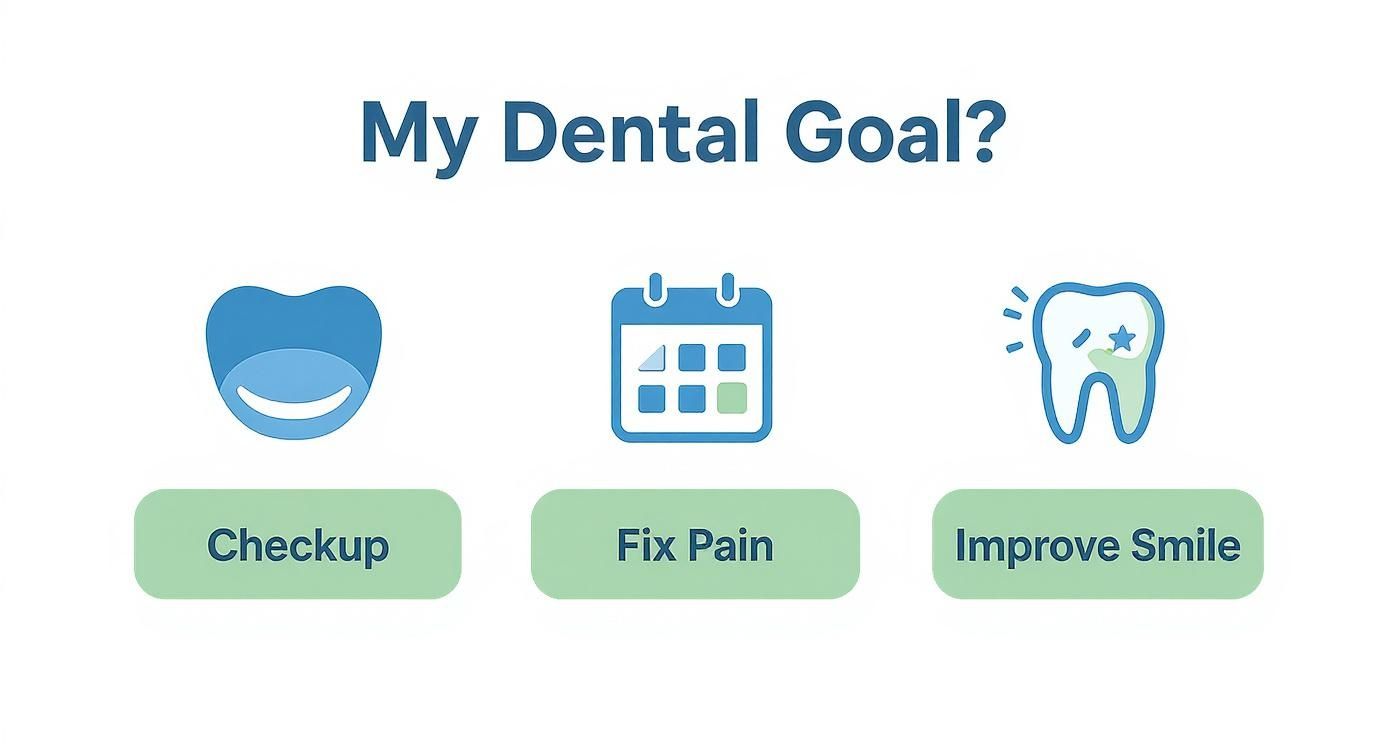
Knowing your objective will help you select the most appropriate financial solution.
An in-house dental savings plan functions like a membership to a specific dental practice. It’s not insurance; it's a direct agreement. You pay a low annual fee to the practice and, in return, receive significant discounts on a wide range of services throughout the year.
This straightforward approach eliminates the middleman. Here’s a practical breakdown of how it typically works:
The value is immediate. For example, if the annual fee is $250 but it covers two cleanings and an exam that would normally cost $400, you are saving money from the start.
What if you require more extensive work, such as a dental implant or a full set of veneers? When facing a procedure costing several thousand dollars, third-party financing from companies like CareCredit and Cherry becomes an invaluable tool.
These services function like a credit card specifically for healthcare expenses. You apply for a line of credit to pay for your treatment immediately. The key benefit lies in the promotional financing periods.
Many dental practices offer plans that allow you to pay off your balance over 6, 12, or even 24 months with 0% interest. As long as you pay the full amount before the promotional period ends, you pay only the original treatment cost.
This strategy enables you to receive necessary care immediately without needing to save the full amount upfront. It breaks down a large, intimidating cost into smaller, predictable monthly payments that fit your budget.
Here’s a direct comparison to help you decide which option is right for you.
Ultimately, both are excellent tools. An in-house plan is ideal for maintaining your health year-round, while financing makes significant smile transformations achievable.
For a deeper dive, our guide on dentist payment plans for patients without insurance explores these options in more detail. Financial flexibility is central to making affordable dental care in Houston a reality.

The most effective strategy for managing long-term dental costs isn't finding last-minute deals—it's preventing problems from starting. Viewing preventive care as a financial investment, rather than an expense, can save you thousands of dollars over time.
Consider the costs. A professional cleaning and exam twice a year might cost a few hundred dollars. In contrast, a single root canal and crown, often the result of an untreated cavity, can easily cost several thousand. The math is simple, yet many people postpone routine visits to save money in the short term. This approach almost always backfires, leading to more pain, more complex procedures, and a much larger bill.
Consider this common scenario. Patient A visits the dentist every six months for a cleaning and check-up. During one visit, a small area of decay is detected, and a simple filling is recommended. The procedure is quick, minimally invasive, and costs a fraction of what major restorative work would.
Patient B, however, skips appointments for several years. The small cavity that could have been an easy fix deepens, eventually reaching the nerve. Now, Patient B is in severe pain and requires an emergency root canal and a custom crown to save the tooth. The decision to "save money" by avoiding check-ups has resulted in a bill that is 10 to 15 times higher than Patient A’s simple filling.
Think of regular check-ups as an early warning system. They allow your dental team to address minor issues before they escalate into painful and costly emergencies.
Professional care is only one part of the equation. Your commitment to at-home hygiene—brushing, flossing, and a healthy diet—works in tandem with your dentist's efforts. These daily habits are your front line against plaque and bacteria between appointments.
When you combine consistent home care with regular professional cleanings, you establish a powerful defense against decay and gum disease. Unsure how often to schedule a visit? Our guide explains how often you should visit the dentist based on individual health needs.
Ultimately, investing in a toothbrush and floss is far more affordable than investing in a dental implant.
A sudden, throbbing toothache or a cracked tooth can disrupt your life instantly. The physical pain is challenging enough without the added stress of a potential surprise dental bill.
When facing a crisis, price shopping is the last thing on your mind. However, understanding your options for emergency affordable dental care in Houston can save you from both physical and financial distress.
First, determine if you have a true dental emergency. While a minor chip may be a cosmetic annoyance, conditions involving severe pain, uncontrolled bleeding, or signs of an abscess (like facial swelling or a pimple on your gums) require immediate attention. Delaying treatment can lead to more serious health complications and more expensive procedures.
Many Houston dental offices, including Clayton Dental Studio, reserve schedule openings for same-day emergency appointments. Your regular dentist should be your first call. If you don’t have one, a quick search for an "emergency dentist in Houston" will provide a list of clinics that can help.
Additionally, Houston’s community health centers are an excellent resource. They often operate on a sliding-scale fee system, where the cost is based on your income, providing a critical safety net for families needing urgent care.
However, accessing care can be challenging. As of early 2025, Texas had 264 designated Dental Health Professional Shortage Areas, a strain felt in Houston. With nearly 5 million Texans uninsured, these gaps present real obstacles. Community health programs and Medicaid are vital in closing this gap. You can review a full breakdown of the dental care access challenges in Texas to understand the local situation.
When you contact a clinic, being prepared with the right questions is crucial. You are not just looking for an open appointment; you are gathering financial information before you commit.
Do not hesitate to discuss cost immediately. A reputable office will be transparent about fees for an emergency exam and any immediate palliative treatment. Asking direct questions is the best way to avoid a surprise bill.
Here’s a checklist of what to ask:
Getting these answers will help you make a clear-headed decision, even when you're in pain. For more details, our post on what to expect when you need emergency dental care near you provides further guidance.
Navigating the financial side of dental care can be complex. Here are clear answers to some of the most common questions we receive from Houston families.
While you likely can't haggle over the price of a filling, you can and should have a direct conversation about your budget. It is perfectly acceptable to ask about different treatment options at various price points. You can also inquire if the practice offers a discount for paying in full with cash.
Think of it less as negotiation and more as a collaboration. A good dental practice wants to help you receive the care you need and will be transparent about all available financial pathways.
This is a difficult but common situation, and you still have options. If an in-house savings plan or financing like CareCredit is not feasible, do not lose hope.
Your next step should be to research Houston's community dental clinics or local dental schools. These facilities are a vital part of the city's healthcare safety net, often providing high-quality care on a sliding scale based on your income. They are an essential resource for anyone needing truly affordable dental care in Houston.
Absolutely, especially for an initial visit. Many Houston dental offices offer new patient specials, such as a deeply discounted exam and X-rays, to welcome you to their practice. It is common to find initial visit offers for under $50, which allows you to get a professional assessment without a major financial commitment.
These specials are a low-risk way to meet the dental team, evaluate the office environment, and get a professional opinion on your oral health before committing to a larger treatment plan. It is one of the smartest first steps you can take.
Ready to find compassionate, high-quality, and affordable care for your family? At Clayton Dental Studio, we combine advanced technology with transparent pricing to help you achieve a healthy, confident smile. Explore our services and new patient specials today!