

Book Your Appointment Today!
Our staff will reach out to you shortly
Thank you! Your submission has been received!
Oops! Something went wrong while submitting the form.


A sudden, sharp tooth pain can derail your entire day, sparking an immediate, frantic search for emergency dental care near me. Before you panic, it's crucial to understand that not every dental issue is a drop-everything crisis.
The key is to differentiate between a severe emergency and a problem that can wait until the next business day. Making the right assessment saves you stress, time, and ensures you receive the most appropriate care when you need it.
While a throbbing toothache is intensely uncomfortable, it doesn't always signal a trip to an after-hours clinic. However, certain symptoms are definitive red flags that require immediate professional attention because they may indicate a more significant health risk.
Knowing where to go is the first critical step. Many people mistakenly visit the ER for dental problems that a dentist is far better equipped to manage. Between 2020 and 2022, tooth-related issues led to an average of 1.94 million emergency department visits annually in the U.S., according to the CDC. A significant portion of these visits could have been more effectively handled in a dental office.
Certain signs indicate your dental issue may be escalating and impacting your overall health. If you experience any of the following, it is time to seek professional care immediately.
Here are the primary indicators of a true dental emergency:
This flowchart provides a quick visual guide to help you decide on the appropriate course of action.
Deciding where to go for care can be confusing, especially when you're in pain. Use this table to determine the most effective place to get treatment.
The table clarifies that most tooth-specific issues are best handled by a dentist, while problems affecting systemic health, like breathing difficulties, require a hospital visit.
A practical rule of thumb: If your life is at risk from severe bleeding or breathing trouble, go directly to the hospital. For nearly all other issues related to your teeth and gums, an emergency dentist is your best choice.
Less urgent issues, such as a lost filling, a minor chip in a tooth, or a dull, manageable ache, can typically wait for a next-day appointment. For a more detailed guide, see our post on handling a dental emergency.

When you're in significant dental pain, your sole focus is finding a practice that can see you immediately. The key is to know precisely what to search for and what to communicate when you call.
While searching for "emergency dental care near me" is a good start, using more specific terms will yield faster, more relevant results. You need to find dentists who explicitly state they accommodate urgent situations.
To improve your search, use terms that dentists with emergency availability would target. This helps filter out clinics that are booked weeks in advance.
Try these more targeted search queries:
In addition to search engines, use specialized dental directories. The American Dental Association’s Find-A-Dentist tool is a reliable resource that allows you to filter by location and specialty to find qualified professionals.
Once you have a list of potential dentists, the phone call is the most critical step. Being clear, prepared, and concise will save valuable time. Your objective is to confirm if they can provide the immediate help you need.
Prepare a brief script before you dial. Lead with the most important information to convey the urgency.
What to Say: "Hi, I'm having a dental emergency. I knocked out a tooth about 20 minutes ago. Are you accepting emergency patients right now?"
This direct approach helps the office staff understand the situation immediately. Follow up with essential questions about their availability, the estimated cost for an emergency exam and X-ray, and whether they accept your insurance or offer payment plans. A focused, two-minute conversation can secure an appointment with a provider equipped to handle your specific issue.
If you are traveling, the same process applies. Use your phone's location services with the search terms above. When you call, mention that you are from out of town; some offices prioritize seeing travelers in distress who lack a local dentist.
You've secured an emergency appointment—a significant step toward relief. But what do you do in the interim? When dealing with severe dental pain, the time until your visit can feel excruciating.
Fortunately, there are several safe and effective first-aid measures you can take to manage your discomfort and prevent the situation from worsening. Proper immediate care can make a substantial difference in your comfort and the ultimate outcome.
Different dental emergencies require different immediate responses. Tailor your first aid to the specific problem.
For a classic toothache, the goal is to reduce inflammation and soothe the area. Rinsing your mouth with a warm salt water solution (1/2 teaspoon of salt in 8 ounces of water) acts as a natural disinfectant and can help reduce swelling. For external swelling, apply a cold compress to the cheek for 15-minute intervals.
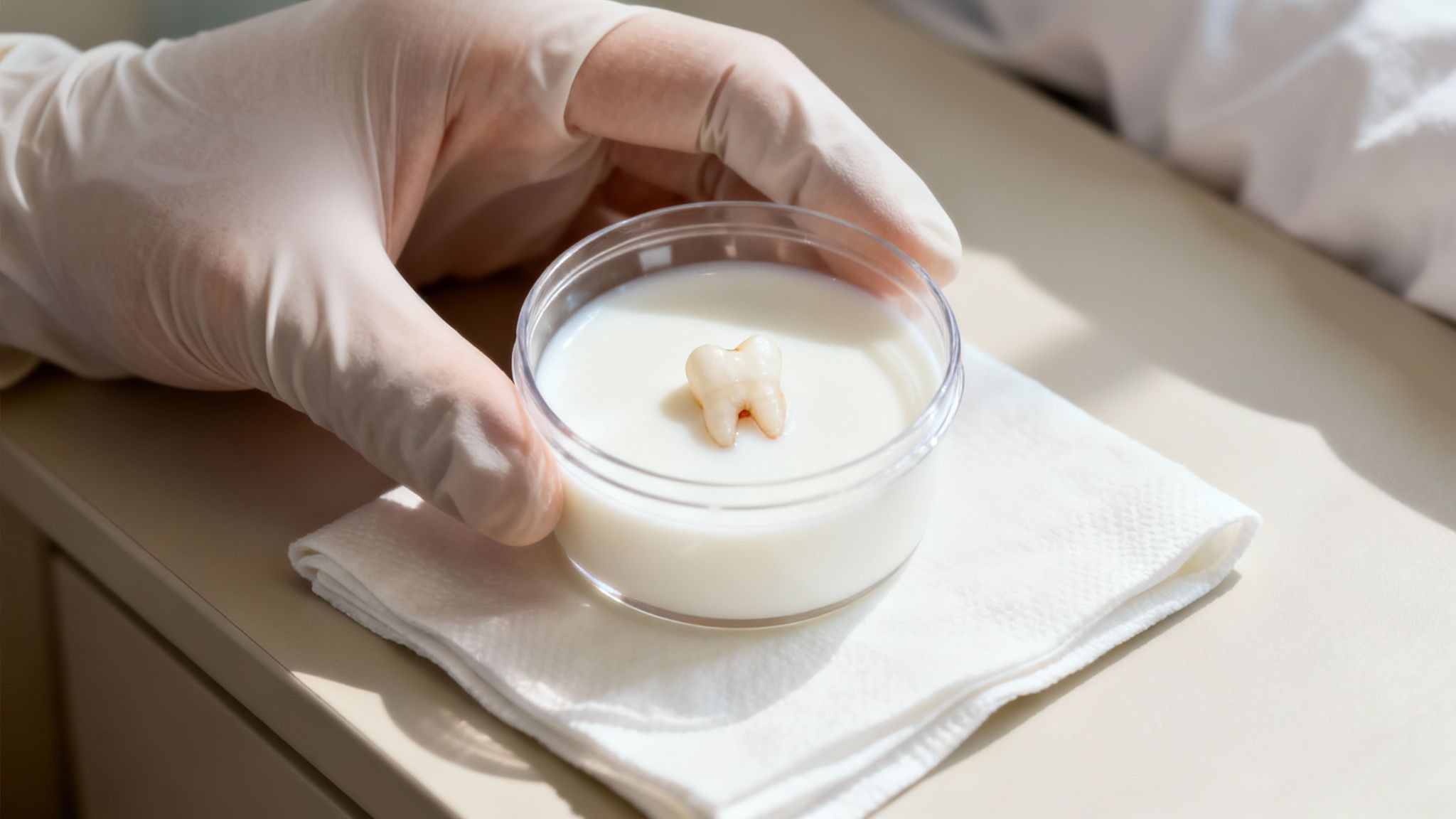
A knocked-out tooth is a time-sensitive emergency where your actions in the first 30 minutes are critical to saving the tooth. The primary rule is to never touch the root.
These steps maximize the chances of successful reimplantation. For more details, consult our guide on what to do for a knocked-out tooth.
Over-the-counter anti-inflammatory medications like ibuprofen can be effective for managing pain and swelling. Always follow the dosage instructions on the package.
However, avoid common "home remedies" that can cause more harm than good.
A dangerous myth involves placing an aspirin tablet directly on the sore tooth or gum. Aspirin is acidic and will cause a chemical burn to the soft tissues of your mouth, creating a new and painful injury.
Similarly, do not use alcohol (like whiskey) as a numbing agent. It can irritate the gums and interfere with the healing process. Stick to proven methods: cold compresses and appropriate over-the-counter medication until you can receive professional care.
Walking into an unfamiliar dental office for an emergency can be stressful. Understanding the process can alleviate anxiety and help you feel more prepared. The goals of an emergency visit are straightforward: alleviate your pain, diagnose the problem, and stabilize the situation.
Arriving prepared can streamline the process for both you and the dental team. You will likely need to complete paperwork, so having your information ready is helpful.
Before you leave for your appointment, gather these items:
The first step is to identify the source of your pain. This begins with a discussion of your symptoms: when the pain started, its nature, and what makes it better or worse.
Next, the dentist will conduct a focused clinical examination of the problem area, looking for signs of damage, swelling, or infection.
A digital X-ray is almost always necessary to see what is happening below the surface. This allows the dentist to identify issues like a deep cavity, abscess, or fractured root. The diagnostic phase is designed to pinpoint the exact cause of the problem to determine the most effective treatment.
The primary objective of an emergency visit is to address the immediate crisis. While other dental issues may be noted, the focus will remain on resolving the problem that brought you to the office.
After a clear diagnosis is made, the dentist will explain the findings and discuss your treatment options. This is your chance to ask questions. The immediate goal is to provide relief and prevent the problem from worsening.
Common emergency treatments include:
The dental team will review the pros and cons of each option, empowering you to make an informed decision. Understanding this process demystifies the experience of seeking "emergency dental care near me" and puts you on the fastest path to recovery.

The cost of emergency dental care is a common concern, but fear of the expense should not prevent you from seeking necessary treatment. Understanding your payment options beforehand can significantly reduce stress and allow you to focus on your health.
Emergency care can be costly. In 2022, ER visits for dental issues cost the U.S. healthcare system nearly $3.9 billion. The average visit was $2,437, a 29% increase, which underscores the financial benefit of visiting a dental office instead of a hospital. These dental care statistics from Premier Image Dentistry highlight why exploring your payment options at a dental practice is essential.
If you have dental insurance, your plan will likely cover a portion of emergency services, but rarely 100%. You will typically be responsible for:
Never assume a service is covered. Ask the dental office to verify your benefits and provide a cost estimate before any major treatment begins. This proactive step helps avoid unexpected bills.
If you don't have insurance, do not despair. Most dental practices offer viable solutions to make emergency care affordable.
An excellent option is an in-house membership plan. At Clayton Dental Studio, our Humble Savings Plan is designed for this scenario. For an annual fee, you receive significant discounts on services, making costs more predictable and manageable than traditional insurance. Learn more in our guide on dentist payment plans without insurance.
We also partner with third-party financing companies like CareCredit and Cherry. These function like healthcare credit cards, allowing you to pay for treatment over time in manageable monthly installments, often with interest-free periods. Our front desk team can provide details on these options. Our priority is always to get you out of pain.
When a dental emergency occurs, it's natural to have questions and feel uncertain. Getting clear, straightforward answers can help you feel more in control. Here are the answers to the most common questions from patients searching for "emergency dental care near me."
This section provides practical, informative answers to help you navigate your emergency with confidence.
The cost of an emergency dental visit varies based on your location and the specific treatment required.
A basic emergency exam with a necessary X-ray typically costs between $100 and $300. This fee covers the diagnosis. The cost of the treatment itself is separate.
For example, a simple tooth extraction might range from $200 to $600, while an emergency root canal to save an infected tooth could exceed $1,000.
Actionable Tip: Always request a detailed cost estimate before agreeing to treatment. A reputable dental office will be transparent about pricing and discuss financial options with you.
The hospital emergency room is the right choice only for potentially life-threatening dental symptoms.
Go to the ER for:
For all other dental issues—including a knocked-out tooth, a lost filling, or a severe toothache without the above symptoms—an emergency dentist is the correct choice. An ER can provide pain medication or antibiotics but cannot perform the necessary dental procedures like fillings, extractions, or root canals.
Dental anxiety is very common, especially during a stressful emergency. The most important action you can take is to communicate your fears to the dental office when you call.
Informing the team that you are anxious allows them to prepare and ensure your visit is as comfortable as possible. Many emergency dentists are experienced in treating anxious patients.
Expert Insight: "Do not let fear prevent you from getting out of pain. We offer sedation options, such as nitrous oxide (laughing gas), to help you relax. Our primary goal is to ensure you are completely numb and comfortable before we begin any procedure."
A compassionate dental team will explain each step, offer breaks as needed, and proceed at a pace that feels comfortable for you. Your overall well-being, including your mental comfort, is a top priority.
At Clayton Dental Studio, we understand the stress of a dental emergency. We reserve time in our schedule for same-day appointments to relieve your pain and begin your recovery as quickly as possible. Our team is dedicated to providing the urgent and compassionate care you need. If you are in pain, do not wait—contact us now.