

Book Your Appointment Today!
Our staff will reach out to you shortly
Thank you! Your submission has been received!
Oops! Something went wrong while submitting the form.


Receiving a dental bill without insurance can be a shock, but it doesn't have to be a roadblock to getting the care you need. Affordable dentist payment plans are readily available, from in-house savings programs to third-party financing, designed specifically for patients without insurance coverage. These tools provide a clear path to managing costs, allowing you to prioritize your oral health without a massive upfront payment.
The prospect of a dental visit without an insurance card can cause anxiety, leading many to delay necessary treatments. Unfortunately, procrastination often allows a minor, manageable issue to escalate into a complex and costly emergency.
The good news is that a lack of insurance does not lock you out of high-quality dental care.
Modern dental practices understand this financial challenge and have implemented practical, patient-focused solutions. These are not mere workarounds; they are structured systems designed to make dental care predictable and accessible. Understanding these options empowers you to take a proactive approach to your health, removing the financial guesswork from the equation.
Instead of avoiding the dentist, you can create a clear financial strategy for your oral health. The most effective solutions for managing costs without insurance fall into three primary categories:
This guide will provide actionable insights into each of these pathways, demonstrating how top-notch dental care in the Humble and Houston area is within your reach. You are not alone—an estimated 68.5 million adults in the U.S. lack dental insurance, which is why these flexible payment solutions are more critical than ever.
A significant benefit of these options is immediate access to care, bypassing the frustrating waiting periods often associated with traditional insurance policies.
Facing a dental bill without insurance can feel intimidating. However, understanding your payment options is the first step toward taking control. Instead of a confusing maze, you have several clear pathways, each designed for different financial situations and treatment needs. Let's analyze the three most common routes so you can determine the best fit.
This visual illustrates the decision-making process when a dental bill is on the horizon.
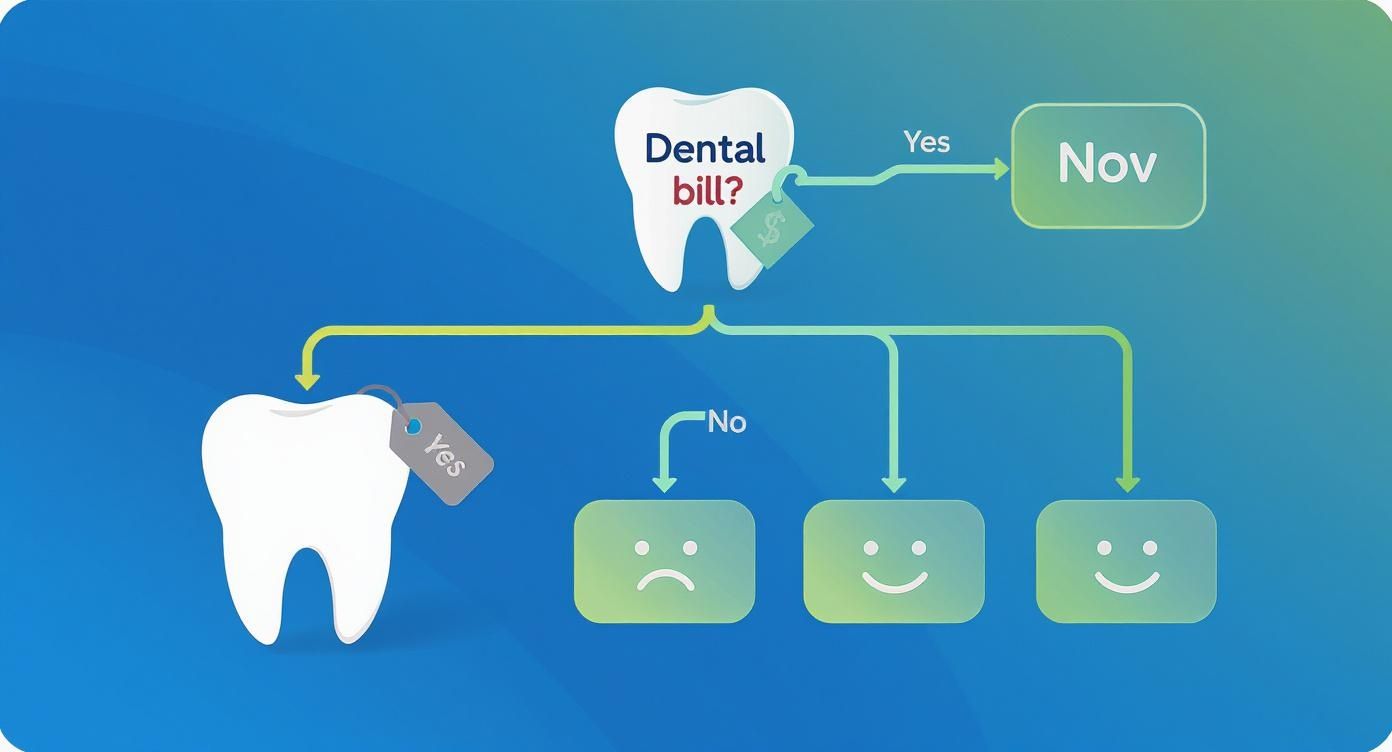
As you can see, a dental need doesn't have to be a financial dead end. Proactive solutions can transform a stressful moment into a manageable plan.
To provide a clear comparison, this table breaks down the key features of the most common payment solutions available for patients without traditional dental insurance.
Each of these paths offers a way forward, ensuring you don’t have to compromise on your oral health because of cost. Let's dive deeper into how each one works.
This is one of the most straightforward and effective methods for managing dental costs. An in-house savings plan is not insurance—it's a much simpler concept. Consider it a membership you purchase directly from your dentist's office. For a single annual fee, you gain access to significant discounts on nearly all services offered.
For example, our Humble Savings Plan at Clayton Dental Studio covers your preventive care (like cleanings and exams) and provides a significant percentage off other treatments, from fillings to cosmetic procedures. Key benefits include no deductibles, no waiting periods, and no annual maximums to worry about. It's an ideal solution for individuals and families who want predictable costs and immediate savings.
When facing more extensive dental work—such as dental implants or a full-mouth restoration—third-party financing is an invaluable tool. It functions like a credit card dedicated specifically to health and wellness expenses. Companies like CareCredit or Cherry partner with dental offices to allow patients to break down a large cost over an extended period.
You can apply online or in the office, and upon approval, you can proceed with your treatment immediately. Afterward, you make manageable monthly payments to the financing company.
A significant advantage is the availability of promotional financing. Many lenders offer 0% APR if the balance is paid in full within a specific timeframe, such as 6, 12, or 18 months. This allows you to get the care you need now without incurring interest charges.
Finally, never underestimate the power of asking. Some dental offices, including ours, may offer direct payment arrangements for certain treatments. This is a straightforward agreement between you and the practice to pay for a procedure in a few installments.
This option is typically less formal than third-party financing and is handled on a case-by-case basis. It is always worth inquiring with the administrative team to see if this is a possibility for your treatment plan.
For more strategies, be sure to explore our complete guide on how to afford dental work.
When exploring payment plans for dental care without insurance, one of the most practical and transparent options is an in-house savings plan. This is not insurance; it's a direct membership with your dental practice. Think of it like a Costco subscription: you pay an annual fee and receive access to exclusive savings all year long.
This model eliminates the administrative complexities of traditional insurance. There are no claim forms, confusing industry jargon, or third-party approvals required. It is a simple, direct relationship between you and your dentist, designed for complete transparency.
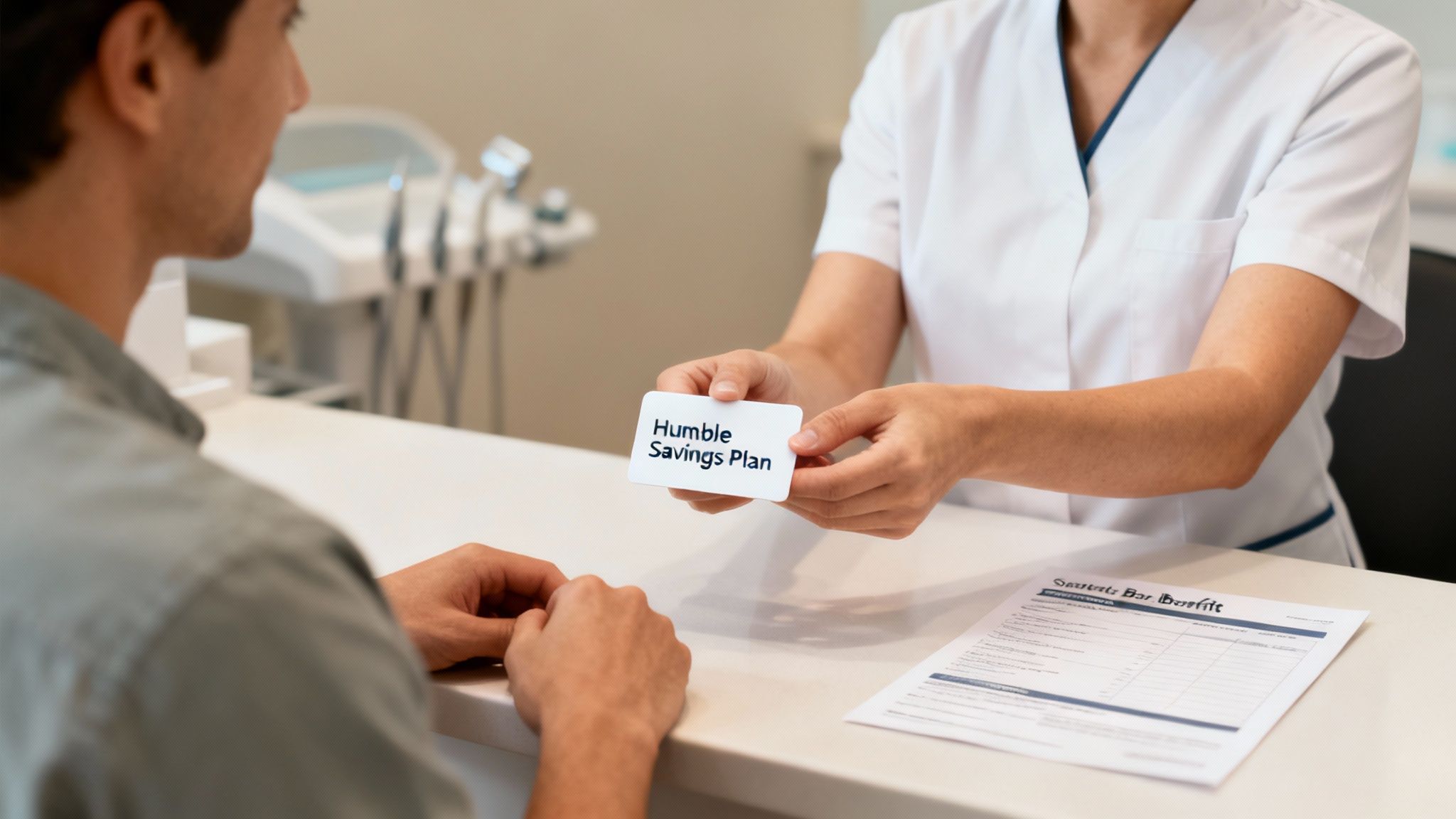
The primary advantage of an in-house plan is its simplicity and immediate value. Unlike insurance policies, which often come with restrictive rules, these memberships are designed for use from day one.
The moment you join, you start saving. This direct-to-patient model has grown in popularity because it addresses the most common frustrations for uninsured individuals, making dental care predictable and easy to budget.
Here is a breakdown of what makes these plans a game-changer:
To provide a concrete example, our Humble Savings Plan at Clayton Dental Studio is designed to cover the foundations of oral health while making all other treatments more affordable.
After paying the low annual fee, your routine preventive care is 100% covered. This includes two professional cleanings, two regular exams, and all necessary x-rays for the year. For many patients, the membership fee is less than the cost of paying for these services individually.
With an in-house plan, the focus shifts from navigating insurance rules to simply getting the care you need. It’s a direct path to savings, putting you in control of your dental health budget.
Beyond preventive care, the plan provides a significant discount on other services. Whether you need a tooth-colored filling, a same-day CEREC crown, or cosmetic treatments like teeth whitening, your membership reduces the final cost. It’s an ideal payment solution for uninsured individuals and families in the Humble and Houston area who want to maintain their oral health without financial stress.
For significant dental procedures, such as a full-mouth restoration or dental implants, the total cost can seem like a major obstacle. While an in-house savings plan is excellent for managing routine care, third-party financing is the tool that makes larger, more complex treatments immediately accessible.
Think of it as a specialized line of credit reserved for your health and wellness needs. We partner with companies like CareCredit and Cherry, which allow you to cover the entire cost of your procedure upfront and then pay it back in manageable monthly installments. This approach transforms a daunting one-time expense into a predictable part of your monthly budget.

Applying for third-party financing is typically a quick and straightforward process that can be completed in our office or online in just a few minutes.
Because this is a line of credit, the financing company will conduct a credit check to determine your eligibility, credit limit, and interest rate. Approval is often instant, which means you can move forward with your treatment plan without delays. This efficiency is why dentist payment plans no insurance options have become essential for patients needing immediate, higher-cost care.
One of the most valuable features of third-party financing is the availability of promotional offers. Many of these companies provide plans with 0% APR (Annual Percentage Rate) for a set period, such as 6, 12, or even 24 months.
What does this mean for you? If you pay off the entire balance before the promotional period ends, you will not pay any interest. It is essentially an interest-free loan to restore your smile, making it an incredibly powerful tool for completing essential procedures.
This strategy is particularly effective for managing treatments with a higher price tag. For a deeper understanding of those expenses, read our guide on how much dental implants cost.
Before committing to a financing option, it is crucial to understand all the terms. Here are a few key factors to evaluate:
With an estimated 27% of adults in the United States lacking any dental insurance, financing companies fill a critical gap. By allowing patients to spread payments over time, they help us serve more of our community, ensuring that cost is not a barrier to necessary care.
It is tempting to look at a dental treatment estimate and decide to "wait and see." A minor toothache may not feel urgent, especially without insurance to cover the cost. However, this mindset is a significant financial trap. Postponing dental work does not save money; it merely defers a much larger expense.
Think of a small cavity like a tiny chip in a car's windshield. Initially, it is a minor, relatively inexpensive fix. If ignored, that chip will spread, turning a simple repair into a costly full windshield replacement. The same principle applies to your teeth.
Let's trace the progression of an untreated cavity. Initially, it may only require a straightforward filling—a quick, single-visit procedure. A payment plan could break this cost into small, manageable monthly amounts, making it an affordable investment in your long-term health.
But if you wait, the decay deepens, eventually reaching the sensitive pulp inside the tooth. At this point, a simple filling is no longer an option. You now face a root canal to save the tooth, followed by a dental crown for protection. A simple procedure has snowballed into a multi-step treatment costing thousands of dollars, not hundreds.
The crucial takeaway is this: proactive care is always less expensive than reactive repair. Using a dentist payment plan for a small issue today prevents you from needing to finance a major dental emergency tomorrow.
The numbers illustrate this clearly. A routine filling might cost around $226 without insurance. If that same problem escalates, you could be looking at a dental bridge costing over $5,000 or a single dental implant averaging $2,695. You can find more insights on how these costs escalate over on Stanton Insurance's website.
Delaying treatment not only impacts your wallet but also leads to more pain, increased time in the dental chair, and a higher risk of losing the tooth altogether. A dentist payment plan for uninsured patients reframes the situation, turning dental care from an expense to avoid into a critical investment that saves you money, discomfort, and time in the long run.
Walking into a dental appointment without insurance does not have to be daunting. With a solid plan, you can skip the stress and have an empowered, open conversation about your care and costs. You are in control.
This guide provides a step-by-step process, from your first phone call to finalizing a treatment plan that fits your budget.
Knowing what to ask and when to ask it eliminates surprises. The goal is to create a partnership with your dental team, turning a potentially anxious situation into a productive one where everyone is on the same page.
The most important preparation happens before you are in the dental chair. A few proactive steps can ensure a smooth and predictable visit.
Here’s your pre-visit checklist:
Once you are at the clinic, the conversation will focus on your specific dental needs and financial options. This is your opportunity to ask questions and collaborate with your dentist to create a plan that works for you.
A great dental team wants to help you get the care you need. Your consultation is a two-way conversation, not a lecture. Be open about your budget so they can provide the best solutions for your specific situation.
Make the most of your consultation by asking these key questions:
By following this action plan, you become an active partner in your healthcare. It is the most effective way to receive excellent dental care that respects both your health and your budget.
When you don't have dental insurance, figuring out how to pay for care can bring up many questions. This is completely normal. Here are answers to some of the most common inquiries we receive from patients.
A frequent question is how personal finances, particularly credit history, affect payment options. The answer depends on the type of plan you choose.
Not all dentist payment plans no insurance options are the same. Our in-house Humble Savings Plan, for instance, does not require a credit check. It functions like a membership—you join, and you receive the benefits. In contrast, third-party financing partners like CareCredit do involve a credit application, as they are providing a loan based on your credit history.
Here’s a smart strategy we often recommend: you don’t have to pick just one. You can combine an in-house savings plan with third-party financing. First, use our Humble Savings Plan to get a significant discount on the total treatment cost. Then, use financing to pay off the new, smaller balance in manageable monthly installments.
This two-step approach is one of the savviest ways to make significant dental work fit your budget. You get the immediate discount from the savings plan, plus the long-term breathing room of a payment plan.
Ready to get the healthy, beautiful smile you deserve without the financial worry? At Clayton Dental Studio, we truly believe that everyone deserves access to top-notch care. Let's work together to find the perfect payment solution for you. Schedule your appointment online today!