

Book Your Appointment Today!
Our staff will reach out to you shortly
Thank you! Your submission has been received!
Oops! Something went wrong while submitting the form.


Considering teeth whitening is an excellent step toward a more confident smile, but it's important to understand the process and potential side effects. Most people want to know if the procedure is safe and what to expect regarding discomfort.
This guide provides the necessary information to help you make an informed decision.
Professional teeth whitening is a controlled dental procedure. Any sensitivity experienced is typically mild, manageable, and temporary. The key difference between professional treatment and over-the-counter options is professional oversight. A dentist customizes the treatment to your specific needs, ensuring both safety and effectiveness.
The two most frequently reported side effects are temporary tooth sensitivity and minor gum irritation. These reactions are almost always mild and short-lived.
Tooth Sensitivity: This sensation is similar to the sensitivity some people feel when consuming hot or cold foods. It occurs because the whitening agent temporarily increases the permeability of your enamel, allowing the nerve inside to be more responsive to temperature changes. This effect typically resolves within 48 hours.
Gum Irritation: The whitening gel can sometimes make contact with the gums, causing temporary redness or tenderness. This is more common with ill-fitting, over-the-counter whitening trays that allow the gel to leak.
At Clayton Dental Studio, we use precise application methods and protective barriers to shield your gums, ensuring the whitening agent is confined to the tooth surface.
It is important to understand that these are normal physiological responses to the active ingredients, not signs of damage.
Here is a summary of what to expect.
This table outlines the most common side effects, their causes, and their typical duration.
With professional oversight, the incidence and severity of these side effects are significantly minimized.
Ultimately, these effects are temporary and manageable steps toward achieving a brighter smile. The goal at Clayton Dental Studio is to provide effective results while prioritizing your comfort and oral health.
Tooth sensitivity is the most common side effect of the whitening process. Fortunately, it is almost always temporary and manageable. Understanding its cause is the first step toward preventing and managing discomfort.
Your tooth enamel functions as a protective outer layer. Beneath it lies a softer layer called dentin, which contains microscopic tubules that connect to the tooth's nerve. Whitening agents, such as hydrogen or carbamide peroxide, penetrate the enamel to break down stains. This process can temporarily increase the porosity of the enamel, allowing stimuli like hot or cold liquids to reach the nerve more easily.
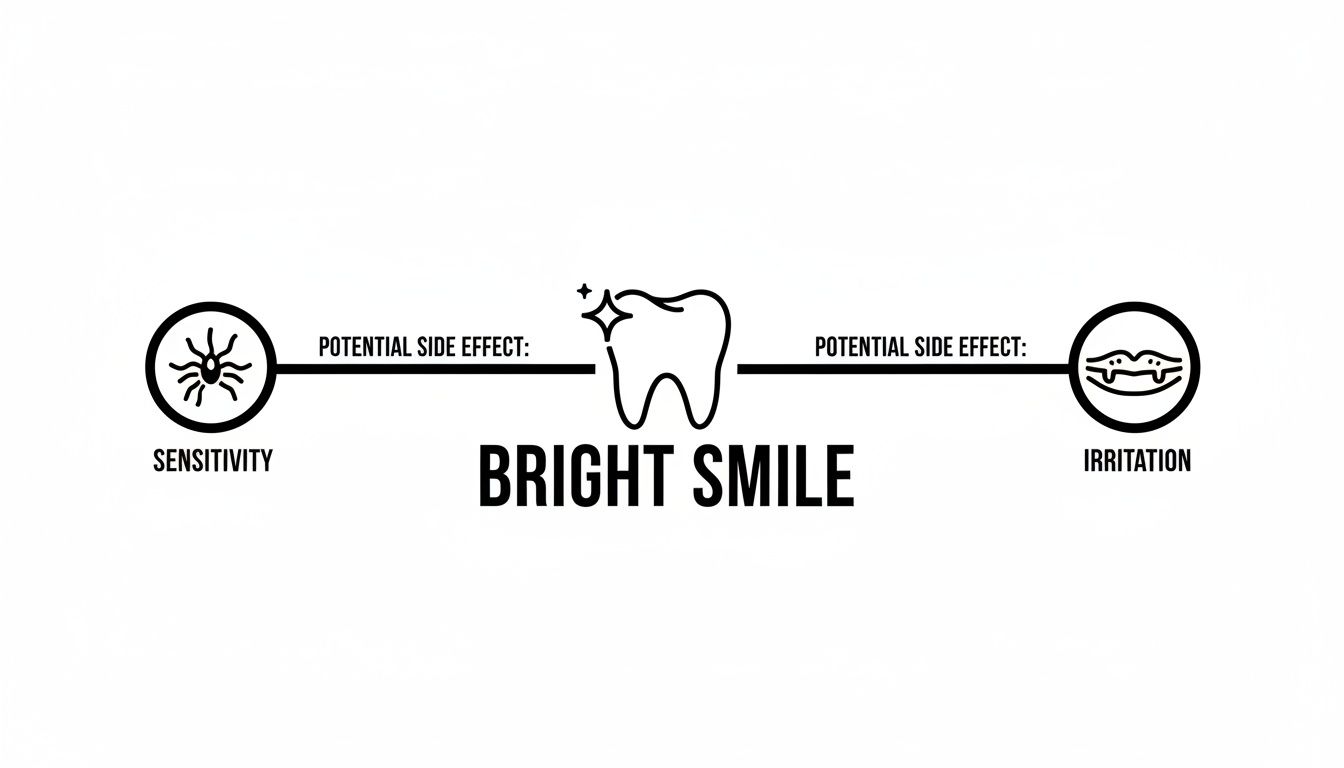
This temporary exposure increases nerve reactivity to temperature changes, causing sensitivity.
The likelihood and intensity of sensitivity vary based on the strength of the whitening agent and the application method.
Tooth sensitivity is the most prevalent side effect of whitening, with studies indicating that 30% to over 78% of individuals experience some level of sensitivity. It's important to note that this discomfort is typically mild and resolves within 24 to 48 hours.
Proactive measures can significantly reduce or prevent sensitivity.
A professional consultation is the most effective preventative measure. At Clayton Dental Studio, Dr. Kamboj can assess your risk for sensitivity and develop a personalized whitening plan that prioritizes your comfort.
Here are practical tips to maintain comfort during and after the whitening process.
1. Use a Desensitizing Toothpaste Beforehand
Begin using a toothpaste formulated for sensitive teeth one to two weeks before your whitening treatment. Ingredients like potassium nitrate or stannous fluoride work by blocking pain signals from the nerve or occluding the microscopic tubules in your dentin.
2. Follow a Post-Whitening Diet
For the first 48 hours after treatment, your teeth are more susceptible to sensitivity. It is advisable to consume room-temperature foods and drinks.
Avoid these common triggers:
3. Adhere to the Recommended Treatment Time
It is critical to follow instructions precisely. Whether using professional take-home trays or OTC products, never exceed the recommended application time. Overexposure to the whitening gel increases the risk of sensitivity and gum irritation. If you experience significant discomfort, shorten the session or take a day off between treatments.
4. Seek Professional Oversight
A dentist can tailor the strength of the whitening agent to your specific sensitivity level. They can also apply a professional-grade desensitizing agent in-office immediately following your treatment for rapid relief. Understanding what causes tooth sensitivity to cold can also provide insight into why whitening sometimes amplifies this sensation. Expert guidance ensures you achieve the desired results without unnecessary discomfort.
While tooth sensitivity is a primary concern, gum irritation is another potential side effect of teeth whitening. Redness or soreness of the gums after a treatment typically occurs when the whitening gel comes into contact with soft gum tissue.
The active ingredients in whitening gels are effective at breaking down stains on enamel but can be harsh on the soft tissues of the mouth. When the gel seeps from a whitening tray or strip and remains on the gums, it can cause a mild chemical irritation, resulting in redness, swelling, or temporary white spots.
Fortunately, this side effect is largely preventable through precise application and a proper fit.
Over-the-counter whitening trays are not molded to the unique contours of an individual's mouth. This improper fit creates gaps along the gumline, allowing the whitening gel to escape and come into direct contact with the gums, causing irritation.
While less common than sensitivity, studies show that over-the-counter products can be linked to soft tissue irritation in up to 20% of misuse cases, primarily due to ill-fitting trays exposing gums to bleaching agents. This underscores the significant difference between DIY whitening and professional care.
In a professional dental setting, protecting your gums is a priority. Dentists employ specific, meticulous techniques to ensure whitening agents remain exclusively on the tooth surfaces.
A professionally crafted whitening tray provides a custom, sealed fit that keeps the gel precisely on your teeth, preventing leakage and protecting gum tissue.
Here’s how we prevent gum irritation at Clayton Dental Studio:
Custom-Molded Trays: For our take-home kits, we create trays from precise impressions of your teeth. This custom fit forms a tight seal along the gumline, preventing gel from leaking onto the gums.
Protective Barriers: During an in-office whitening procedure, we apply a professional-grade protective barrier, or liquid dam, directly onto your gums. This material creates a shield that isolates the gums from the potent whitening gel.
Controlled Application: Dr. Kamboj applies the whitening gel with precision, targeting only the tooth enamel. We control the exact amount of gel used to prevent overflow, a common issue with at-home kits.
Recognizing the signs of gum irritation is important. Redness, tenderness, or white patches on your gums are indicators that the gel has made contact with the tissue. While this is usually temporary and resolves within a few days, it is avoidable with proper technique. For more information, refer to our guide on how to whiten teeth safely at home.
Ultimately, preventing gum irritation depends on control and customization—hallmarks of professional whitening services.
A common question is whether teeth whitening can damage teeth. When performed correctly under professional supervision, teeth whitening is safe for tooth enamel. The active ingredients are formulated to lift stains without compromising the enamel's structural integrity.
However, the safety of the procedure is contingent on proper application and professional guidance. Overuse of store-bought kits or using products with excessively high peroxide concentrations without a dentist's supervision can pose risks.
While professional whitening does not cause permanent damage, it can induce temporary, microscopic changes to the enamel surface, particularly with high-strength in-office treatments.
Some research indicates that aggressive, high-concentration agents (e.g., 35% hydrogen peroxide) can cause a temporary demineralization and increased roughness of the enamel. This can make teeth more susceptible to staining and sensitivity from acidic foods and drinks immediately after treatment, which is why adherence to post-whitening instructions is crucial. You can learn more about these effects in this detailed study.
These changes are typically minor and reversible, as saliva acts as a natural remineralizing agent that helps restore the enamel surface. Nonetheless, this reinforces the importance of a professional examination to ensure your enamel is healthy enough for whitening.
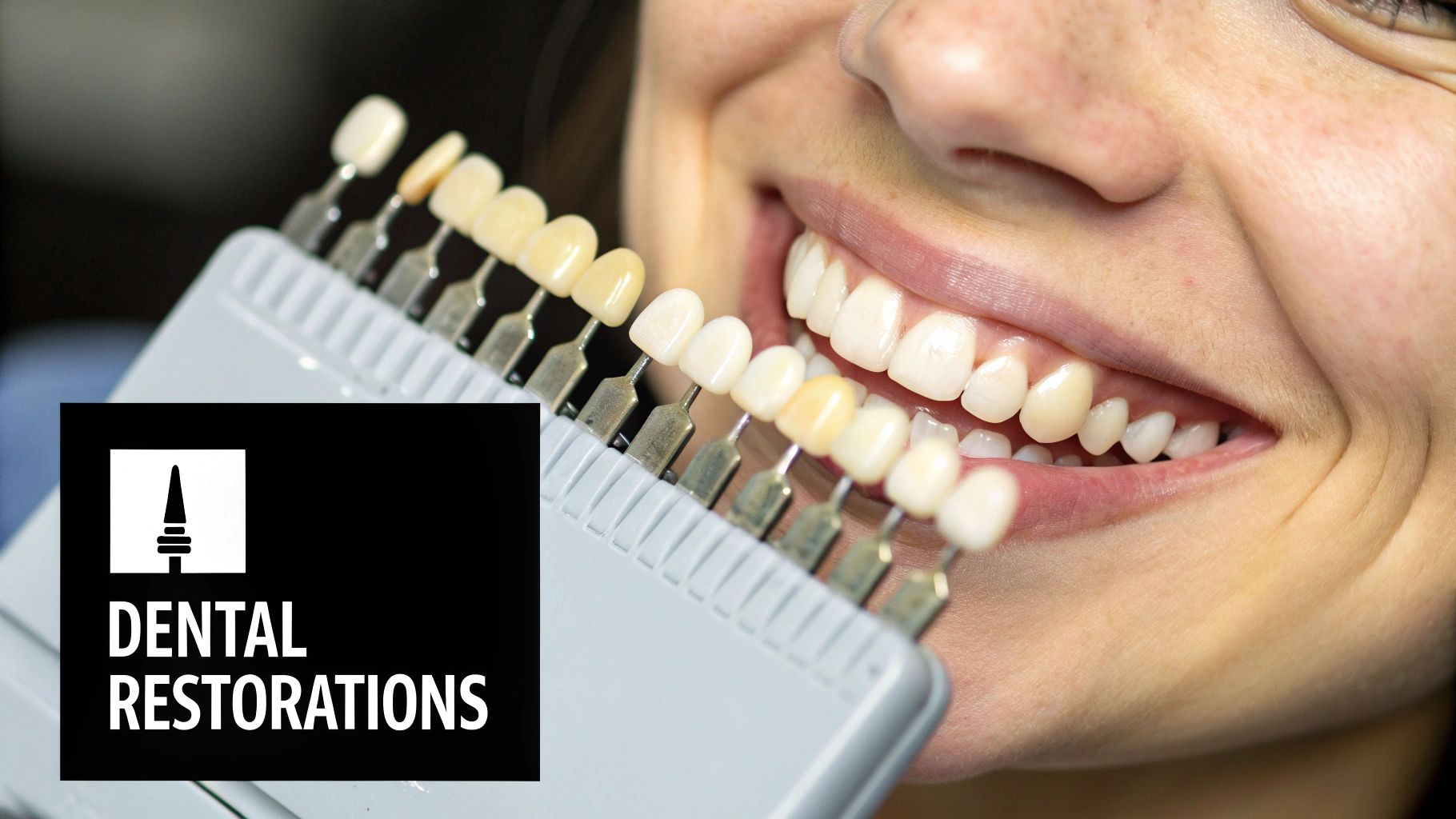
A critical consideration often overlooked in DIY whitening is that dental restorations do not whiten.
Materials such as porcelain and composite resin—used for fillings, crowns, veneers, and bridges—are color-matched at the time of placement and are impervious to whitening agents.
This can result in a color mismatch between your natural teeth and your dental work. As your natural teeth become brighter, the restorations retain their original shade, making them appear more prominent and creating an uneven smile.
This effect is comparable to painting three walls in a room a new color while leaving the fourth wall unchanged. The contrast creates an unintentional and aesthetically unpleasing result.
This is precisely why a pre-whitening dental examination is essential.
A thorough dental check-up before whitening is a crucial step to ensure safe, uniform, and aesthetically pleasing results. This examination allows Dr. Kamboj to develop a comprehensive treatment plan.
The pre-whitening exam includes:
Based on this assessment, we create a strategic plan. In some cases, the best course of action is to whiten the natural teeth first, then replace older dental work to match the new, brighter shade. This ensures a seamless, natural-looking result. Bypassing this professional step can lead to a multi-toned smile that is both difficult and costly to correct.
After reviewing the potential side effects of teeth whitening, from sensitivity to gum irritation, it is clear that professional supervision is the most reliable way to ensure a safe and successful outcome. While over-the-counter kits offer convenience, they involve a level of risk and guesswork that is eliminated in a controlled, professional setting.
DIY whitening can be compared to following a generic online workout plan; it may not account for individual health conditions or limitations, potentially leading to issues. Professional whitening, conversely, is analogous to working with a personal trainer who assesses your specific situation, designs a customized program, and monitors your progress to ensure safety and effectiveness.
This personalized, expert-led approach minimizes risks and maximizes results.
Choosing a dentist like Dr. Kamboj at Clayton Dental Studio for your whitening treatment is an investment in safety and peace of mind. A professional environment provides multiple layers of protection that at-home kits cannot offer.
Here is what distinguishes professional oversight as the superior option:
A professional provides a comprehensive service, not just a product. This personalized care ensures your path to a whiter smile is built on a foundation of oral health, avoiding the common pitfalls of DIY methods.
For a deeper dive, check out our article exploring 5 reasons to choose professional teeth whitening over at-home kits.
The difference in safety between unsupervised at-home whitening and professional treatment is significant. This table breaks down the key differences, illustrating why professional care is the recommended choice for avoiding common side effects.
Ultimately, whitening your teeth should be a positive experience. By choosing professional supervision, you ensure the process is safe, comfortable, and tailored to your specific needs.
Ready to achieve your brightest smile the safest way possible? Schedule a consultation at Clayton Dental Studio today to discuss your goals with Dr. Kamboj and create a personalized whitening plan that puts your health and comfort first.
It is normal to have additional questions about the teeth whitening process. This section addresses some of the most common inquiries to ensure you feel fully informed and confident.
Our goal is to resolve any remaining concerns and demonstrate why a professional consultation is the best way to receive advice tailored to your specific dental health.
The most common side effects, such as sensitivity and minor gum irritation, are temporary.
Most individuals experience sensitivity most acutely within the first 24 to 48 hours following a treatment, after which it typically subsides. Similarly, any minor gum redness or soreness usually resolves within a few days. The duration depends on the whitening method and individual sensitivity levels, but prolonged discomfort is rare.
If side effects are severe or do not improve after a few days, contact your dentist immediately.
When performed correctly, professional teeth whitening is a safe procedure that will not permanently harm tooth enamel. The whitening agents are formulated to break down stain molecules, not the mineral structure of your teeth.
The risk of damage arises from the improper or excessive use of over-the-counter products without professional guidance. Chronic use of abrasive whitening toothpastes or leaving whitening strips on for extended periods can, over time, contribute to enamel wear. Professional supervision eliminates this guesswork and ensures the process is managed safely.
Under a dentist's care, the procedure is controlled and predictable. We use the appropriate concentration of whitening agent for the correct duration, protecting your enamel while achieving optimal results.
Yes, teeth whitening is not suitable for everyone. A pre-whitening consultation is an essential step to determine candidacy.
Generally, teeth whitening is not recommended for:
This is why a comprehensive dental examination is a mandatory first step in any professional whitening treatment plan.
Pre-treatment preparation can significantly improve your comfort during and after the whitening process.
First, schedule a professional cleaning before your whitening appointment. This removes plaque and tartar, providing a clean surface for the whitening gel to work effectively.
It is also beneficial to use a desensitizing toothpaste for one to two weeks prior to treatment. Products containing potassium nitrate can help reduce nerve sensitivity. Finally, the most important preparation is open communication with your dentist. Discuss your goals and any concerns you may have so we can tailor the treatment to your needs.
Ready to explore your whitening options with a team that puts your safety and comfort first? At Clayton Dental Studio, we’re here to answer all your questions and create a personalized plan for your brightest, healthiest smile. Schedule your consultation today by visiting us at https://www.claytondentalstudio.com.