

Book Your Appointment Today!
Our staff will reach out to you shortly
Thank you! Your submission has been received!
Oops! Something went wrong while submitting the form.


Thinking about whitening your teeth at home? You're in the right place. Achieving a brighter smile starts with understanding the causes of discoloration and choosing methods that are both effective and dentist-approved.
For minor, everyday surface stains, a quality whitening toothpaste is an excellent starting point. If you're tackling more noticeable, deeper discoloration, you'll likely need an over-the-counter kit containing hydrogen or carbamide peroxide. The key to success is applying these products correctly to brighten your smile without damaging your teeth or gums.
Before you purchase a whitening kit, it’s essential to understand the structure of your teeth. Your teeth aren't solid white; they are composed of layers that determine their natural color and how they will respond to whitening treatments.
The bright, white outer layer of your tooth is the enamel. It's the hardest substance in your body but is also slightly translucent. Directly beneath it lies the dentin, a softer, naturally yellowish layer. The color of your teeth is a combination of the enamel's translucency and the yellow hue of the dentin showing through.
Tooth discoloration falls into two main categories. Identifying which type you have is the first step in selecting an effective whitening strategy.
Understanding this distinction is crucial. Most over-the-counter products are designed to combat extrinsic stains. If you're dealing with intrinsic staining, you will likely need a professional-grade treatment to achieve significant results.
While it's easy to desire a celebrity-white smile, it's important to set realistic expectations. The global demand for brighter smiles has fueled a massive industry—the teeth whitening market reached approximately USD 8.52 billion in 2024 and continues to grow. This means a vast array of products are available, but their effectiveness varies. You can read more about the growing teeth whitening market and its trends to learn more.
Your natural tooth shade, the type of stains you have, and your overall dental health all influence the final outcome. The objective of at-home whitening should be to lift stains and reveal your teeth's brightest natural shade, not to achieve an artificial, stark-white appearance.
Key Takeaway: Approach safe at-home whitening as an enhancement, not a complete transformation. Aiming to brighten your smile by a few shades will yield a noticeable yet natural-looking result. This mindset also helps prevent overuse of products, which is vital for protecting your teeth.
The dental care aisle can be overwhelming with products promising a brighter smile. The best approach is to select a method that aligns with your specific whitening goals, stain type, lifestyle, and budget.
Let's examine the most common options: whitening toothpastes, adhesive strips, and take-home trays. Understanding their differences is the first practical step toward whitening your teeth safely at home.
Whitening toothpastes are your first line of defense and are best for stain maintenance. They utilize mild abrasives to gently polish away daily surface stains from things like coffee or tea. While some contain a small amount of peroxide, they aren't formulated for dramatic shade changes. They are ideal for maintaining a bright smile after a professional cleaning or preventing new stains.
For a more noticeable improvement, whitening strips are a significant step up. These are thin, flexible plastic strips coated with a peroxide-based whitening gel. You apply them directly to your teeth, typically for 30 minutes a day, over a period of a few weeks.
Their main advantages are convenience and affordability. The key to success is careful application to ensure even coverage on the tooth surface while avoiding contact with your gums to prevent irritation. When used correctly, strips can lighten your teeth by several shades.
If you're looking for results that more closely resemble professional in-office treatments, take-home trays are the superior option. This method involves a dentist creating custom-molded trays that fit your teeth perfectly. You receive a professional-strength whitening gel to apply in the trays at home.
The precise fit ensures the gel makes uniform contact with every part of your teeth, leading to consistent whitening and minimal gum irritation. While this is a greater investment than drugstore kits, the results are significantly better. Our guide on professional teeth whitening options can help you explore this further.
This diagram helps illustrate which path might be right for you, depending on what's causing your tooth stains.
As you can see, surface stains from foods and drinks are often effectively treated with at-home kits. Deeper discoloration from aging or genetics typically requires a professional consultation to achieve the desired results.
The active ingredient in most whitening products is either hydrogen peroxide or carbamide peroxide. Carbamide peroxide is a more stable compound that breaks down into hydrogen peroxide, making it a gentler option for teeth and gums.
Here is a general breakdown of concentrations:
Do not assume a higher concentration is always better. While it may whiten faster, it also significantly increases the risk of tooth sensitivity and gum irritation. Adhering strictly to the product's instructions for application time and frequency is essential for safety.
The popularity of these products has grown rapidly, partly due to the influence of social media on over 4.48 billion users. In 2024, North America's market share for these products exceeded 39.7%, driven by toothpastes, strips, and gels, as detailed in this PR Newswire report.
Proper application is critical for achieving great results without causing harm. Follow these steps for safe and effective whitening.
For Whitening Strips:
For Whitening Trays:
By choosing the right product and applying it correctly, you can safely achieve a brighter smile at home. Always start with a clean mouth, follow directions precisely, and never extend treatment times.
A quick search on social media will reveal numerous "natural" teeth whitening hacks. While using simple kitchen ingredients for a brighter smile sounds appealing, many of these viral trends can cause irreversible damage to your teeth.
Understanding what not to do is as important as knowing which methods are safe.
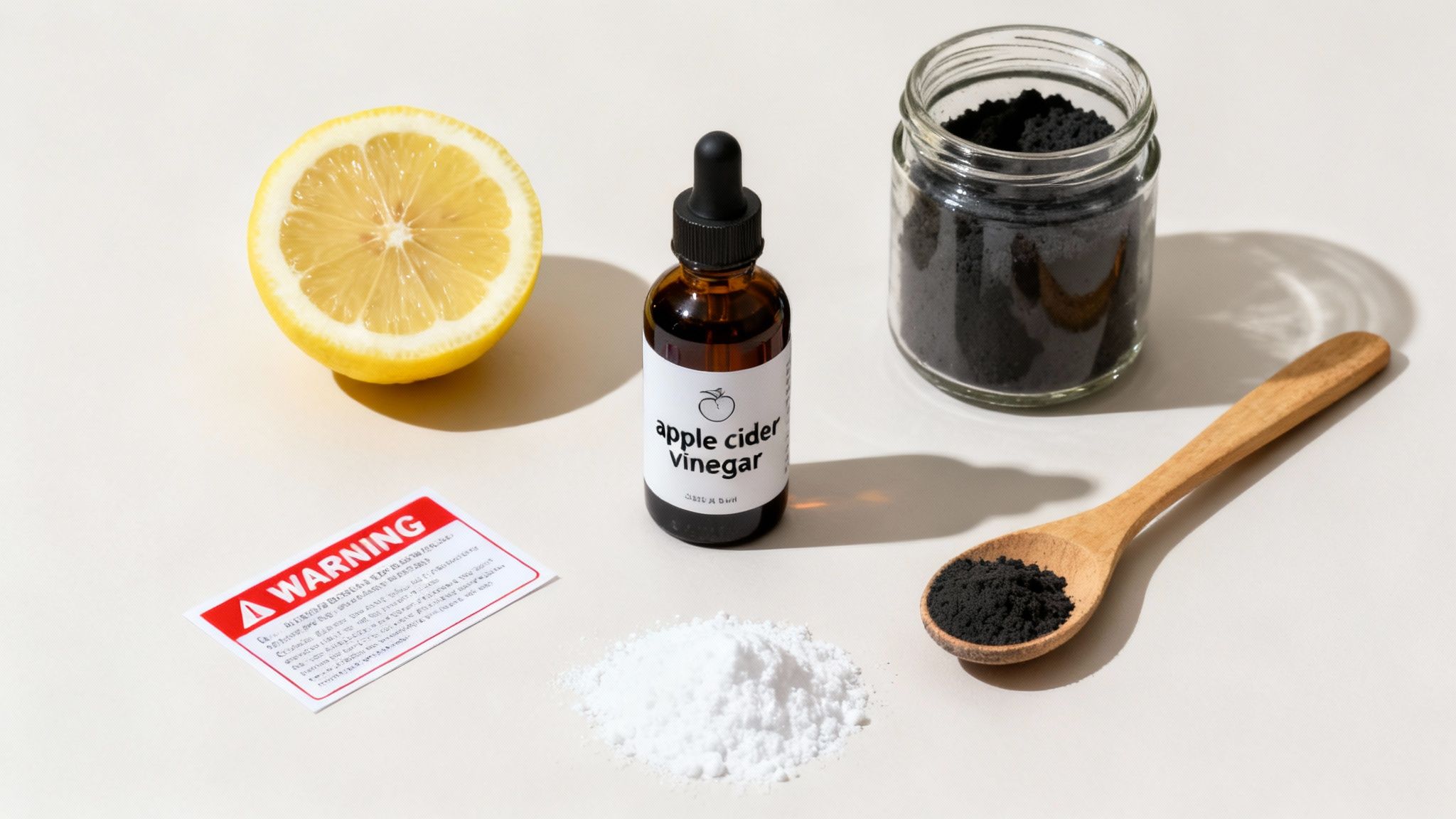
Many of these popular remedies do more harm than good. Let's identify the worst offenders so you can protect your smile.
One of the most dangerous trends involves applying acidic substances like lemon juice, apple cider vinegar, or crushed strawberries to your teeth. The theory is that the acid will "bleach" away stains. While this may create a temporary illusion of brightness, the actual process is highly destructive.
These acids work by dissolving your tooth enamel—the hard, protective outer layer. Once enamel is lost, it does not grow back. This permanent damage exposes the yellowish dentin layer, which can ironically make your teeth appear darker over time.
Key Takeaway: Using acidic foods to whiten teeth is like using sandpaper on glass. It may remove surface grime, but it leaves behind permanent damage and weakens the entire structure. The result is often increased sensitivity, a higher risk of cavities, and a duller smile.
Another damaging trend involves using abrasive materials to scrub away stains, such as activated charcoal powders or harsh pastes made from coarse salt and baking soda. The logic of "scrubbing" things clean seems plausible.
However, these substances are far too abrasive for regular use on teeth. They create microscopic scratches on the enamel. While this might initially lift some surface stains, these tiny grooves make your teeth more prone to future staining. The newly roughened surface acts as a magnet for pigments from coffee, tea, and red wine.
Let's compare the claims of these DIY trends with the reality of what they do to your teeth.
While very gentle, occasional use of baking soda might help with surface stains, the potential risk often outweighs the minimal benefit. The damage from these trends is a common and avoidable issue seen in dental offices. You can find a more detailed analysis of what science says about natural teeth whiteners on Healthline.com.
It is far safer to use products specifically formulated and tested for teeth whitening. Look for products with the American Dental Association (ADA) Seal of Acceptance. These use controlled concentrations of safe agents, like hydrogen or carbamide peroxide, to whiten teeth from within without causing structural damage.
One of the most common concerns about at-home whitening is tooth sensitivity. That sharp, sudden discomfort when consuming something cold is unpleasant, but the good news is that it's usually temporary and largely preventable with proper preparation.
Gum irritation is another frequent side effect. The whitening agents that lift stains can be harsh on the soft tissues of your mouth. Protecting your gums is essential for a comfortable whitening experience.
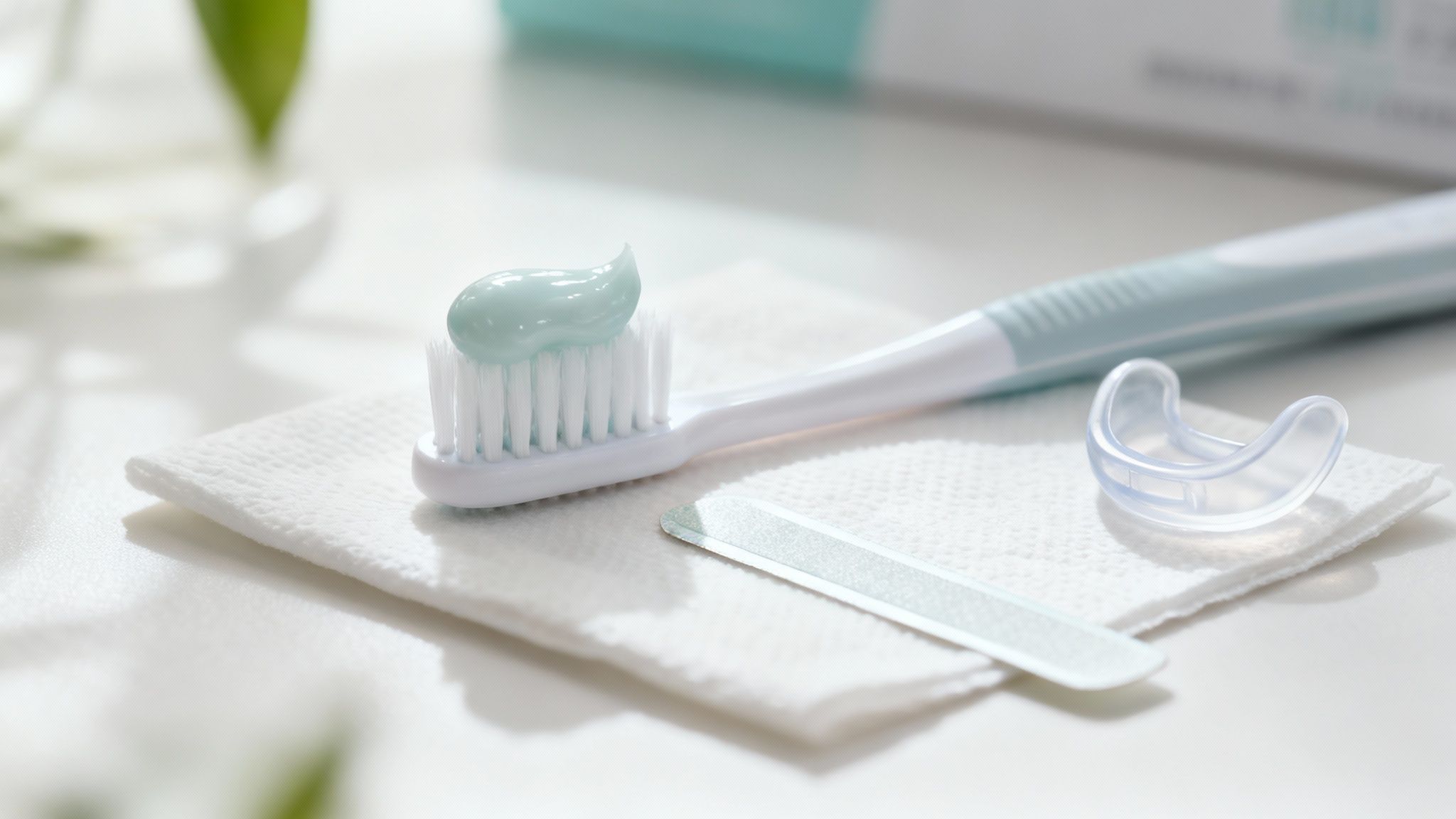
Taking preventative measures can significantly reduce potential sensitivity before you even begin whitening. Think of it as priming a wall before painting; a little prep work makes a big difference.
Approximately two weeks before you plan to start whitening, switch to a desensitizing toothpaste. These formulas contain ingredients like potassium nitrate or stannous fluoride, which work by blocking the microscopic tubules in your teeth that lead to the nerves. Consistent use helps build a protective barrier, making your teeth less reactive to the whitening gel.
If you are prone to sensitivity, your choice of product and your whitening schedule are crucial.
Expert Insight: Remember, teeth whitening is a marathon, not a sprint. A slower, more gradual approach often yields the same beautiful results with far less discomfort. Listening to your body and adjusting your routine is the safest path to a brighter smile.
The goal is to keep the whitening agent on your teeth and off your gums. Direct contact can cause temporary white spots or a stinging sensation. These simple tricks can make a huge difference.
If you are using whitening strips, customize the fit.
For those using whitening trays, a little gel goes a long way.
These small adjustments can make your whitening experience much more pleasant. However, if you experience severe or persistent sensitivity, stop the treatment and consult a professional to ensure everything is okay.
While at-home teeth whitening is a great option for many, it is not a universal solution. There are situations where consulting a professional is not just a better choice—it's the smartest and safest one for your smile.
Over-the-counter products have limitations. They are designed primarily to lift surface-level, extrinsic stains from things like coffee or tea. If your discoloration is deeper—caused by medication, an old injury, or genetics—at-home kits lack the strength to be effective. Using them more frequently or for longer periods will not improve results and will only increase the risk to your teeth and gums.
Pain and irritation are your body's warning signals. If you experience significant discomfort while whitening at home, stop immediately and schedule a consultation. These are not minor issues to be ignored; they are clear indicators that something is wrong.
Watch for these warning signs:
Crucial Insight: At-home whitening kits are designed for a healthy mouth. If you have undiagnosed cavities, hairline cracks, or gum disease, peroxide can seep into these vulnerable areas, causing severe pain and potential irreversible damage. A pre-whitening dental check-up is always the safest first step.
Professional whitening offers two key advantages: supervision and strength. In a dental office, we use high-concentration whitening agents that deliver superior results in a controlled, safe environment.
Before starting a treatment, we protect your gums and soft tissues with a special barrier, ensuring the powerful gel only contacts your tooth enamel. This level of precision is impossible to achieve with ill-fitting generic strips or trays.
Because we can safely use stronger agents, we can often achieve in a single one-hour appointment what might take an at-home kit weeks to accomplish.
For those who prefer the convenience of whitening at home, we offer custom-fitted take-home trays. We create a mold of your teeth to make trays that fit you perfectly, preventing gel leakage and ensuring even coverage. This approach combines the flexibility of at-home treatment with the safety and effectiveness of professional care.
When you're ready for a brighter smile without the guesswork, you can learn more about our professional teeth whitening services at Clayton Dental Studio. Investing in professional oversight is the best way to ensure your journey is both successful and safe.
Even with clear instructions, you may still have questions as you begin your whitening journey. Being informed is the best way to protect your dental health. Here are answers to some of the most common questions we hear from patients.
The longevity of your whitening results largely depends on your daily habits. For most people, a brighter smile can last from a few months up to a year or more. However, this timeline shortens if you regularly consume staining substances.
The main culprits for new stains are coffee, tea, red wine, and dark sodas. To maintain your results, practice excellent oral hygiene and be mindful of your diet.
This is a critical point. The short answer is no—whitening products do not work on dental restorations. The bleaching agents in whitening gels are formulated to lift stains from natural tooth enamel only.
This means that any crowns, veneers, bonding, or fillings will remain their original color while your natural teeth become brighter. This can create a noticeable, uneven appearance, especially if the dental work is on your front teeth.
Before starting any whitening regimen, it is essential to consult your dentist if you have existing dental work. They can discuss your options, which might include replacing older restorations to match your newly whitened smile.
Overusing whitening products is one of the quickest ways to develop sensitive teeth and irritated gums. Most at-home kits are designed for a specific, limited treatment period and are not intended for continuous daily use.
For instance, a standard box of whitening strips may direct you to use them once a day for 14 days. After completing the cycle, you should stop. From then on, perform only occasional touch-ups as needed.
Think of it like a fitness routine; your teeth need rest days to recover. Constantly exposing your teeth to peroxide can weaken the enamel and lead to chronic discomfort. Always follow the manufacturer's directions precisely to keep your teeth healthy and strong.
Ready to achieve a brighter, more confident smile with professional guidance? At Clayton Dental Studio, Dr. Kamboj and our team offer safe and effective whitening solutions tailored to your unique needs. Schedule your consultation today and let us help you find the perfect path to the radiant smile you deserve.