

Book Your Appointment Today!
Our staff will reach out to you shortly
Thank you! Your submission has been received!
Oops! Something went wrong while submitting the form.


That sharp, sudden pain you feel when sipping a cold drink isn't just a random annoyance—it's a clear signal from your teeth. The answer to what causes tooth sensitivity to cold almost always boils down to one primary issue: exposed dentin. This is the softer, more sensitive layer that sits just beneath your tooth’s hard enamel shell. Understanding why it gets exposed is the first step toward finding a lasting solution.
Think of your tooth's enamel as insulation for a house. It’s a tough, protective outer layer built to shield the delicate structures inside from extreme temperatures. When that insulation is thick and intact, you can enjoy ice cream or a hot coffee without a second thought.
But when the enamel wears thin or your gums pull back, they expose the layer underneath called dentin. This isn't a solid barrier like enamel. Instead, dentin is porous and filled with thousands of microscopic tubules that lead directly to the tooth's nerve center, the pulp.
When something cold—like ice water or even a chilly breeze—hits these exposed tubules, it triggers a rapid fluid shift inside them, sending a lightning-fast signal straight to the nerve. That’s what you feel as that characteristic sharp, sudden jolt of pain. It’s your tooth's built-in alarm system telling you its protective barrier has been breached.
We've known about this process for a while, but a recent discovery finally pinpointed the exact biological trigger. In 2023, researchers identified a specific protein in tooth cells, known as the TRPC5 ion channel, that acts as a molecular cold sensor. When dentin is exposed, this sensor fires off an immediate pain signal to the brain.
This finally gives us a clear scientific reason why cold is such a reliable trigger for tooth pain. Interestingly, this research also helps explain why old-school remedies like oil of cloves work—they contain a compound that blocks this specific channel. You can read more about this groundbreaking discovery and what it means for treating tooth sensitivity.
So, what causes this breakdown in your tooth's natural defenses in the first place? Here’s a quick rundown of the most common reasons you might be feeling that cold-induced zing.
Here is a quick look at the primary reasons for sensitivity to cold and what's happening inside your tooth.
Understanding which of these issues might be at play is the first step toward finding relief and getting back to enjoying your favorite cold treats without wincing.
That sharp, sudden zing you feel when ice water hits your teeth is a distress signal telling you something’s wrong. To get real, lasting relief, it's crucial to identify the exact cause. The reasons for cold sensitivity can range from a worn-down surface to deeper structural damage, and each requires a different approach to fix.
If you’ve ever winced after a sip of a cold drink, you're in good company. This issue, technically called dentin hypersensitivity, is incredibly common. In fact, a 2023 European study revealed that over 50% of adults experience it, with cold being the number one trigger by far. You can discover more insights from global sensitivity studies that show just how widespread this problem is.
This chart breaks down the two most common ways sensitivity starts, showing how both enamel damage and receding gums end up in the same place: exposed dentin.

As you can see, whether the protective layer is worn away from the top or pulled back from the bottom, the outcome is the same—a direct hotline to your tooth's nerve.
Your tooth enamel is the hardest substance in your body, designed to protect the sensitive layers underneath. When that armor gets thin or wears away, a process called enamel erosion, it exposes the next layer down: the dentin. This softer, more porous layer is filled with thousands of microscopic tubes that lead straight to the tooth's nerve center.
The main culprit is acid. Things like soda, citrus fruits, and sports drinks can slowly dissolve your enamel over time. Medical conditions like acid reflux are a major contributor, too. Even something as seemingly healthy as brushing your teeth can be a problem if you're too aggressive, especially with a hard-bristled brush.
Your gums form a tight seal around the base of your teeth, protecting the roots. Unlike the tops of your teeth (the crowns), the roots aren't covered by that tough enamel. When your gums start to pull away from the teeth, a condition we call gum recession, those vulnerable root surfaces are left exposed to the world.
Gum recession is often a sign of gingivitis or more advanced gum disease, which causes inflammation that destroys gum tissue. But it can also be caused by brushing way too hard or even just your genetics. Because that root surface is so much softer, it’s extremely sensitive to cold, leading to that sharp pain right at the gumline. To see what healthy gums should look like, you can check out our guide on how to know if your gums are healthy.
Beyond general wear and tear, several specific dental problems can create a fast track for cold to reach the nerve. These issues usually cause sensitivity that’s focused on one particular tooth.
Trying to figure out what causes tooth sensitivity to cold on your own can be a frustrating guessing game. A professional diagnosis is the fastest, most reliable way to get to the root of the problem and find a real solution. Knowing what your dentist is looking for can demystify the visit and help you understand the purpose behind each step.
Your appointment will start with a conversation. Be prepared to describe your sensitivity: which tooth hurts, how long the pain lasts, and what triggers it. This information provides your dentist with the first clues.
After you've talked, your dentist will perform a thorough visual exam. They'll be on the lookout for obvious signs of trouble like cavities, cracked teeth, or old fillings that might be failing. They'll also pay close attention to your gum line, checking for any recession that could be leaving the sensitive root surfaces of your teeth exposed.
To see what the naked eye can’t, your dentist will use specialized tools to gather more information. This part of the exam is all about pinpointing the exact source and severity of your sensitivity.
The diagnostic process typically includes:
This diagnostic process isn't just about finding a problem; it's also about ruling other things out. A comprehensive exam ensures your treatment plan targets the actual cause, whether it’s something simple like needing a desensitizing agent or something more involved like a new filling.
Once your dentist has all the necessary information, they’ll explain what they've found in clear, simple terms. They will connect the exam results to the symptoms you're feeling, giving you a complete picture of what's going on in your mouth.
From there, they will lay out a personalized treatment plan. This plan will tackle the underlying cause of your sensitivity and outline the specific steps for achieving long-term relief. It’s a collaborative approach, ensuring you understand the "why" behind your pain and feel confident about the path forward.
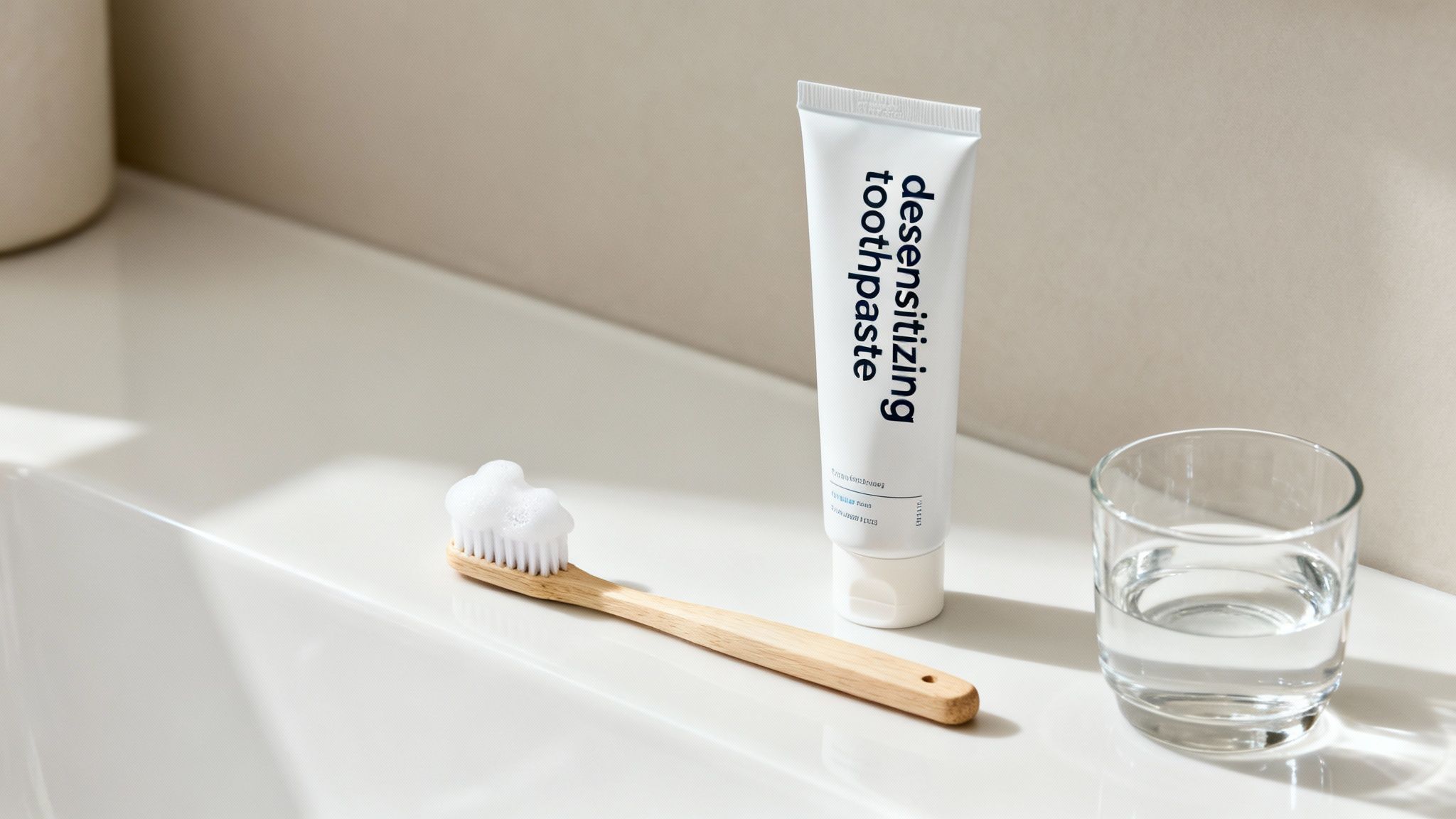
While a professional diagnosis is the only way to find a permanent solution, you can start managing the discomfort right now with a few simple, effective changes at home. These strategies are your first line of defense to get immediate relief and protect your teeth from future flare-ups.
The key to managing sensitivity at home is to build a routine that soothes irritated nerves and protects vulnerable enamel. Here’s a comparison of the most effective strategies you can start using today.
These small adjustments work together to create a powerful defense system for your teeth, turning down the volume on that painful sensitivity.
One of the biggest, and most surprising, causes of sensitivity is brushing too hard. Many people think scrubbing harder means getting teeth cleaner, but it’s actually incredibly counterproductive.
Aggressive brushing with a hard-bristled brush wears down enamel and can cause your gums to recede, exposing the ultra-sensitive roots. The fix is simple: switch your tools and your technique. A soft-bristled toothbrush is non-negotiable. When you brush, use gentle, circular motions.
Remember, plaque is soft and sticky. You don't need brute force to remove it. A gentle touch is all it takes to get your teeth clean while keeping your enamel and gums intact for the long haul.
The toothpaste aisle can be overwhelming, but for sensitive teeth, the choice is clear: you need a desensitizing toothpaste. These products contain specific active ingredients designed to tackle the problem directly.
Most work in one of two ways:
For these toothpastes to be effective, you have to use them consistently. It often takes a few weeks of daily use to really feel the full benefits as the protective effect builds up over time.
What you eat and drink has a massive impact on your enamel. Acid is enamel's worst enemy, and our modern diets are often full of it.
Making a few small tweaks can make a huge difference in protecting your teeth:
These simple habits are fantastic for your overall oral health, not just sensitivity. By combining these at-home tactics, you can build a powerful defense against the causes of tooth sensitivity to cold.
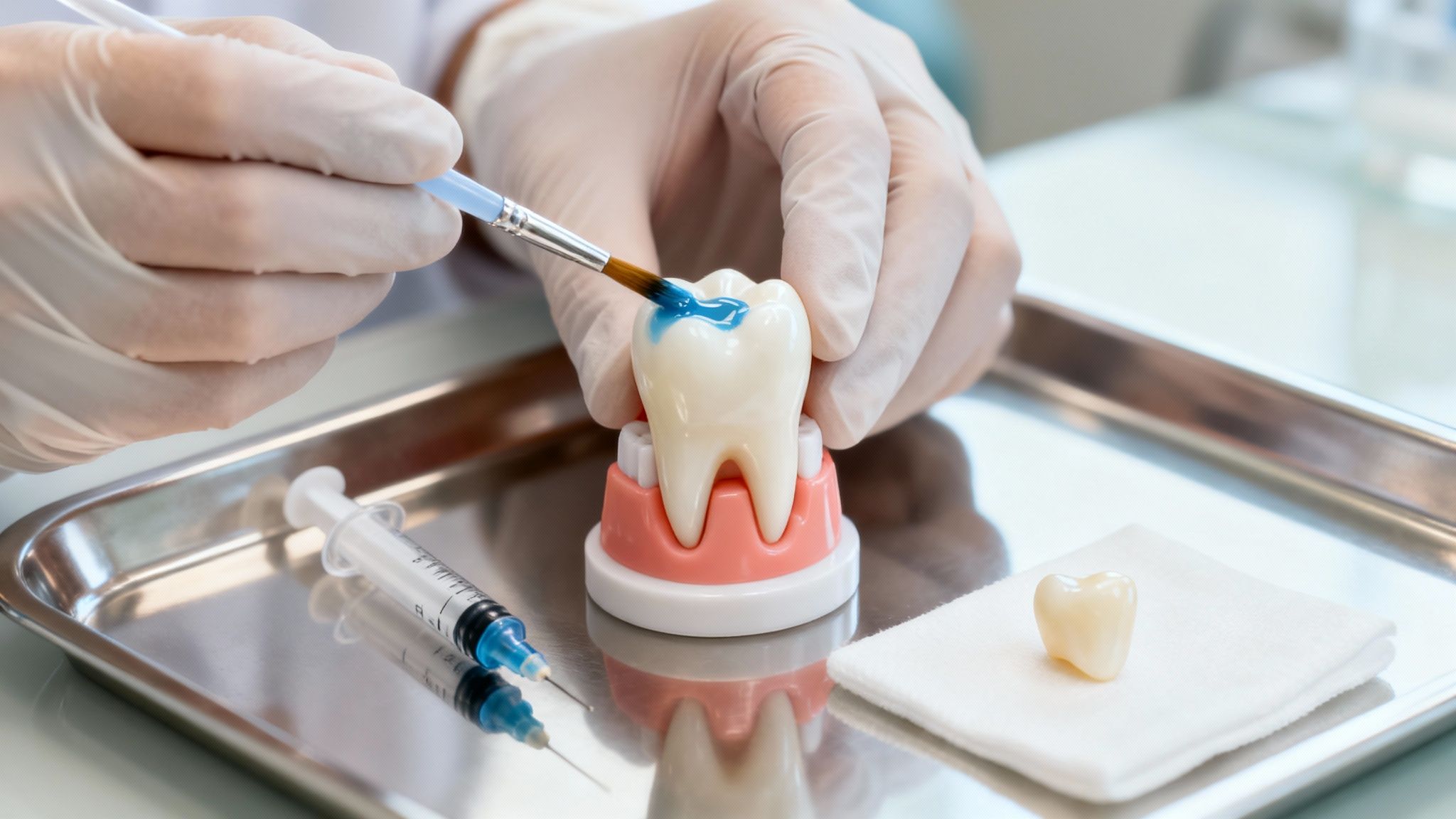
When home remedies aren't enough, your dentist has a range of professional treatments designed to provide lasting relief. These in-office procedures go beyond simply managing the symptoms—they address the underlying cause of the problem to build a powerful, long-term defense against that painful jolt of cold.
For many people, the first line of professional defense is a simple, non-invasive treatment. If your sensitivity stems from mild enamel wear or exposed roots, it can often be managed with a quick and painless in-office application.
Professional treatments are about more than just a temporary patch. By targeting the specific cause, your dentist can build a long-term barrier against the pain, letting you get back to enjoying ice cream and cold drinks without wincing.
Sometimes, sensitivity is a sign of a deeper structural problem that needs a more comprehensive solution. In these cases, restorative procedures are the answer. They’re designed to repair the tooth, seal it off completely from irritants, and restore its full strength and function.
If a cavity is creating that sharp pain, a simple filling is usually all it takes. Once the decay is removed and the tooth is sealed, that direct pathway to the nerve is closed off for good.
For a tooth that’s cracked, badly damaged, or has a large, failing filling, a dental crown is a much more robust solution. A crown is like a custom-made helmet that fits over the entire tooth, protecting it from temperature extremes and biting forces. Learning what is a dental crown procedure can help you feel more comfortable with this common and highly effective treatment.
In situations where gum recession is the main issue, a gum graft might be the best option. This surgical procedure involves carefully placing a small piece of tissue over the exposed root, which restores your gumline’s natural, protective seal.
Finally, if the sensitivity is severe, throbbing, and constant, it could mean the tooth's nerve is inflamed or infected. When this happens, root canal therapy is the definitive treatment. It gently removes the damaged nerve, resolving the pain right at its source while letting you keep your natural tooth.
Even after understanding the causes and treatments for cold sensitivity, specific questions often arise. Here are clear, straightforward answers to some of the most common ones.
Only in very specific situations. If you’ve just had a dental cleaning or a whitening treatment, it’s common to feel temporary sensitivity for a few days as the tooth recovers.
However, if your sensitivity is from a structural issue like enamel erosion, a cavity, or receding gums, it will not resolve by itself. These conditions require professional intervention to prevent them from getting worse and to provide lasting relief.
When the zing is isolated to a single tooth, it strongly suggests a localized problem rather than widespread enamel wear.
The usual suspects for single-tooth sensitivity are:
Yes, temporary sensitivity is a very common and expected side effect of professional teeth whitening. The peroxide agents used to lift stains also make your enamel slightly more porous for a short period.
This allows cold to travel through the tiny tubules in your dentin much more easily. The good news is this discomfort usually fades within 48 hours as your enamel naturally rehydrates and remineralizes.
Actionable Tip: Use a desensitizing toothpaste for a week or two before and after your whitening treatment. This can help "pre-soothe" the nerve and block those tubules, making the experience much more comfortable.
Most sensitivity is a nuisance, not an emergency. However, you should see a dentist right away if your sensitivity is severe, lasts for more than 30 seconds after the cold is gone, or is paired with a spontaneous, throbbing ache.
Other warning signs that demand urgent attention include any swelling in your gums or face, or a persistent bad taste in your mouth. These could point to a serious problem like a deep cavity, a tooth abscess, or a major crack that needs immediate treatment to save the tooth.
Managing tooth sensitivity always starts with figuring out why it’s happening. At Clayton Dental Studio, Dr. Navneet Kamboj and our team use modern diagnostics to pinpoint the exact reason for your discomfort and create a personalized plan to bring you relief. If you're tired of wincing every time you open the fridge, schedule your appointment today at https://www.claytondentalstudio.com.