

Book Your Appointment Today!
Our staff will reach out to you shortly
Thank you! Your submission has been received!
Oops! Something went wrong while submitting the form.


Spotting pink on your toothbrush or in the sink can be unsettling, but it's a common signal from your body. In most cases, bleeding gums are not a dental emergency. Instead, they’re usually pointing to one specific, and very treatable, issue: gingivitis.
This is the earliest stage of gum disease, and it’s widespread, affecting over half of all adults in the U.S.
The main culprit behind gingivitis is almost always plaque—a sticky, invisible film of bacteria that builds up on your teeth every day.
When plaque isn't removed, it irritates the delicate tissue at your gumline, triggering inflammation. This makes your gums tender, swollen, and prone to bleeding when you brush or floss. Think of it like a splinter in your finger; the area becomes red and sore until the irritant is removed.
While plaque is the primary offender, a few other factors can increase the likelihood of bleeding gums. Identifying the root cause helps you choose the most effective action.
The best news? Gingivitis is completely reversible with consistent care. Your gums aren't bleeding without reason—they’re sending a clear signal to improve your oral hygiene routine.
If you notice bleeding gums, you don't have to wait for it to stop on its own. There are simple, effective steps you can take at home to get immediate relief and start the healing process.
The table below outlines specific, dentist-approved actions to take the moment you see blood.
Remember, these are first-aid measures. The most powerful long-term solution is consistent removal of the plaque that causes the problem. You can learn more about what to look for in our guide on how to know if your gums are healthy.
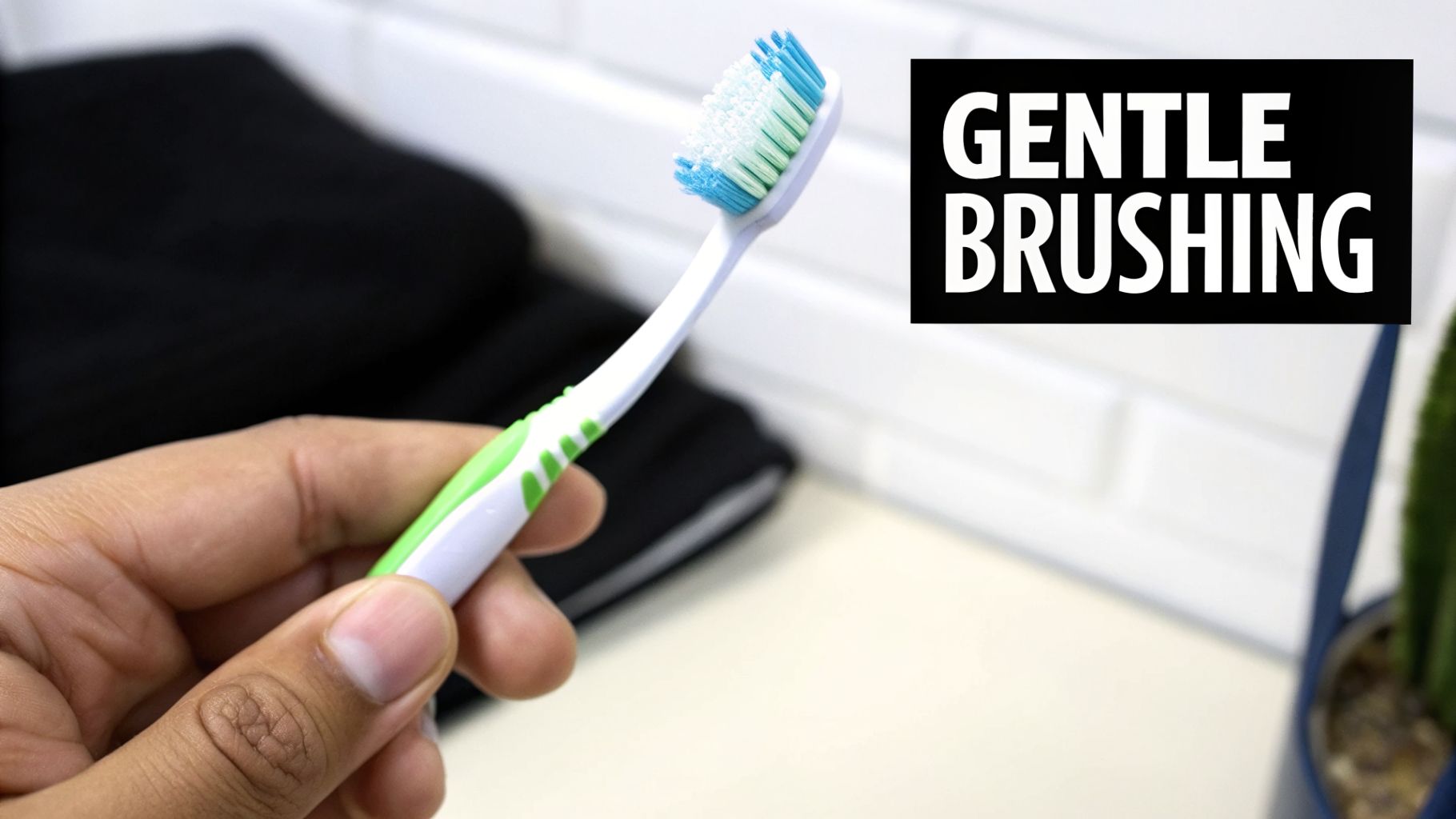
While rinses offer quick relief, the real, lasting solution for bleeding gums lies in your daily habits. The single most impactful action you can take is to perfect your brushing and flossing technique. This isn't about scrubbing harder—it's about being smarter and gentler to remove plaque without aggravating your gums.
Your toothbrush and floss are your primary defense against the bacteria causing inflammation. But using them incorrectly can make things worse. It’s like trying to clean a silk shirt with a scrub brush; you’ll damage the delicate fabric. The same principle applies to aggressive brushing on sensitive gum tissue.
The goal is to transform a daily chore into a targeted, healing practice. Let’s break down the exact techniques that will make a significant difference.
Effective brushing is about technique, not force. A common mistake is brushing too hard with the bristles held flat against the teeth. This approach misses the most critical area—the gumline, where plaque accumulates.
First, always use a soft-bristled toothbrush. Position the bristles at a 45-degree angle to your teeth, aiming them directly where the teeth and gums meet. This specific angle allows the bristles to gently sweep just underneath the gum's edge, clearing out the plaque that causes irritation and bleeding.
Use short, gentle, circular motions on every tooth. The sensation should be like massaging your gums, not scrubbing a floor. This method is far more effective at removing plaque and is essential for allowing inflamed gums to heal.
Flossing is often where people first notice blood, and their instinct is to stop. This is the exact opposite of what your gums need. Seeing blood when you floss is a clear sign that plaque is trapped between your teeth, and removing it is the only way to break the cycle of inflammation.
However, technique is critical. Snapping the floss down between your teeth can cut or bruise your gums, making bleeding worse.
If you find traditional string floss difficult or painful, do not give up on cleaning between your teeth. Modern tools are available that are just as effective and often gentler.
A water flosser, for example, is an excellent alternative. It uses a targeted stream of water to flush plaque and food particles from between teeth and below the gumline. It's particularly helpful for people with very sensitive gums, braces, or complex dental work.
Regardless of the tool you choose, cleaning between your teeth daily is fundamental to building strong, resilient gums. While these home care habits are crucial, they work best when combined with regular professional care. You can learn more about getting a professional dental cleaning in Humble, TX to restore your gum health.

Once you've optimized your brushing and flossing routine, you can incorporate natural remedies to further support gum health. Certain traditional practices are now being validated by scientific research for their ability to calm inflammation and combat the bacteria that cause gingivitis.
It’s crucial to view these as supplemental aids, not replacements for daily oral hygiene. They work in tandem with your habits to give your gums an extra healing boost. Let's review a few options with scientific backing and discuss how to use them safely.
Oil pulling is an ancient Ayurvedic practice that has gained popularity for its oral health benefits. The method involves swishing oil in your mouth for an extended period to "pull" out plaque and bacteria.
Coconut oil is the most common choice, primarily due to its high concentration of lauric acid, a compound with known antimicrobial and anti-inflammatory properties. Studies have shown that daily oil pulling can significantly reduce plaque and the signs of gingivitis, making it a sound addition to an oral care regimen.
Here’s the step-by-step guide:
A key reminder: oil pulling is a supportive practice. It does not replace brushing and flossing, which are essential for physically removing plaque from your teeth.
While a rinse benefits your entire mouth, sometimes inflamed gums need a more direct approach. Applying certain natural compounds directly to sore spots can provide soothing relief and target bacteria where inflammation is most severe.
These applications deliver a concentrated dose of benefits to irritated areas. Always dilute them properly and perform a patch test on a small area first to check for sensitivity.
Clove oil has a long history in dentistry. It contains eugenol, a powerful natural antiseptic and analgesic (pain reliever). It can help numb soreness and reduce bacteria on your gums.
Known for soothing sunburns, aloe vera's calming and anti-inflammatory properties are equally beneficial for irritated gums. Research suggests it can be as effective as traditional antiseptic mouthwashes in reducing gum bleeding and plaque.
Think of these remedies as part of a comprehensive strategy. Combining a solid daily hygiene routine with these evidence-backed natural solutions creates a powerful defense against the root causes of bleeding gums.
While we focus heavily on brushing and flossing, your diet plays a critical role in your body's healing capacity. Good nutrition is the other half of the equation. While proper oral hygiene addresses the problem externally, a nutrient-rich diet helps stop bleeding gums from the inside out.
The principle is straightforward: sugary snacks and highly processed foods fuel the harmful bacteria that cause gingivitis. They create an acidic, inflammatory environment where plaque thrives, leading to irritation and bleeding. Conversely, whole, nutrient-dense foods provide your body with the tools it needs to fight inflammation, repair tissue, and maintain a healthy oral environment.
For gum health, two vitamins are indispensable: Vitamin C and Vitamin K. Deficiencies in either can result in gums that bleed more easily and heal more slowly.
Ensuring your diet is rich in these nutrients provides your body with the resources to combat gingivitis and build healthier, more durable gums.
You don't need a complete dietary overhaul overnight. Simply incorporating specific foods into your daily meals can make a significant impact on your oral health.
The goal is to prioritize whole, unprocessed foods that are naturally high in vitamins and anti-inflammatory compounds.
Your diet is one of the most powerful, controllable factors in your journey toward healthier gums. Every meal is an opportunity to either feed inflammation or fight it.
To simplify this, we've created a quick reference guide. Use it to help you choose foods that support your gums and identify those that may be hindering your progress.
It can be that simple. A gum-friendly snack could be a handful of almonds and a small orange. For dinner, add a side of steamed spinach or kale. These small, consistent changes provide a steady supply of the nutrients your gums need, forming a core part of your strategy for how to stop bleeding gums naturally.
Think of it like a cut on your finger: a minor scrape heals with basic care, but if it continues to bleed or shows signs of infection, you see a doctor. The same logic applies to your gums. Ignoring these warning signs allows simple gingivitis to advance to periodontitis, a more severe form of gum disease that causes permanent damage to the teeth and jawbone.
If you experience any of the following symptoms along with bleeding gums, schedule a dental appointment immediately. These are not "wait-and-see" issues; they are clear indicators that an underlying infection is worsening and requires professional intervention.
Key warning signs to watch for include:
Ignoring these symptoms is not an option if you want to preserve your long-term dental health. The progression from gingivitis to periodontitis is where irreversible tissue and bone loss begins.
This decision tree provides a visual guide on how your daily food choices can either support or undermine your gum health.
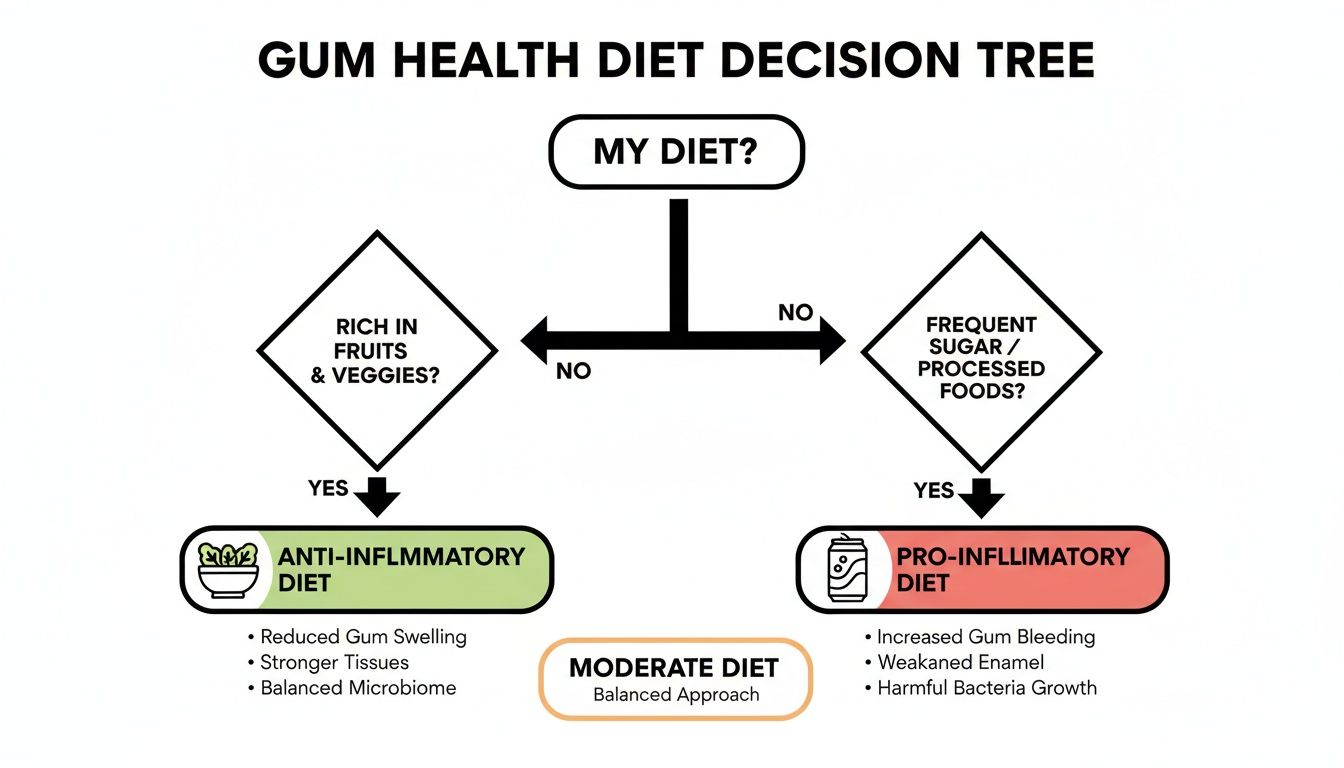
The main takeaway is clear: consistently choosing anti-inflammatory foods builds a strong foundation for healthy gums. Conversely, a diet high in pro-inflammatory foods creates an ideal environment for gum disease to develop and progress.
If you are already noticing gum recession, do not ignore it. It is a sign that requires professional attention. To understand what treatment might involve, you can read our guide on what to expect with gum graft surgery before and after. Making an informed decision now is the best way to protect your smile for the future.
It's one thing to read about improving gum health, but another to apply it to your daily life. You may have questions as you start a new routine, wondering what's normal and what isn't. Let's address some of the most common questions we hear from patients about bleeding gums.
This is the most frequent question we receive. While it is incredibly common—especially if you're resuming a consistent flossing habit—it is not "normal." Think of it as an early warning from your gums, indicating that inflammation (gingivitis) is present.
The good news is that with gentle, consistent daily flossing, the bleeding should subside within one to two weeks as you remove plaque and allow your gums to heal. If the bleeding persists beyond that period, it’s a clear sign you should schedule a check-up.
Yes, it absolutely can—a connection many people overlook. When you're under high stress, your body produces more of the hormone cortisol, which increases inflammation throughout the body, including your gums. This can make them more sensitive and prone to bleeding.
Stress also impacts our behavior. When we're overwhelmed, daily routines like brushing and flossing are often neglected. This creates a perfect storm for plaque to build up and irritate your gums. Managing stress is a powerful, though indirect, way to support your oral health.
If you are diligent with your new routine—improved brushing, daily flossing, and a healthier diet—you should see a noticeable improvement within one to two weeks. Most mild cases of gingivitis respond well and can resolve in this timeframe.
However, the key is this: if you see no change, or if the irritation worsens, do not wait longer. Persistent bleeding is a sign that the problem has progressed beyond what home care can fix and requires professional evaluation.
For many people, an electric toothbrush is a game-changer. Its primary advantage isn't just power, but the technology designed to protect your gums.
If you are struggling with bleeding gums, switching to an electric toothbrush with a pressure sensor is one of the best tools you can add to your arsenal. It helps ensure you are cleaning effectively yet gently.
Navigating the journey to healthier gums can feel overwhelming, but you don't have to do it alone. If your bleeding gums persist or you have concerns, the team at Clayton Dental Studio is here to provide a clear diagnosis and a personalized care plan. Schedule your compassionate, comprehensive evaluation today.