
Book Your Appointment Today!
Our staff will reach out to you shortly
Thank you! Your submission has been received!
Oops! Something went wrong while submitting the form.


If you've just moved to Katy, or you're finally replacing the dentist you never quite clicked with, the search can feel bigger than it should. You want a place that can see your child for a cleaning, help you with a cracked tooth before a weekend trip, and explain treatment clearly enough that you don't leave with unanswered questions.
That's what most families mean when they search for dental office katy tx. They aren't looking for a random name on a map. They're looking for a practice that feels steady, modern, and easy to trust from the first phone call forward.
Katy gives families options. A lot of them. Healthgrades lists 468 dentists within 10 miles of Katy, TX, which tells you two things at once. First, dental care is widely available here. Second, picking the right office isn't simple, because convenience alone won't tell you how a practice communicates, how it handles nervous patients, or whether it can care for your whole household over time.
A nearby office is helpful. It isn't enough.
One family might need Saturday availability because both parents work during the week. Another might care most about a dentist who explains every option before starting treatment. A retiree may want a practice that's comfortable managing worn restorations, gum issues, and replacement planning without rushing into the most expensive fix.
A strong dental home usually has these traits:
Practical rule: Don't choose a dentist based only on the first available appointment. Choose the office you'd trust when something hurts, when your child is anxious, and when you need a second opinion that feels honest.
Most new patients don't arrive thinking about crown margins or bite balance. They arrive asking simpler questions. Will this office judge me because I'm overdue? Will someone explain the bill? Can I bring my kids here too? Will they fit me in if something goes wrong?
That's why a dependable practice focuses on relationships, not one-off visits. The best offices in a crowded area earn trust by being predictable in the right ways. They answer questions directly, they don't pressure patients, and they build care around real life.
If you're comparing options, this short guide on how to choose a good dentist is a useful place to start. It helps narrow the search beyond star ratings and office photos.
Here's the simple truth. In a community with many choices, the right dental office is the one that makes your care feel less confusing, less stressful, and easier to maintain year after year.
A family dental office works best when it solves more problems than it creates. If every chipped tooth, whitening question, or worn filling means another referral across town, care gets fragmented fast. Most patients want one familiar office that can handle routine care, smile improvements, and common repairs without turning every visit into a new search.
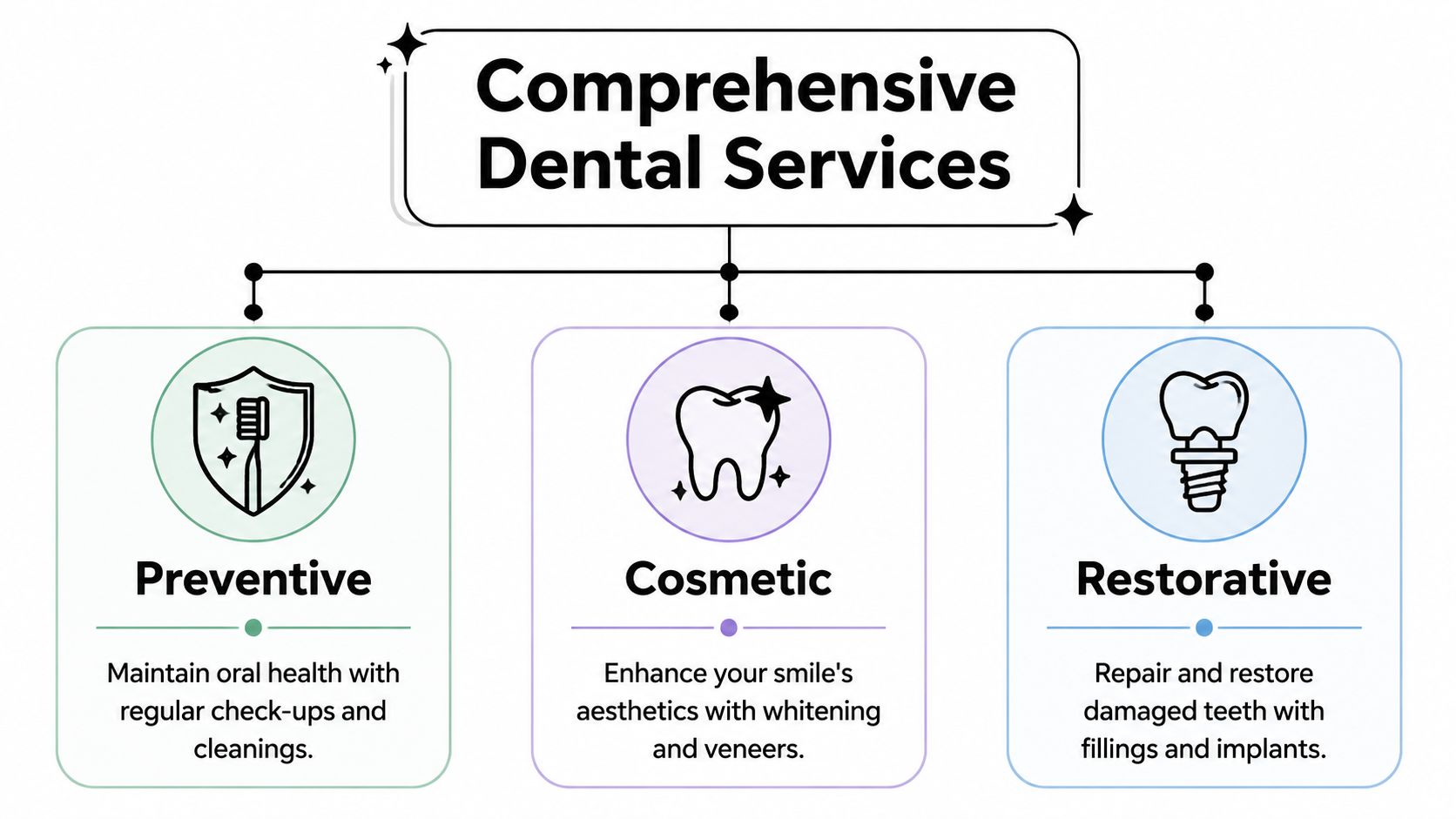
Preventive dentistry is where good long-term outcomes start. That means exams, professional cleanings, digital imaging when needed, cavity detection, gum health monitoring, and practical home-care guidance that matches the patient sitting in the chair.
For children, preventive care builds comfort and routine. For adults, it often catches wear, decay, and inflammation before they become painful or expensive. For busy families, preventive care matters because it reduces disruption. A short, planned visit is easier than an urgent one.
A strong preventive visit should do more than “clean teeth.” It should answer questions like these:
Cosmetic dentistry gets oversimplified. Patients often think it's only about whiter teeth, but the primary aim is balance. Shade, shape, symmetry, and bite all affect whether a result looks polished or artificial.
That may include whitening, bonding, veneers, contouring, or aligner-based smile improvements. The best cosmetic planning starts with restraint. Not every stain needs veneers. Not every small chip needs a major restoration. A careful dentist matches the treatment to the reason the patient is unhappy with their smile.
Good cosmetic work doesn't announce itself. It lets people notice that you look better without knowing exactly why.
Restorative treatment repairs damage and brings teeth back into daily use. That includes fillings, crowns, bridges, implant planning, and replacing old dental work that no longer seals or supports the bite well.
Technology can significantly impact dental practices. As one Katy-area office notes, “Our practice utilizes CEREC® CAD/CAM technology, which allows for the design and creation of high-quality ceramic crowns in a single appointment, eliminating the need for temporary crowns and multiple visits.” That matters because traditional crown workflows can mean extra appointments, temporary restorations, and more time away from work or school.
Here's how patients often think about the three pillars of care:
| Care type | Main goal | Common patient benefit |
|---|---|---|
| Preventive | Maintain health and catch issues early | Fewer surprises and more predictable care |
| Cosmetic | Improve smile appearance | Better confidence with a natural look |
| Restorative | Repair damaged or missing tooth structure | Stronger chewing function and comfort |
Families looking for an office that can support each of those needs in one setting often start with a family dentist in the Houston area. It's the most practical model for patients who want continuity, especially when different members of the household need very different types of care.
The first visit matters because it sets the tone. A patient usually decides very quickly whether an office feels calm, rushed, judgmental, or easy to talk to. That reaction isn't trivial. It affects whether people return for treatment, whether they ask questions, and whether they put off care again after one uncomfortable experience.

A smooth first appointment starts before you sit in the chair. Paperwork, insurance details, health history, medications, and past dental concerns all shape how the team plans the visit. If you like filling things out in advance, digital tools and custom patient intake forms can make that process simpler and more organized.
At the front desk, the best teams do something small but important. They slow the pace enough for you to ask basic questions. New patients often need directions about insurance cards, records from a prior office, or how long they should expect the visit to take. A little clarity here lowers anxiety right away.
Once you're brought back, most first visits include:
Many patients still expect X-rays to be slow and awkward because they remember older systems. Digital imaging has changed that workflow significantly. A Katy-area office explains it this way: “Our digital X-ray systems are not only safer by reducing radiation exposure compared to traditional film but also faster, allowing our team to review findings with you immediately and shorten your overall appointment time.”
That immediate review matters. When a dentist can show you a cracked filling, bone levels, or a cavity on a screen right away, the discussion becomes clearer and less abstract. Patients usually feel more comfortable saying yes to treatment when they understand what the dentist is seeing.
The right first visit doesn't feel like a lecture. It feels like a conversation with structure.
A helpful dentist explains findings in plain language, separates urgent issues from optional upgrades, and tells you when no treatment is needed. If you're nervous, the office should acknowledge it without making it awkward. If you've been away from the dentist for years, the tone should stay practical and respectful.
Look for these signals:
A first visit should leave you informed, not cornered. If you understand your condition and your options, the office is doing its job well.
You're halfway through lunch in Katy, bite down, and a tooth cracks. Or your child wakes up with facial swelling before school. In those moments, people want two things right away. An answer on whether it can wait, and a same-day plan if it can't.

Some dental problems are uncomfortable but stable. Others can worsen within hours. Pain that keeps building, visible swelling, bleeding that does not stop, a knocked-out tooth, trauma to the mouth, or a broken tooth with exposed inner structure should be treated the same day whenever possible.
A few quick examples help:
The goal is simple. Relieve pain, control infection, protect the tooth if it can still be saved, and keep a manageable problem from turning into a root canal, extraction, or hospital visit.
A good emergency visit is focused. We start by finding the source of the problem, not by trying to do every piece of dentistry at once. That often means a brief exam, any imaging needed to confirm the cause, and a discussion of what needs to happen today versus what can wait a few days.
That distinction matters. Some patients need treatment the same day to stop pain or remove infection. Others do better with a stabilizing step first, such as smoothing a sharp edge, recementing a temporary solution, prescribing medication when appropriate, or placing a protective restoration until the full repair is scheduled.
This is also where transparency matters most. Patients are often in pain, short on time, and worried about cost. The office should explain the immediate priority, the likely next step, and any trade-offs before treatment begins.
The front desk can help faster when the first call is specific.
Be ready to share:
Behind the scenes, same-day emergency access depends on smart systems and protected time in the schedule. Many practices use tools such as healthcare staff scheduling solutions to keep room for urgent visits without derailing the whole day.
If you want a practical overview of what to do before you get to the office, this guide on emergency dental care near me is a helpful reference.
A same-day appointment should leave you with clarity. You should know what happened, what was done today, what comes next, and what symptoms mean you should call back right away.
You finally set aside time to fix a tooth that has been bothering you, then a new worry shows up. What will this cost, and will anyone explain it before treatment starts? In our Katy office, that conversation happens early because families make better decisions when the numbers are clear.
Cost is one of the main reasons people postpone care. Some patients do not have insurance. Others have benefits but are not sure what the plan pays for. The stressful part is rarely the bill alone. It is the fear of agreeing to treatment without understanding the full picture.

Many family practices in Katy try to make care accessible by accepting a wide range of insurance plans, seeing both kids and adults, and offering hours that work for school and work schedules. That helps, but insurance is only one part of affordability. A helpful front desk team should verify benefits, explain what is likely covered, and tell you where estimates can change before treatment begins.
If you have dental insurance, ask these questions before you schedule larger treatment:
| Question | Why it matters |
|---|---|
| Is my plan in network or out of network? | This affects your expected share of the cost and how claims are processed. |
| Can you give me a pre-treatment estimate? | An estimate helps you compare timing, phases, and out-of-pocket costs. |
| Do you recommend doing this in stages? | Phasing treatment can help when benefits have annual limits or when family budgets are tight. |
The best financial discussion is specific. You should leave knowing what insurance may contribute, what it probably will not, and whether there is a simpler short-term option if you need time to plan.
Patients without employer dental benefits often want something more predictable than paying full fee for every visit. An in-house membership plan can be a good fit in that situation. These plans often include preventive care and reduced fees on many additional services, which makes routine visits easier to keep up with.
They are not the same as insurance. That matters. Insurance may help with treatment done outside the practice, while a membership plan is usually tied to one office and designed to lower costs there. For families comparing both models, My Policy Quote's dental insurance guide is a useful starting point.
For larger cases, monthly financing can make good care possible without waiting too long. Many offices work with third-party options such as CareCredit or Cherry so patients can spread costs out over time. That can be helpful for crowns, implant steps, cosmetic cases, or a treatment plan that combines several procedures.
Financing works best when the office explains the trade-offs clearly.
I always tell patients the same thing. A financing option should support the right treatment plan, not push someone into more dentistry than they need. In many cases, the smart choice is to phase care in a way that protects your health now and keeps the long-term plan manageable for your family.
Fit matters more. A short drive is convenient, but most patients stay with an office because communication is clear, scheduling works for the family, and treatment recommendations feel balanced.
Often, yes. A family-centered practice can usually manage preventive care for children, routine treatment for adults, cosmetic concerns, and common restorative needs in one setting. That makes scheduling easier and helps everyone build comfort with the same team.
It shouldn't be. A good office focuses on the current condition of your mouth and the next right step. Judgment doesn't help patients move forward. Clear explanations and a realistic plan do.
Say that early. Dental anxiety is common, and it changes how the team should communicate with you. Many patients do better when the dentist explains each step before starting, keeps the pace slower, and prioritizes the most urgent need first instead of trying to do everything at once.
Call the new office and ask what they need. In most cases, the team will tell you whether they want recent X-rays, chart notes, or treatment history, and they'll explain how to request them from your previous provider.
Usually, a dentist is the better first call for a dental problem. As one Katy emergency dentistry page notes, many patients go to the emergency room for dental pain, but EDs can typically only offer temporary pain relief and not definitive dental treatment. Our same-day emergency appointments are designed to provide a real solution and prevent costly, ineffective hospital visits.
If the problem is dental, the fastest route to relief is usually a dental office prepared to diagnose and treat it that day.
Keep it simple and practical:
Those questions tell you a lot about how organized and patient-focused the office really is.
If you want a dental home that combines modern technology, same-day help for urgent problems, and a straightforward approach to family care, Clayton Dental Studio is a strong place to start. The team serves the greater Houston area with compassionate, complete dentistry designed to make care comfortable, understandable, and easier to afford.