
Ever wake up with a sore jaw, a dull headache, or teeth that just feel… sensitive? If so, you might be one of the millions of people who grind their teeth at night. This common condition, known as sleep bruxism, is an involuntary habit often fueled by stress, your genetics, and even your daily routines.
Ever wake up with a sore jaw, a dull headache, or teeth that just feel… sensitive? If so, you might be one of the millions of people who grind their teeth at night. This common condition, known as sleep bruxism, is an involuntary habit often fueled by stress, your genetics, and even your daily routines.
The Silent Habit Damaging Your Smile
So what exactly is teeth grinding? It's a high-intensity, unconscious workout for your jaw muscles while you sleep. This clenching and grinding puts an incredible amount of pressure on your teeth—far more than you’d ever use for normal chewing—which can cause significant wear and tear over time.
While you’re not aware of it happening, the triggers are often clear once you know what to look for. The good news is that understanding these root causes is the first real step toward protecting your smile from further damage.
Unpacking the Primary Triggers
There’s no single, simple answer for what causes teeth grinding at night. Instead, it’s usually a mix of factors that all contribute to this subconscious muscle activity. Most of the culprits fall into three main buckets: psychological, biological, and lifestyle.
Before we dive into the details, this summary table gives you a quick overview of the main factors at play.
Key Causes of Nighttime Teeth Grinding at a Glance
| Cause Category | Primary Drivers | Common Examples | | --- | --- | --- | | Psychological | Emotional and mental state | Stress, anxiety, frustration, tension, competitive personality types | | Biological | Physical and genetic predispositions | Family history (genetics), sleep disorders like sleep apnea, misaligned bite | | Lifestyle | Daily habits and substances | Caffeine (coffee, tea, soda), alcohol consumption, smoking, certain medications |
This table helps illustrate how different parts of your life can come together to create the perfect storm for bruxism. Now, let’s explore the biggest one.
This diagram helps visualize how these different causes are all connected, feeding into the central problem of nighttime grinding.
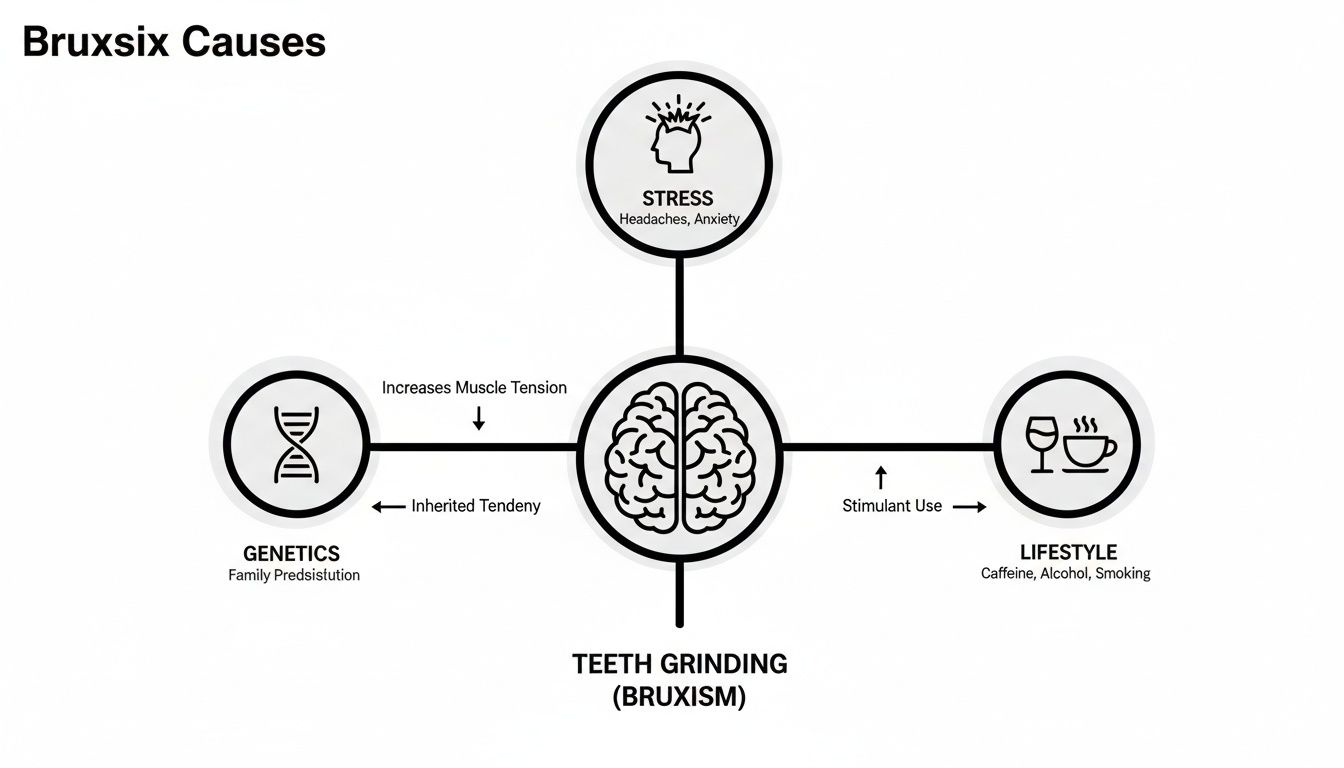
As you can see, things like stress, genetics, and certain habits all play a role in triggering this subconscious behavior.
Stress as the Leading Factor
If we had to point to just one primary cause, it would be stress. Stress and anxiety are the most common triggers for sleep bruxism. When life gets intense, our bodies often react by tensing up, and that tension has to go somewhere. For many, it comes out in the jaw during sleep.
The link became incredibly clear during the COVID-19 pandemic. A 2021 survey revealed that over 70% of dentists saw an increase in patients with clenching and grinding issues. This was paired with a 60% rise in related problems like cracked teeth and jaw pain. When your "fight-or-flight" response is stuck in the "on" position, that tension carries right over into your sleep. You can read the full research about these findings to see the direct impact.
Key Insight: Nighttime teeth grinding isn't just a dental issue; it's often a physical sign of what's going on in your head. Your jaw becomes an outlet for the stress and anxiety you carry throughout the day.
But stress isn't the whole story. Other factors often contribute, including:
- Genetics: Bruxism definitely runs in families. If one of your parents or siblings grinds their teeth, you have a much higher chance of doing it, too.
- Lifestyle Choices: Stimulants like caffeine and depressants like alcohol can interfere with your natural sleep cycles and rev up muscle activity, making grinding more likely.
- Sleep Disorders: Conditions like sleep apnea are strongly connected to bruxism. Grinding can actually be the body's unconscious attempt to tighten the throat muscles and reopen a blocked airway.
How Stress And Anxiety Fuel Nighttime Grinding
If you've ever wondered what causes teeth grinding at night, the most common culprit is something we all deal with: stress. Think of stress and anxiety as the primary triggers for sleep bruxism. They wind up your jaw muscles, starting an unconscious cycle of clenching and grinding that continues long after you've fallen asleep.
Your body’s reaction to stress is a built-in alarm system—the classic "fight-or-flight" response. When you’re facing a tight work deadline or a difficult conversation, your body floods with hormones that get you ready for action. Your heart races, your breathing quickens, and your muscles tense up, especially the powerful masseter muscles in your jaw.
In short bursts, this is a brilliant survival tool. The problem is that modern life often leaves that alarm blaring all day. The tension from financial worries, family disagreements, or even just a frustrating commute doesn't just disappear when you go to bed. Instead, it finds a physical release, and for millions of people, that outlet is the tremendous pressure of a clenched jaw.
The Mind-Body Connection in Your Jaw
The link between what’s happening in your head and the tension in your body is incredibly direct. You might catch yourself clenching your jaw during a tense meeting or while you’re stuck in traffic. When you’re asleep, that same habit carries on, but now there’s no conscious control to tell it to stop.
This nightly jaw workout can exert a shocking amount of force. The pressure from sleep bruxism is often much greater than the force you use to chew food, which is why it can do so much damage over the years.
Actionable Insight: Your jaw often acts like a pressure release valve for pent-up stress. The emotional tension you feel during the day can directly translate into physical tension in your jaw muscles at night, leading to grinding.
This connection also helps explain why certain personality types are more at risk. People who are naturally more anxious, competitive, or even aggressive tend to hold more tension in their bodies. If that sounds familiar, you might be more likely to experience bruxism as your body’s default response to pressure.
Actionable Stress Management for Jaw Relief
Since stress is the main fuel for nighttime grinding, managing it is your best first line of defense. The goal is to quiet that internal alarm system before bed, giving your jaw muscles a chance to truly relax. Bringing simple stress-reducing activities into your daily routine can make a world of difference.
Here are a few effective techniques to get you started:
- Mindfulness and Meditation: Just 10-15 minutes of a guided meditation or some deep breathing exercises before you sleep can calm your entire nervous system. This helps shift your body from a state of high alert to one of rest.
- Regular Physical Exercise: Activities like jogging, yoga, or even a brisk walk are fantastic for burning off stress hormones and releasing physical tension. Just try to avoid any intense workouts right before you turn in for the night.
- Creating a Calming Bedtime Routine: Signal to your body that it's time to wind down. Dim the lights, put away your phone an hour before sleep, listen to calming music, or take a warm bath. This routine helps your mind disengage from the day's worries.
By actively working to lower your daily stress, you aren't just helping your mind—you're directly protecting your teeth from the silent, destructive habit of grinding at night.
Exploring the Genetic and Biological Links to Bruxism
While stress is a huge factor, it doesn’t tell the whole story when it comes to teeth grinding. For many people, the habit is actually wired into their biology and family history. Have you ever been told you have a habit that “runs in the family”? It turns out, sleep bruxism is often one of them.
If a parent or sibling grinds their teeth, you’re far more likely to do it, too. This strong hereditary connection suggests our genes have a lot to say about this unconscious behavior. Researchers think this might come down to inherited traits that influence everything from how our jaw muscles fire to the very structure of our sleep cycles.
Is Teeth Grinding in Your DNA?
The evidence for a genetic link is convincing. It’s more than just a coincidence when multiple people in the same family grind their teeth. You can think of it like inheriting your eye color or hair type—you might also inherit a tendency for how your jaw muscles act while you're asleep.
This genetic component is a powerful risk factor, separate from your lifestyle or stress levels. In fact, some studies show that up to 50% of people with sleep bruxism have a close family member who also has it. The Sleep Foundation points to this as a primary factor, noting that it changes with age: about 15% of adolescents grind their teeth, which drops to 8% in middle-aged adults, and finally to just 3% in older adults.
Informative Insight: Your DNA can set the stage for teeth grinding. This means that even with a low-stress lifestyle, you might still be prone to bruxism simply because it's part of your genetic makeup.
Understanding this family connection is a critical piece of the puzzle. It helps explain why some people develop bruxism without any obvious psychological triggers and guides us toward the right long-term management strategies.
How a Misaligned Bite Triggers Grinding
Beyond genetics, another key biological cause is the physical structure of your mouth—specifically, your bite. The technical term for a bad bite is malocclusion, which is just another way of saying your upper and lower teeth don't fit together properly.
Imagine your jaw is constantly trying to find a comfortable, stable resting spot but never can. Ideally, your teeth should meet in a way that lets your jaw muscles completely relax. When they don’t, your body might try to "fix" the issue subconsciously by grinding your teeth together, as if it's trying to wear down the high spots to find a better fit.
This constant, involuntary hunt for a resting position can create a grinding reflex. It’s like a faulty light switch that keeps flicking your jaw muscles on all night. Several things can lead to a misaligned bite:
- Crooked or crowded teeth: When teeth aren't lined up correctly, they create interferences that stop your jaw from closing comfortably.
- Missing teeth: Gaps in your smile can cause the neighboring teeth to drift, throwing off the natural balance of your bite.
- An improperly shaped jaw: Sometimes, the issue lies in the underlying bone structure itself.
This is a huge reason why an early orthodontic evaluation can be so beneficial. Correcting these structural problems can do a lot more than just improve your smile’s appearance; it can help shut down a major biological trigger for bruxism. For anyone dealing with alignment issues, there are modern solutions. You might find our guide on how do clear aligners work helpful to understand one popular method. Getting to the root structural problem can bring lasting relief from the destructive forces of nighttime grinding.
Lifestyle Habits That Trigger Teeth Grinding
While your genetics and how you handle stress play a big part, your daily choices can also be a major reason for what causes teeth grinding at night. Think of it this way: certain habits can throw fuel on a fire, turning a minor tendency to clench into a really destructive, nightly problem. Once you understand these triggers, you can make simple changes that give your jaw a much-needed break.
Some things you eat and drink act like an accelerator for your nervous system, revving it up and making it tough to idle down for sleep. Stimulants are a prime example and a key culprit behind bruxism.
Caffeine: The Nervous System Activator
That morning cup of coffee or afternoon energy drink does a lot more than just wake you up—it puts your entire nervous system on high alert. Caffeine is a powerful stimulant, increasing brain activity and making your muscles more excitable. If it’s still in your system at bedtime, it can keep your jaw muscles from fully relaxing, making them far more likely to clench and grind.
And it’s not just coffee. Be mindful of the caffeine hiding in other things you might enjoy later in the day:
- Teas: Both black and green tea pack a surprising caffeine punch.
- Sodas: Many popular soft drinks are loaded with it.
- Chocolate: Dark chocolate, in particular, contains a noticeable amount of this stimulant.
If you’re a regular caffeine drinker, try to make your last cup an early afternoon one. This gives your body more than enough time to process it before you hit the pillow, which can seriously reduce tension in your jaw.
Alcohol and Its Impact on Sleep
A lot of people reach for a glass of wine or a beer to unwind, believing it helps them sleep better. And while alcohol might make you feel drowsy at first, it’s actually a major disruptor of your natural sleep cycle. It can help you doze off faster, but it actively prevents you from getting into those deep, restorative stages of sleep where your body truly repairs itself.
This kind of fragmented sleep is a huge trigger for bruxism. When your body is constantly shifting between lighter sleep stages, your muscle activity—including in your jaw—can ramp up. That "relaxing" nightcap could be the very thing forcing your jaw to work overtime all night long.
Actionable Insight: Alcohol can wreck your sleep quality, leading to more wake-ups and increased muscle activity that can make nighttime grinding much worse.
Try to limit alcohol, especially in the few hours before bed. Swapping it for a calming herbal tea is a great alternative that can improve your sleep and give your jaw a chance to finally rest.
The Overlooked Link Between Grinding and Sleep Apnea
One of the most critical—but frequently missed—causes of teeth grinding is its connection to obstructive sleep apnea (OSA). This is a serious condition where your breathing repeatedly stops and starts all night long because your airway becomes blocked. For some people, teeth grinding is actually the body’s subconscious rescue mission.
Here’s what’s happening: when the airway collapses, your brain senses the drop in oxygen and triggers an emergency response to open it back up. One of those responses is to thrust the jaw forward and tighten the throat muscles, an action that often involves powerful clenching and grinding. In this case, the bruxism isn't the real problem—it's a symptom of a much bigger breathing issue.
Catching this connection is vital. If you snore loudly, wake up gasping for air, or feel exhausted even after a full night’s sleep, you should be evaluated for sleep apnea. Often, treating the underlying breathing disorder makes the associated teeth grinding disappear. It’s a perfect example of why looking beyond just the teeth is so important for finding a true, lasting solution for your overall health.
Recognizing the Warning Signs of Bruxism
Figuring out why you grind your teeth is one piece of the puzzle, but recognizing the aftermath is just as important. Since sleep bruxism happens while you're completely unconscious, most people have no idea it’s even occurring. Instead, they wake up to the clues it leaves behind—some subtle, and some not-so-subtle.
Catching these warning signs early is your single best defense against lasting damage. While many symptoms can be mistaken for other problems, when they start showing up together, they often point directly to nighttime grinding.
The Damage Done to Your Teeth
The most direct evidence of bruxism is found right where the action happens: your teeth. The incredible force from clenching and grinding slowly but surely takes its toll. You can think of your tooth enamel like the tread on a tire—it’s designed to be tough, but it can't withstand that kind of constant, intense friction forever.
Over time, this grinding can lead to very real, visible changes:
- Flattened or Worn-Down Teeth: Your back molars might lose their natural, rolling hills and valleys, appearing unusually flat. You may also notice your front teeth looking shorter than they used to.
- Chipped or Fractured Teeth: The sheer force can cause tiny chips along the edges of your teeth. In more serious cases, it can even lead to cracks that need professional dental repair.
- Increased Tooth Sensitivity: As the protective outer layer of enamel wears away, the more sensitive inner layer, called dentin, becomes exposed. This is why you might feel a sharp twinge of pain when you eat or drink something hot, cold, or sweet.
It’s a gradual process, but the effects are cumulative and, unfortunately, permanent. The sooner you spot this wear and tear, the more of your natural tooth structure can be saved.
Physical Pains Beyond the Mouth
The impact of teeth grinding doesn't just stop at your smile. The powerful muscles doing all that work overnight are connected throughout your head and neck. When they’re constantly tensed, the strain radiates outward, which is why so many bruxism symptoms seem totally unrelated to your teeth at first glance.
Waking up with a dull headache or a sore, tired jaw is one of the biggest red flags for sleep bruxism. The constant muscle contraction puts immense stress on your temporomandibular joint (TMJ) and all the surrounding tissues, leading to widespread discomfort.
If you find yourself regularly waking up with any of the following, nighttime grinding could be the culprit:
- Dull Headaches: A persistent, nagging headache that seems to be centered in your temples is a classic sign.
- Sore Jaw Muscles: Your jaw might feel tired, tight, or achy, almost like you spent the entire night chewing a tough piece of steak.
- Earaches or Ringing: Your TMJ sits right next to your ear canal. When it gets inflamed, the tension can easily cause pain that feels like an earache or even contribute to tinnitus (a ringing sound in the ears).
- Neck and Shoulder Pain: That muscle tension doesn't stay in one place. It often travels down from the jaw, creating stiffness and soreness in your neck and upper back.
The Sign You Can't Spot Yourself
There’s one major warning sign that you’ll never be able to identify on your own: the sound. The scraping and grinding noises from sleep bruxism can be surprisingly loud, and it's often a sleeping partner who notices it first.
If someone has ever mentioned that you make grinding sounds in your sleep, take them seriously. It’s one of the most definitive clues that you're dealing with this condition.
To help put it all together, review this checklist to see if you're experiencing the common signs of nighttime teeth grinding.
Bruxism Symptom Checklist
Review this list to see if you're experiencing common signs of nighttime teeth grinding. If several of these seem familiar, it’s time to consult a dentist.
| Symptom Category | What to Look For | How It Feels or Appears | | --- | --- | --- | | Dental Signs | Worn enamel, flattened chewing surfaces, chips or cracks. | Teeth may look shorter or feel sensitive to temperature changes. | | Jaw-Related Pain | Soreness, tightness, or fatigue in the jaw muscles. | A tired or achy jaw upon waking; difficulty opening your mouth wide. | | Head and Face Pain | Dull headaches originating at the temples; pain around the ear. | A persistent, low-grade headache or an earache with no sign of infection. | | External Reports | A partner or family member hears grinding or clenching sounds. | Loud scraping or tapping noises while you are asleep. |
If a few of these points hit close to home, it’s a strong signal that you may be grinding your teeth. Because these symptoms can overlap with other health issues, a professional diagnosis is the only way to get a clear answer. Early detection is everything when it comes to stopping irreversible damage before it starts.
Your Action Plan for Finding Relief from Grinding
Once you recognize the warning signs of bruxism, it’s time to take action. The goal isn’t just to live with the symptoms—it’s to protect your smile from further harm and get to the bottom of the issue. Let's walk through the steps, from getting a proper diagnosis to exploring the best ways to find lasting relief.
Getting a professional diagnosis is your first, most important step. A dentist can perform a complete evaluation to confirm whether sleep bruxism is behind your jaw pain and headaches. This process is straightforward and gives us the clues needed to see the full picture.
How Your Dentist Diagnoses Bruxism
Dentists are trained to spot the evidence that teeth grinding leaves behind. Confirming bruxism and ruling out other issues usually involves a few key steps.
Your exam will likely include:
- A Visual Tooth Inspection: We'll look for the classic calling cards of bruxism, like flattened biting surfaces, tiny cracks in the enamel, or noticeable wear and tear.
- A Muscle and Jaw Check: By gently feeling the muscles in your jaw, neck, and head, we can check for the soreness and tightness that almost always come with chronic clenching.
- A Detailed Discussion: This is where we connect the dots. We’ll discuss your symptoms—from morning headaches to jaw aches—as well as your lifestyle, daily stress levels, and sleep patterns.
This conversation helps tie the physical evidence to potential triggers, giving us a much clearer understanding of what causes teeth grinding at night in your unique situation.
The Best Defense: A Custom Night Guard
After a bruxism diagnosis, the top priority is to stop the damage. By far, the most effective way to do that is with a custom-fitted night guard. This isn’t a generic, bulky piece of plastic; it’s a slim, comfortable device crafted precisely for your teeth.
A custom guard acts like a personal shock absorber for your smile. It slips on easily and creates a durable, protective layer between your upper and lower teeth. While it doesn't stop the grinding reflex itself, it completely absorbs those destructive forces. This prevents your teeth from making contact, stopping fractures and enamel wear before they get worse.
Actionable Insight: A custom night guard is like a personal bodyguard for your teeth. It works silently all night, taking the full force of the grinding so your teeth don't have to. It's the simplest and most effective way to neutralize the damage.
While you might see over-the-counter "boil-and-bite" guards at the pharmacy, they rarely provide a good fit. In fact, a poor-fitting guard can sometimes make jaw pain even worse. A professionally made appliance is a smart investment in your long-term oral health.
Restoring and Managing Your Smile
For many people, a diagnosis comes after some damage has already been done. The good news is, there are excellent options to repair your teeth and manage any lingering discomfort.
If you have chips, fractures, or significant wear, your dentist might suggest:
- Dental Bonding: A tooth-colored resin can be applied to fill in minor chips and rebuild the original shape of worn-down teeth.
- Crowns: For teeth with more severe damage, a crown fits over the entire tooth like a protective helmet, restoring its strength, function, and appearance.
Beyond just fixing teeth, a dentist can also help with painful side effects. Gentle jaw stretches and facial exercises can help relax tight, sore muscles. When combined with stress-reduction techniques, these therapies can make a huge difference in your daily comfort.
Sometimes, a severe grinding episode can crack a tooth or cause sudden, intense pain. In those moments, knowing your options for emergency dental care near me is key to getting the fast relief you need.
Your Questions About Nighttime Teeth Grinding, Answered
It's completely normal to have questions when you learn you might be grinding your teeth. We hear them every day from our patients, so we’ve gathered answers to some of the most common concerns to give you more clarity.
Can Children Get Bruxism Too?
Yes, and it’s actually quite common. You might hear your child grinding their teeth as their jaw and baby teeth are developing. While most kids grow out of it, it’s always something a dentist should monitor to make sure their developing teeth are protected. It also helps rule out other potential causes, like airway obstructions or even allergies.
Will A Night Guard Actually Stop The Grinding?
This is a great question. A night guard doesn't stop the involuntary muscle reflex that causes you to grind, but it does something even more critical: it stops the damage. It acts as a protective cushion that absorbs the incredible forces of nighttime clenching. This simple device is truly a tooth-saver. It prevents fractures, premature wear, and the sensitivity that comes from all that pressure.
Think of a custom night guard as the perfect shock absorber for your smile. It takes all the impact so your natural teeth don't have to, preventing irreversible damage while you sleep.
Is A Drugstore Night Guard Good Enough?
While an over-the-counter guard seems like a quick and easy fix, dentists strongly advise against these "boil-and-bite" options. Because they aren't made for your unique mouth, their generic, bulky fit is often uncomfortable and not very effective. Worse yet, an ill-fitting guard can sometimes throw your bite out of alignment or even aggravate jaw pain. A custom-fit guard, made from a precise mold of your teeth, is a far better investment for your health, offering maximum protection and comfort.
Are There Any Exercises That Can Help With Jaw Pain?
Absolutely. Dentists often recommend gentle jaw stretches and massage to help relieve the muscle tightness and soreness that bruxism can cause. A dentist or physical therapist can show you specific movements, like slowly opening and closing your mouth or gently massaging the jaw joint (the TMJ). These exercises can work alongside professional treatment to bring you some much-needed relief.
Ready to Schedule Your Appointment?
Dr. Kamboj and the Clayton Dental Studio team are here to help. Call us or book online today.