

Book Your Appointment Today!
Our staff will reach out to you shortly
Thank you! Your submission has been received!
Oops! Something went wrong while submitting the form.


Deciding on porcelain veneers involves a critical trade-off: you gain a durable, stain-resistant, and aesthetically ideal smile, but it requires a significant financial investment and a permanent alteration to your natural teeth. This guide provides an informative breakdown of the porcelain veneers pros and cons to help you determine if they are the right long-term solution for your smile and confidence.
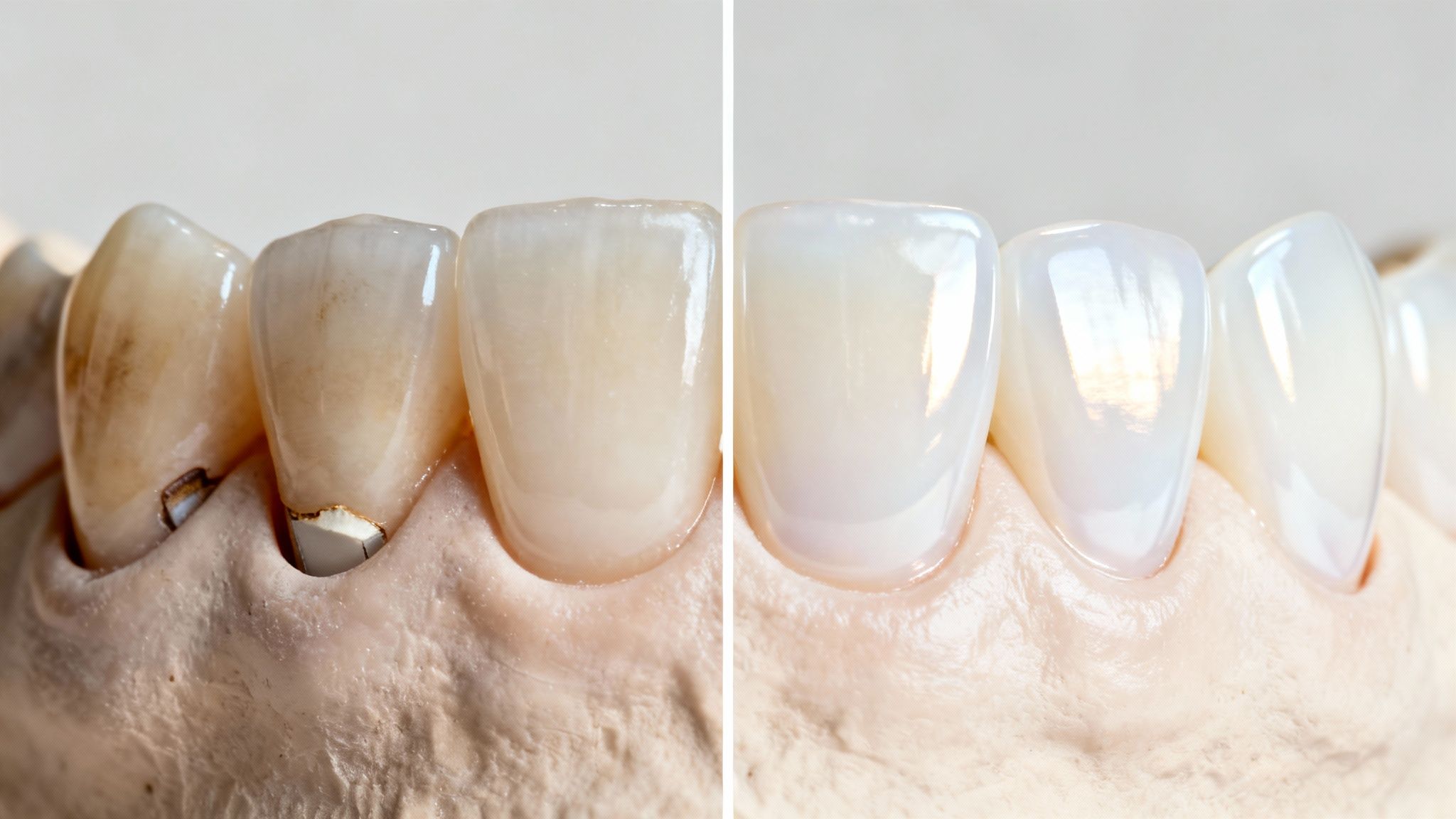
At their core, porcelain veneers are ultra-thin, custom-fabricated shells of medical-grade ceramic engineered to cover the front surface of your teeth. Functionally, they act as a new, perfected facade for your smile, designed to correct a wide range of cosmetic imperfections simultaneously.
Unlike a treatment like whitening, which only alters tooth color, veneers can reshape, resize, and recolor teeth in one procedure. They are permanently bonded to your natural teeth, creating a seamless, strong, and natural-looking result. This makes them a highly effective solution for individuals seeking a comprehensive smile transformation.
Veneers are a versatile tool in cosmetic dentistry, often recommended to address multiple concerns at once for a total smile makeover.
Here are the primary problems veneers are designed to fix:
The core principle of porcelain veneers is to achieve a significant cosmetic improvement using a conservative preparation technique. The procedure requires far less removal of natural tooth structure than a full dental crown, preserving the integrity of your healthy tooth.
A practical understanding of the pros and cons of veneers begins with comparing them to other common dental treatments. The optimal choice depends entirely on your specific cosmetic goals, dental health status, and budget.
Here is a brief comparison of how they differ.
When evaluating the pros and cons of porcelain veneers, the "pros" are substantial and often transformative. Patients choose veneers for a comprehensive smile redesign that is both natural in appearance and built for longevity. The impact extends beyond aesthetics, frequently leading to a significant increase in self-confidence.
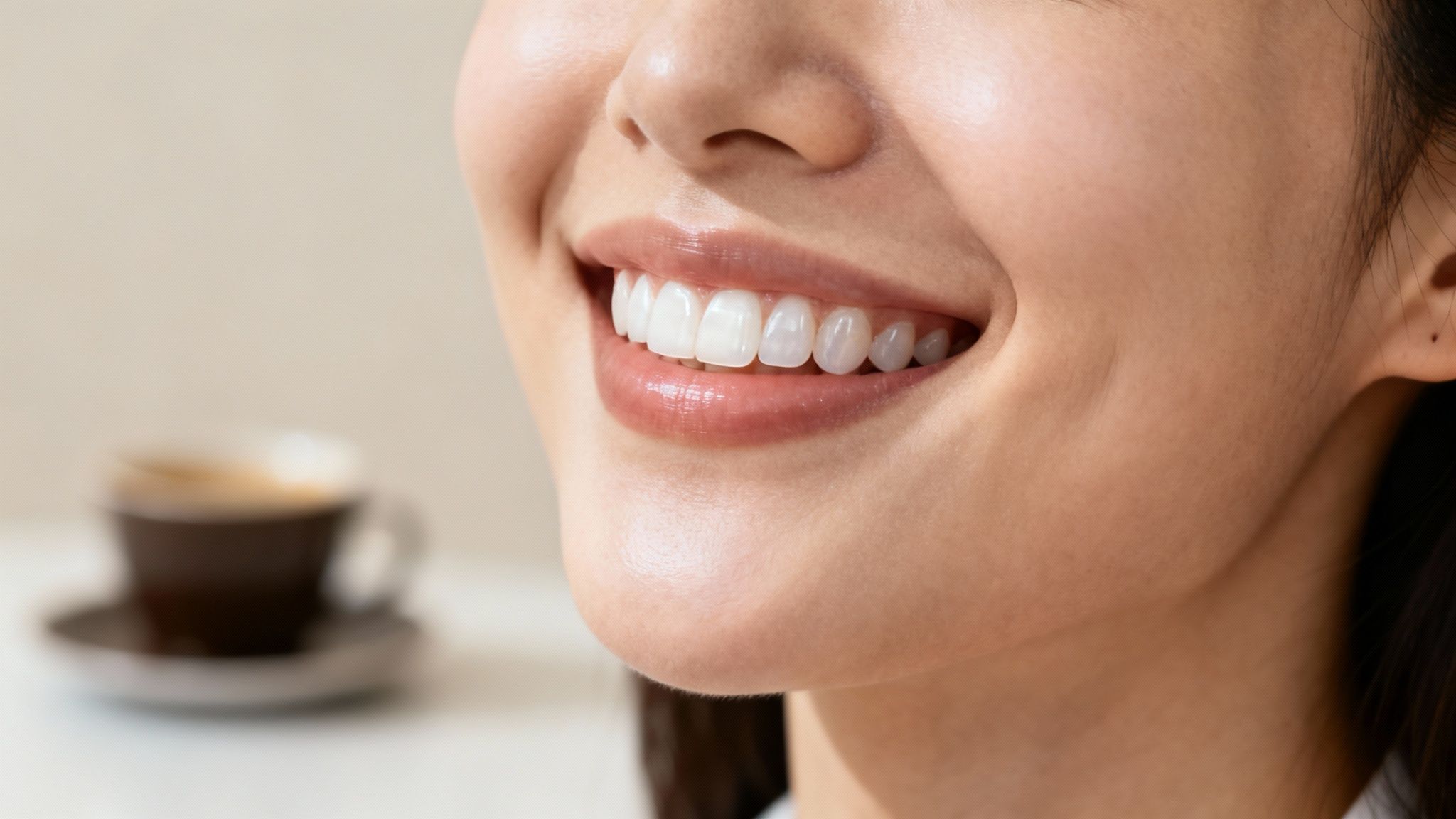
The primary reason patients are highly satisfied with veneers is their ability to create a beautiful, natural-looking smile. High-quality porcelain possesses a translucent quality that accurately mimics the light-reflecting properties of tooth enamel. This creates a depth and vitality that is difficult to replicate with other materials, ensuring the final result does not appear flat or artificial.
Each porcelain veneer is a piece of precision-engineered dental artistry. During the smile design process, your dentist maintains complete control over every aesthetic detail to craft your desired outcome. This level of customization is what establishes them as the gold standard in cosmetic dentistry.
Here are the elements that can be customized for you:
This is not a one-size-fits-all procedure. The objective is to design a smile that harmonizes with your unique facial features, creating a result that looks entirely natural.
While the initial cost is a factor, the longevity of porcelain veneers makes them a sound long-term investment. Fabricated from a high-strength ceramic material, they are engineered to withstand the forces of daily chewing and biting. With proper care, they are expected to last for a decade, and often much longer.
Porcelain is stronger and less porous than natural tooth enamel. This inherent strength means veneers resist chipping and wear more effectively than natural teeth, preserving your smile's integrity for years.
Their proven performance is why they dominate the market. Porcelain veneers are projected to account for 54.20% of the total dental veneers market revenue by 2025, driven by their durability and superior aesthetics. It is common for patients to retain their veneers for 10-15 years or more, making them a lasting cosmetic solution. You can review more data on the dental veneers market on futuremarketinsights.com.
One of the most practical advantages of porcelain veneers is their exceptional resistance to staining. Natural tooth enamel is porous, allowing it to absorb pigments from foods and beverages like coffee, tea, and red wine, which leads to discoloration over time.
Porcelain, by contrast, is a non-porous ceramic. Its glazed surface acts as an impermeable barrier, preventing staining agents from penetrating. This ensures your smile remains consistently bright and white year after year, eliminating the need for recurring whitening treatments.
How Veneers Handle Everyday Stains
This makes veneers an ideal choice for those seeking a permanently white smile without altering their dietary habits. This functional benefit is often a deciding factor when weighing the pros and cons of porcelain veneers.
While porcelain veneers offer remarkable results, a thorough evaluation of the potential downsides is essential for informed consent. Balancing the porcelain veneers pros and cons is the only way to ensure you are making a confident and appropriate decision for your long-term dental health.
Be aware that this is not a reversible procedure. It involves permanent alterations to your teeth, a significant financial commitment, and a plan for lifelong maintenance.
The most critical factor to understand is that the decision to get porcelain veneers is permanent. To ensure a seamless fit and a strong bond, a thin layer of natural enamel—typically around 0.5 millimeters—must be removed from the tooth's surface.
Once this enamel is removed, it cannot be regenerated. This means the prepared tooth will always require a veneer or another restoration, such as a crown, for protection and aesthetic completion. It is not possible to revert to your original teeth at a later date.
This is the defining consideration for many patients. Unlike teeth whitening, which can be discontinued, this procedure involves a lifelong structural alteration that requires absolute certainty about your cosmetic goals.
High-quality porcelain veneers are a premium cosmetic dental procedure and represent a considerable financial outlay. The cost reflects the advanced ceramic materials, laboratory fees for custom fabrication, and the high level of clinical skill required for a natural-looking result.
Prices vary based on geographic location and case complexity, but porcelain veneers typically cost between $925 to $2,500 per tooth. A full smile makeover involving six to eight anterior teeth can total $10,000 or more. This requires careful financial planning and should be viewed as a major investment in your well-being.
It is common to experience temporary tooth sensitivity after tooth preparation and during the period you wear temporary veneers. This sensitivity to hot and cold stimuli usually subsides once the permanent veneers are bonded.
However, a small percentage of patients may experience lingering sensitivity. This is a potential risk to consider, as the removal of the protective enamel layer can leave the underlying dentin slightly more exposed to thermal changes.
Although porcelain is extremely durable, it is not indestructible. Veneers are designed to last for many years, but they can be damaged by trauma or improper use.
Key points to consider:
This table provides a side-by-side summary of the key considerations when evaluating your options.
Understanding these potential disadvantages provides the balanced perspective needed to determine if the benefits of porcelain veneers align with your long-term goals and expectations.
Understanding the procedural steps is as important as weighing the pros and cons of porcelain veneers. Knowing the process can demystify the experience and build confidence in your decision.
Obtaining veneers is not a single appointment but a collaborative process involving you, your dentist, and a master ceramist. The procedure is typically completed over three main appointments, each with a specific purpose to ensure precision and a predictable outcome.
This initial appointment is a comprehensive discussion about your aesthetic goals. You will have the opportunity to specify what you wish to change. We will conduct a thorough examination, including digital X-rays, to confirm that you are a suitable candidate and assess your underlying dental health.
This visit serves as a co-design session for your future smile. Using digital imaging technology, we can often create a simulation of the expected outcome before beginning any treatment. This is crucial for aligning expectations and finalizing the desired shape, size, and color of the veneers.
This planning stage focuses on:
Once your custom smile design is finalized, the second visit involves preparing your teeth. To accommodate the veneers and ensure a natural appearance, a very thin layer of enamel—typically around 0.5 millimeters—is carefully removed from the front surface of the teeth. This is the irreversible step that makes veneers a long-term commitment.
Following preparation, a highly accurate impression or digital scan is taken. This detailed mold is sent to a specialized dental laboratory, where a ceramist will meticulously handcraft each veneer according to our exact design specifications.
You will not leave with unprepared teeth. While your permanent veneers are being fabricated (a process that usually takes two weeks), we will place a set of temporary veneers. These protect your teeth, reduce sensitivity, and provide an aesthetic, functional smile. They also serve as a "test drive" for the general shape and feel of your final smile.
This is the final appointment where your new smile is delivered. We begin by removing the temporary veneers and thoroughly cleaning your teeth. Before permanent bonding, we will place the final porcelain veneers on your teeth to meticulously verify the fit, shape, and color.
We will work with you to ensure every detail meets your approval and make any necessary minor adjustments to your bite. Once you provide final approval, your teeth are treated with a special solution to create a strong bonding surface. A high-strength dental cement is applied to the veneer, which is then precisely positioned on your tooth.
Finally, a special curing light is used to harden the cement, permanently securing the veneer. We will remove any excess cement, re-verify your bite, and give your new smile a final polish. You will leave the office with a completely transformed, confident smile.
While porcelain veneers are an excellent solution for a comprehensive smile makeover, they are not the only option. A key part of analyzing the pros and cons of veneers is understanding how they compare to other cosmetic treatments.
Each alternative has a specific application, and the best choice depends on your dental needs, budget, and long-term goals. Let's compare veneers to other treatments to clarify where they excel.
Composite bonding is often the first alternative considered for smaller imperfections. In this procedure, a tooth-colored resin is applied directly to the tooth, then sculpted and polished to repair chips, close minor gaps, or improve color.
The primary advantages of bonding are its lower cost and reversibility. Unlike veneers, bonding typically does not require the removal of natural tooth enamel, meaning the procedure does not permanently alter the tooth. It is also a faster treatment, usually completed in a single visit.
However, there are significant trade-offs. The composite resin is more porous than porcelain, making it susceptible to staining from coffee, tea, and red wine. It is also less durable, with a typical lifespan of 3 to 7 years before requiring touch-ups or replacement.
For patients on a limited budget with minor cosmetic concerns, bonding is a superb, low-commitment option. However, for a dramatic, long-lasting, and stain-resistant result, porcelain veneers are superior.
Although crowns and veneers are sometimes discussed together, they perform fundamentally different functions. A porcelain veneer is a thin shell covering only the front surface of a tooth for aesthetic purposes. A dental crown, in contrast, is a full "cap" that encases the entire tooth.
Crowns are primarily a restorative treatment, not purely cosmetic. They are indicated when a tooth has significant structural damage, such as a large cavity, fracture, or following a root canal. A crown's purpose is to restore the tooth's strength and function.
Because a crown covers the entire tooth, it requires the removal of significantly more tooth structure than a veneer. For this reason, placing a crown on a healthy tooth solely for cosmetic improvement is generally considered an overly aggressive treatment.
This flowchart illustrates the typical veneer procedure, which is far less invasive than that required for a full crown.
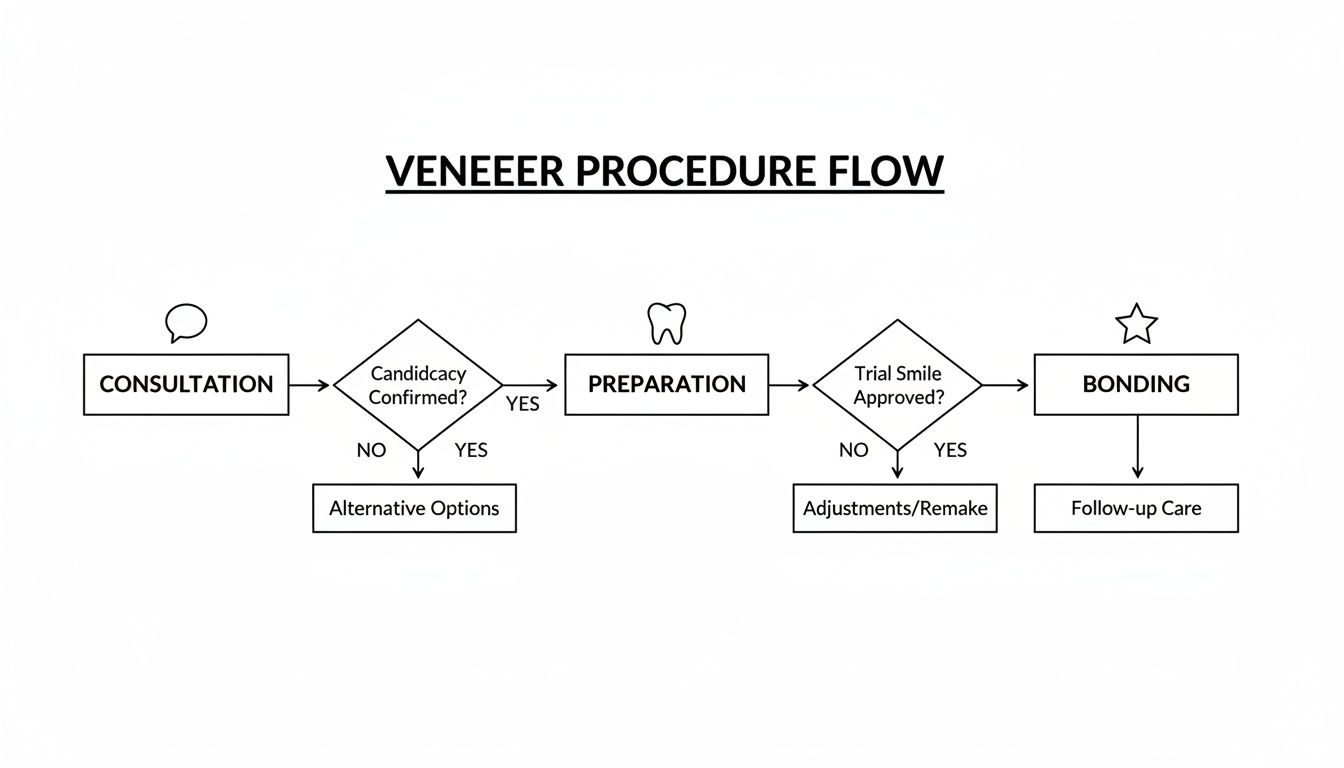
As shown, the entire process is focused on enhancing aesthetics while preserving the tooth's core structure.
When the primary issue is malocclusion (crooked teeth), crowding, or bite problems, the most appropriate solution is to correct the underlying issue, not mask it. This is the role of orthodontics, such as traditional braces or clear aligners.
Orthodontic treatment physically moves your natural teeth into their correct alignment. This approach addresses the root cause of the misalignment. The major advantage is that you are improving the health and appearance of your own teeth without permanent alteration.
The main drawback is the treatment time. Orthodontics can take from several months to a few years to achieve the final result, whereas veneers can provide the appearance of straight teeth in just two or three appointments. There are many modern teeth straightening options for adults that are more discreet than traditional braces.
This table provides a side-by-side comparison of these treatments based on factors most important to patients.
Ultimately, the right choice depends on your specific goals. If you aim to correct multiple cosmetic flaws simultaneously with a durable, stain-resistant, and immediate solution, the benefits of porcelain veneers are hard to surpass. However, if your concerns are primarily structural or involve significant misalignment, alternatives like crowns or orthodontics are more appropriate.
You have reviewed the aesthetic potential, durability, and significant drawbacks of veneers. The critical question remains: are they the right investment for you? This decision transcends a simple list of pros and cons. It requires aligning this powerful cosmetic treatment with your personal goals, financial capacity, and long-term outlook.
Examining different patient scenarios can help clarify whether veneers are the appropriate tool for your specific objective.
For certain individuals, porcelain veneers are unequivocally the optimal solution, offering a comprehensive fix that other treatments cannot match in terms of speed and scope.
You may be an ideal candidate for veneers if:
The key advantage of porcelain veneers lies in their ability to deliver a complete smile makeover in just a few appointments. For those seeking a dramatic yet natural-looking transformation, the value often far exceeds the financial cost.
Conversely, veneers are not a universal solution. In many situations, a more conservative or targeted treatment is a more prudent choice, saving money and preserving natural tooth structure.
Consider exploring other options if:
Making the right choice requires an honest assessment of your priorities. This is a significant commitment, both financially and in terms of the permanent alteration to your teeth. Thinking through these key questions will provide clarity.
Ask yourself the following:
Ultimately, the decision to get porcelain veneers is deeply personal. By carefully weighing the benefits and drawbacks against your unique situation, you can move forward with confidence, knowing you’ve made an informed choice that will bring you satisfaction for years to come.
Ready to discover if porcelain veneers are the perfect solution for your smile? At Clayton Dental Studio, Dr. Navneet Kamboj and our compassionate team are here to provide honest recommendations and create a personalized plan just for you. Schedule your consultation today to explore your options and take the first step toward the confident, beautiful smile you deserve.