

Book Your Appointment Today!
Our staff will reach out to you shortly
Thank you! Your submission has been received!
Oops! Something went wrong while submitting the form.


You may be looking in the mirror and thinking two separate thoughts at once.
One is, “My teeth have shifted more than I realized.”
The other is, “I’ve also been missing that tooth for years, and now I finally want to fix it.”
That combination is common. A missing back tooth can let nearby teeth lean or drift. Front teeth can crowd over time. Biting may feel uneven. Smiling in photos may feel a little less natural than it used to. Many adults in their 30s, 40s, and beyond assume that if both issues exist together, treatment must be too complicated to bother with.
It isn't.
Orthodontics and implants often work best when they’re planned together. One treatment creates the right position. The other restores what’s missing. When you understand the order and the reason behind it, the process starts to feel much more manageable.
A patient might come in saying something like this: “I lost a molar a long time ago, and now my teeth feel crooked. I want to fix everything, but I don’t even know where to start.”
That’s a reasonable place to be.
If you’ve got a missing tooth and shifting teeth, you’re not looking at two unrelated problems. You’re looking at one system that changed over time. Teeth respond to space. When a tooth is gone, nearby teeth can tip, the opposing tooth can over-erupt, and the bite can slowly become less balanced.

A lot of people feel embarrassed that they “waited too long.” They haven’t. What matters is getting a clear plan now.
Think of your smile like a room that needs both remodeling and one permanent replacement piece.
Orthodontics handles the layout. It lines teeth up so the spacing and bite make sense again. An implant replaces the missing tooth with something stable and long-lasting. When those two are coordinated, the final result looks better, feels better, and functions better than rushing into one part without planning the other.
Good treatment planning often feels less like doing more and more like doing things in the right order.
Some patients need only a small amount of alignment before an implant. Others need more bite correction first. Teenagers with a missing permanent tooth may need a very different plan than an adult who lost a molar years ago. The details vary, but the idea stays the same. You build the smile piece by piece.
Most confusion comes from three questions:
When patients understand that orthodontics and implants are part of one coordinated strategy, the whole process becomes less intimidating and more hopeful.
Orthodontics and implants solve two different problems. Once you know which tool does what, the full treatment plan feels much easier to follow.
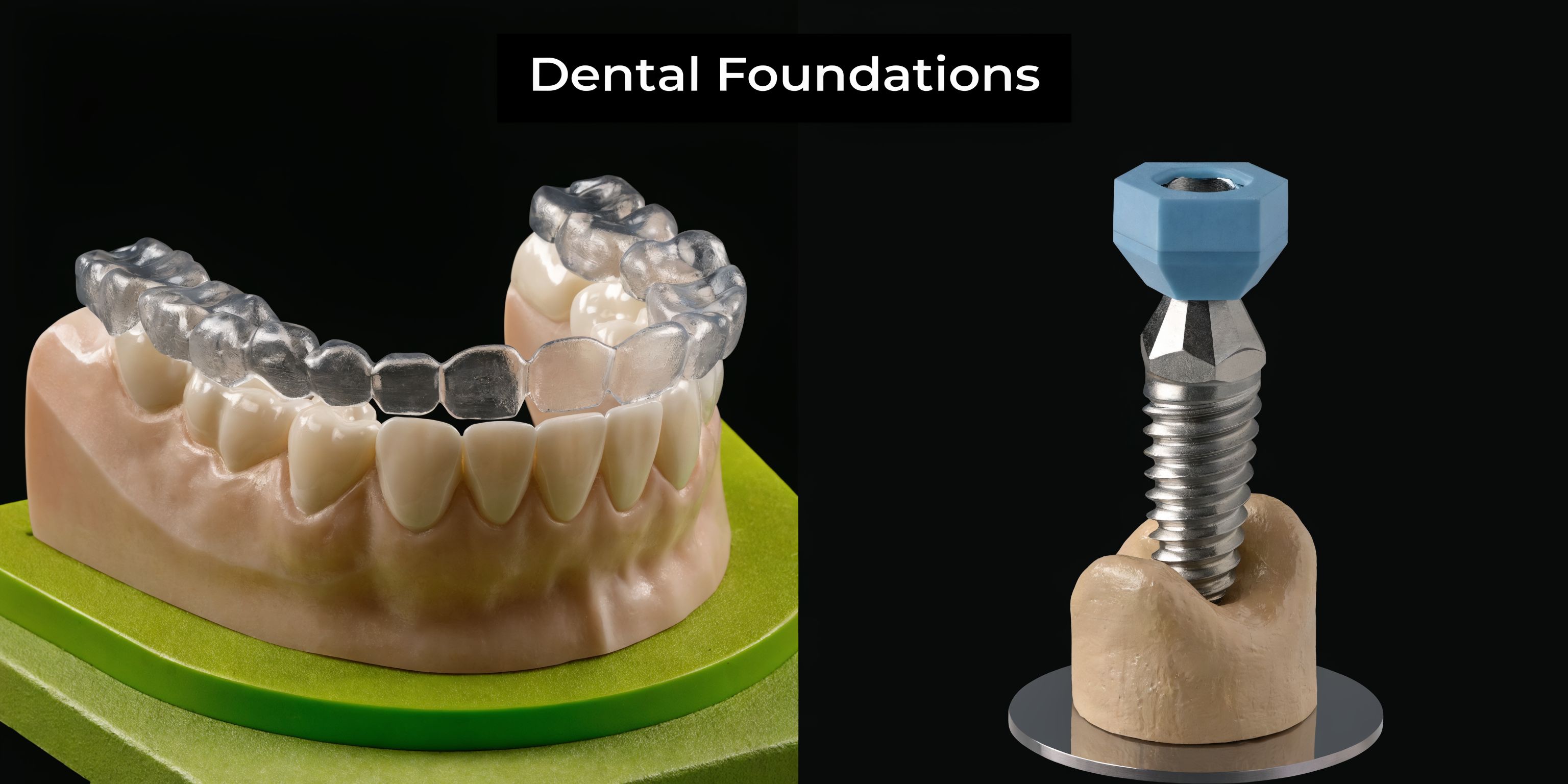
Orthodontics moves natural teeth into better positions so your bite, spacing, and smile work together. For a patient in Humble or the Houston area, that can mean reopening space where a tooth has been missing for years, straightening crowded front teeth, or getting the upper and lower teeth to meet more evenly.
The easiest way to understand it is to picture traffic lanes after a long construction detour. Cars drift. Lines stop making sense. Before you place something permanent in one spot, you first guide everything back into the right lanes. That is what braces and aligners do inside the mouth.
Depending on the case, orthodontic treatment may be used for:
If you are weighing your options, this guide to clear aligners vs braces explains how each one fits different goals, routines, and budgets.
Orthodontics has been studied and refined for generations. In the historical evolution of orthodontics in America, Dr. Callender notes that the American Society of Orthodontists was founded in 1900, Dr. Edward Angle introduced the first metal braces in 1901 and developed the Angle Classification system, and Harvard Dental School launched the first orthodontic residency program in 1914.
That history matters for a practical reason. Orthodontic tooth movement is not guesswork. It is planned around bone support, bite forces, facial balance, and the final position needed for long-term function.
A quick visual can make the distinction easier to grasp.
A dental implant has a different role. It replaces a missing tooth root with a titanium post that integrates with the bone, and that post supports the final crown or restoration.
Patients sometimes assume an implant works like a tooth that can be adjusted later. It does not. Once it heals into the bone, it stays fixed in that position. That is one reason combined planning matters so much at the beginning, especially if the space is narrow, the bite is off, or the missing tooth has been gone for a long time.
Modern implant treatment grew out of Per-Ingvar Brånemark’s discovery of osseointegration in the 1950s, which showed that titanium can bond directly with bone. The detailed history of dental implants also notes that the first successful human dental implant procedure took place in 1965, and reports success rates exceeding 95% in properly selected cases.
For patients, the practical takeaway is simple. Implants are designed to be stable, long-term replacements. Orthodontics creates the position and spacing that help that replacement look natural and function well.
Orthodontics moves teeth into the right places.
Implants replace teeth that are gone.
At Clayton Dental Studio, those two tools are planned together so families can understand the sequence, the timeline, and the financial path before treatment starts. That clarity helps patients feel less overwhelmed and more confident about each step.
Most patients ask the same question right away. “Do I get the implant first, or do I straighten my teeth first?”
In most situations, the answer is orthodontics first.
The reason is straightforward. Natural teeth can be moved. An implant is fixed in place once it integrates with bone. If you place the implant too early, it can become the one object in the mouth that everyone else has to work around.
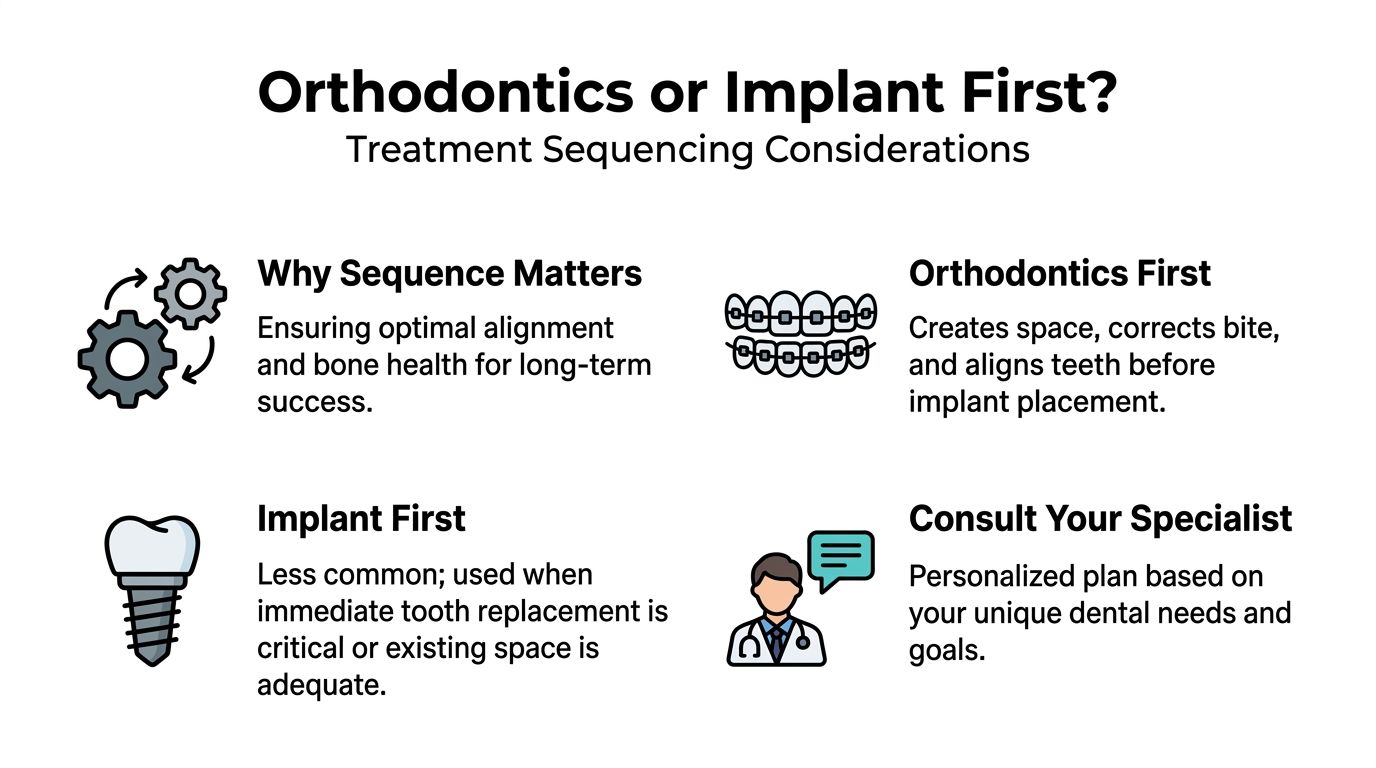
Think of a missing tooth space as a parking spot that’s been distorted over time. The neighboring cars have drifted over the lines. Before you install a permanent post in that spot, you need to repaint the lines and put the cars back where they belong.
Orthodontics helps do that by:
Sometimes patients assume the missing tooth should be replaced immediately and alignment can be handled later. That sounds efficient, but it often creates a harder path.
Practical rule: If a tooth is missing and nearby teeth have moved, getting the teeth into the right position first makes the implant easier to place and easier to restore well.
There are exceptions.
An implant may be placed before orthodontics in selected situations, especially when the available space is already appropriate or the implant is being used as part of a broader coordinated plan. But that’s less common, because the implant won’t move like a natural tooth.
That fixed position can be helpful in a carefully designed case. It can also be limiting if the bite or spacing still needs major correction.
FactorOrthodontics First (Most Common)Implant First (Rare Exception)Main goalCreate ideal space and bite before replacing the toothReplace the tooth early when space and bite are already suitableWhy doctors choose itNatural teeth can move into healthier positions before anything permanent is placedA fixed replacement may be needed earlier in select casesBig advantageBetter control over spacing, angulation, and bite relationshipsUseful when the treatment plan already has stable spacingMain limitationThe patient waits longer for final replacementThe implant becomes a fixed object that orthodontics must work aroundBest fitDrifted teeth, crowding, tipped teeth, bite changes, long-standing missing tooth spacesCarefully selected cases with adequate space and minimal movement needs
Sometimes the conversation isn’t only about alignment. It’s also about whether there is enough bone to support the implant. If bone loss or contour changes are part of the picture, your dentist may discuss grafting as part of the plan. This guide to what bone grafting is for dental implants helps explain why rebuilding support can matter before the final implant is placed.
A treatment plan doesn’t follow a cookie-cutter script. It looks at:
With orthodontics and implants, the best order protects the final result.
If teeth need to move, move them before you place the part that won’t.
Good combined treatment looks simple from the outside. Underneath, it depends on careful biology and precise planning.
That’s true when a future implant has to fit into a space created by orthodontics. The tooth position, the surrounding bone, and the final bite all need to line up. If one part is off, the result can feel awkward even if it looks fine in a photo.
An implant doesn’t sit in the gums. It depends on the jawbone.
Modern implant care is built around osseointegration, the process that allows titanium to fuse with bone. According to Argon Dental, modern implant surfaces include features such as micro-roughened textures, nano-structured coatings, and bioactive layers that improve bone-to-implant contact, and 3D-printed surgical guides can reduce placement errors to less than 0.5 mm while boosting 5-year survival to over 95% in major markets when used in planned cases (latest techniques and materials in dental implant technology).
That level of precision matters because implants don’t have the natural cushioning system that teeth do. They need to be placed where the bone can support them and where the final crown will fit the bite.
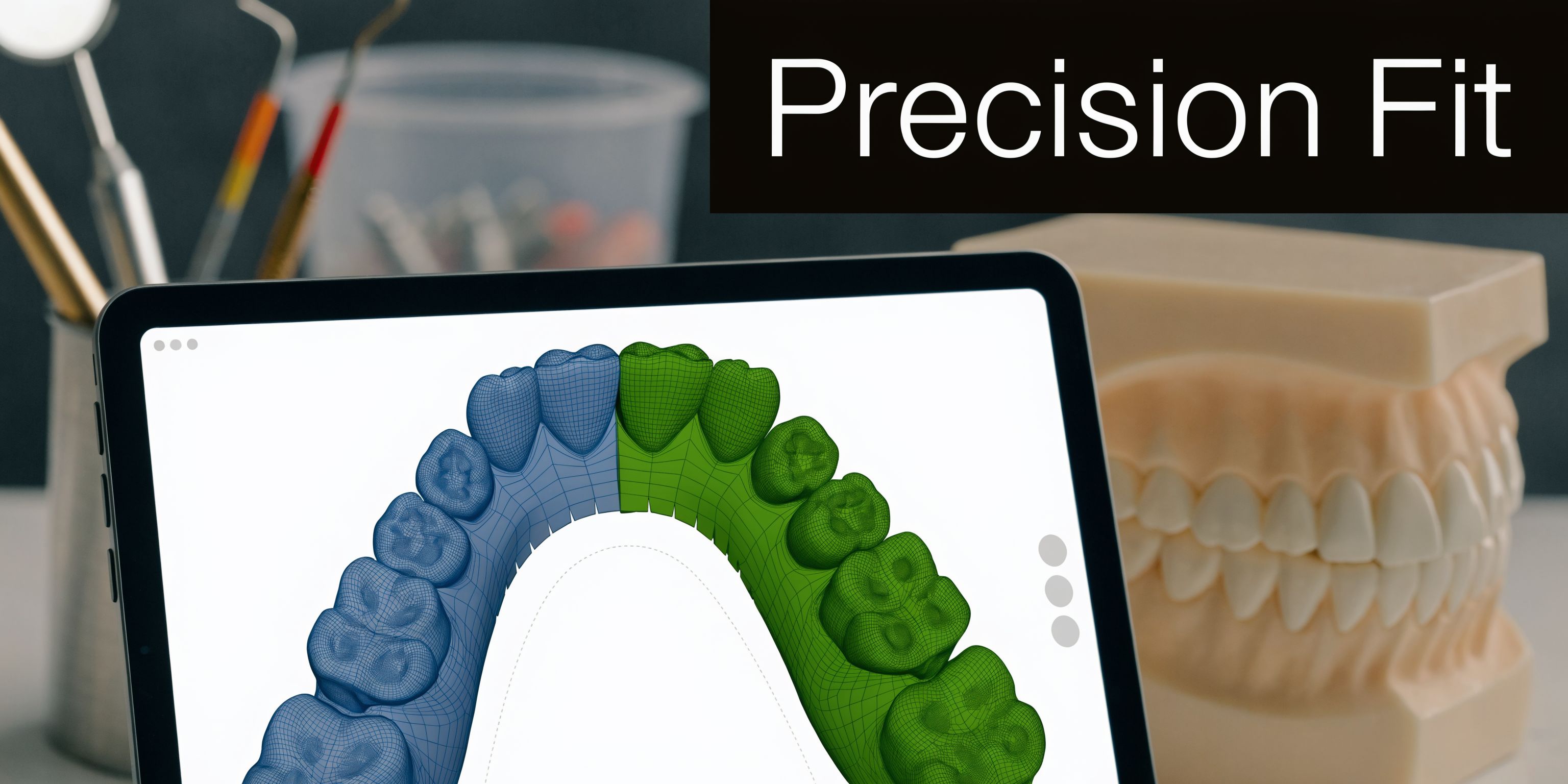
If you want to understand the imaging side of this process, cone beam 3D imaging shows how dentists evaluate bone, anatomy, and implant position in three dimensions instead of relying on a flatter picture alone.
Many people think creating space for an implant means “making a gap.”
It’s more specific than that. The space has to be the right width, the roots of neighboring teeth have to be positioned properly, and the bite must allow room for the future crown. A gap can look open from the front and still be wrong underneath.
That’s why orthodontics can be useful before an implant. It can:
A beautiful implant crown needs more than a visible opening. It needs the right architecture around it.
Clear aligners aren’t for simple cosmetic straightening. In selected cases, they can create the conditions needed for future restorative work.
The review on clear aligner therapy attachments in implant-prosthetic cases reports that attachments can increase force application by 1.5 to 3 times and that clear aligner treatment can reduce treatment duration by 20 to 30% compared with fixed appliances for mild to moderate malocclusions, depending on case selection (clear aligner therapy attachments review).
Those attachments are small bonded shapes placed on certain teeth. They help the aligner grip better and deliver more specific force. In plain language, they help the tray “grab the handle” it needs for more precise movement.
If the support isn’t there, the implant position may need to wait until the foundation is ready.
Too little room creates a cramped result. Too much room can look unnatural and affect the bite.
A good restoration should look natural, chew comfortably, and fit the smile as a whole.
When orthodontics and implants are planned together, those three goals can support each other instead of competing with each other.
Patients often understand the concepts once they hear them. What helps even more is seeing how this plays out in everyday life.
These are fictional examples, but they reflect the kinds of situations many Houston-area families deal with.
A woman in her 40s had lost a lower molar years earlier. Life got busy, and replacing it kept sliding down the list. By the time she came in, the space had narrowed and the teeth nearby had tipped slightly. She also had crowding in the front that had become more noticeable in pictures.
Her main concern wasn’t vanity. She wanted to chew comfortably and stop feeling self-conscious when she smiled.
Clear aligners made sense for her because she wanted a discreet option that fit her work schedule. The aligners gradually improved the front crowding and helped create a healthier setup around the missing molar space. Once the spacing and bite were where they needed to be, the implant could be planned in a way that made the final tooth look like it belonged there all along.
What changed most for her was confidence. She stopped thinking of the treatment as “straightening” plus “an implant.” She started seeing it as one coordinated fix.
A teen came in with a congenitally missing upper incisor. The family had known for years that something would eventually need to replace that tooth, but the timing felt confusing. The bigger question was whether to place the implant right away.
For a younger patient, jaw development matters. The smile also has to be prepared carefully in the front, where tiny differences in spacing and gum shape are obvious.
Braces were used first to position the neighboring teeth and manage the space properly. During that stage, the family had a temporary plan for appearance so the teen didn’t feel stuck socially. The implant would be considered only after growth was complete and the site was ready.
That kind of case reminds families that “doing it now” isn’t always the same as “doing it right.”
Another patient had an implant placed years before ever thinking about orthodontic treatment. Later, he wanted to correct crowding and improve his bite.
He was relieved to learn that orthodontic treatment can be possible even when an implant is already there. The key was accepting one important limitation. The implant would stay where it was, and the natural teeth would be moved around it as thoughtfully as possible.
Some of the best outcomes happen when patients stop looking for a perfect textbook case and work with their current situation.
That plan required more creativity, but it still produced a healthier and more attractive result than doing nothing.
By the time patients understand the biology, they ask the practical questions.
How long will this take?
And how am I supposed to pay for it?
Both are fair questions. Orthodontics and implants can be life-improving treatment, but they also require planning, patience, and a realistic view of the timeline.
A combined plan usually unfolds in phases, not in one fast appointment block.
Orthodontic movement itself takes time because teeth move through bone gradually. After that, the implant site may need a healing period. Then the restoration phase has to be completed so the final crown fits the bite and the smile correctly.
For many patients, the process can take an extended period, depending on how much orthodontic correction is needed and how the implant portion progresses. That isn’t delay for delay’s sake. It’s what allows each stage to support the next.
A simple way to think about the timeline is this:
Patients sometimes compare the cost only to the immediate alternative, such as leaving the gap alone or choosing the quickest cosmetic fix. That comparison can be misleading.
A missing tooth can affect chewing, spacing, and bite balance. Crooked or crowded teeth can be harder to clean and may continue shifting. When both problems are present, solving only one can leave the other to keep creating trouble.
The financial conversation also has to reflect reality. According to the GWU Geiger Gibson Program, 72 million Americans lack dental insurance, and for many people cost is the primary barrier to extensive care like orthodontics and implants (community health centers and oral health access for underserved populations).
If you’re comparing offices, don’t ask for a number. Ask how the plan can be made workable.
Helpful options may include:
If the plan feels financially overwhelming, ask whether it can be staged without compromising the final result.
Families in Humble, Atascocita, Kingwood, and nearby communities aren’t looking for luxury dentistry. They’re looking for a smart path that protects long-term oral health without creating unnecessary financial stress.
That’s why affordability matters in orthodontics and implants. The right discussion isn’t only “Can this be done?” It’s also “Can this be done in a way that fits real life?”
The answer is often yes, especially when the treatment team is honest about priorities, timing, and options.
A parent from Humble comes in expecting to hear, “You need braces,” or “You need an implant.” Instead, the first visit is about building the map before choosing the road. That matters because combined orthodontic and implant cases work best when the team decides the order carefully, based on your bite, your space, your timing, and your budget.
At Clayton Dental Studio, Dr. Navneet Kamboj starts by looking at the whole picture. If one tooth is missing, the question is not only how to replace it. The question is whether the space is the right width, whether nearby teeth have drifted, whether the bite will support the final result, and whether your family would be better served by doing treatment in phases.
A first visit usually includes:
Patients often tell us the biggest relief is finally understanding the sequence. Orthodontics and implants can feel like trying to assemble furniture without the instructions. Once you know which piece goes first, the process starts to feel much more manageable.
Good planning also depends on how a dental office tracks images, notes, timing, and follow-up across a longer treatment journey. If you want a simple look at the kind of systems that support organized care, this overview of software for dentists offers useful background.
If you have been delaying care because the process felt confusing or expensive, start with the consultation. You do not need to arrive with the answer. You need a plan that makes sense for your mouth, your schedule, and real life in the Houston area.
Often, yes.
Clear aligners can work well if the goal is to open space, fine-tune spacing, or improve the bite before an implant is placed. They are especially helpful when a patient wants a more discreet orthodontic option during a longer treatment timeline.
The key question is control. Creating implant space is a little like parking a car in a narrow garage. The spacing has to be accurate, not just close. That is why your dentist looks closely at how much tooth movement is needed, where the roots sit, and whether aligners can deliver that level of precision.
You still may have good options.
An implant stays fixed in the bone, so it does not move with braces or aligners the way a natural tooth does. Natural teeth around it can often be repositioned to improve crowding, bite balance, and appearance. In practical terms, your implant becomes one of the anchor points in the plan, and the rest of the treatment is designed around it.
That situation is common for adults who had a tooth replaced years ago and are now ready to straighten the rest of their smile.
That concern is reasonable.
A good treatment recommendation starts with saving healthy teeth whenever that is possible. If a tooth can be predictably maintained, that option should be part of the conversation. If a tooth cannot be saved, the discussion should shift to the best replacement plan and the right timing for it.
Patients in the Houston area often feel more comfortable once they see the sequence on paper. Which tooth is being kept? Which space needs to be created? What can wait? What should happen first? Clear answers matter. A careful review of unnecessary implant treatment concerns also reinforces the importance of conservative diagnosis and thoughtful case selection in implant planning (discussion of unnecessary implant placement and conservative diagnostics).
No. The right plan depends on what your mouth needs.
Some patients only need orthodontics to close or redistribute space. Some only need an implant to replace a missing tooth in an otherwise stable bite. Others benefit from combining both so the final implant fits the space correctly and the bite functions better over time.
The goal is not to recommend the biggest treatment plan. The goal is to recommend the smallest plan that solves the underlying problem and gives you a result that looks good, feels stable, and fits your budget and schedule.
If you are tired of guessing what comes first, a consultation can give you a step-by-step roadmap. Families in Humble, Atascocita, Kingwood, and the greater Houston area often feel relief once the timeline is clear, the sequencing makes sense, and the payment options are laid out in plain language. Dr. Navneet Kamboj and the team at Clayton Dental Studio focus on making complex combined treatment feel understandable, practical, and worth planning for.