

Book Your Appointment Today!
Our staff will reach out to you shortly
Thank you! Your submission has been received!
Oops! Something went wrong while submitting the form.


Have you ever wondered, what is bone grafting for dental implants, and why is it a necessary step for some people? Think of it like preparing solid ground before building a house. For a dental implant to provide a lifetime of confident smiles, it requires a strong, dense jawbone to anchor into. If that foundation is lacking, a bone graft is a highly effective and common procedure used to rebuild it, ensuring your new tooth is secure for the long term.
This guide provides actionable, informative insights into why bone grafting is a crucial part of implant dentistry, what the procedure involves, and how you can ensure a successful outcome.

A dental implant is a small, medical-grade titanium post that replaces a natural tooth root. Its success hinges on a process called osseointegration, where the implant fuses directly with your jawbone. However, a common issue arises when a tooth has been missing for a while: the bone in that area begins to shrink and lose density because it's no longer stimulated by chewing forces.
This is where a bone graft becomes essential. It is a predictable surgical procedure that adds volume and density precisely where it's needed. The graft material serves as a safe, effective scaffold, providing your body with the blueprint it needs to generate new, healthy bone.
Attempting to place an implant in a weak or thin jawbone is a formula for failure. Without a solid base, the implant faces a much higher risk of loosening, becoming unstable, or failing to integrate altogether. A bone graft is not just an optional step; it is a critical investment in the long-term success and stability of your new smile.
Actionable Insight: A bone graft is a vital procedure used to rebuild lost jawbone when there's insufficient volume or density. Studies show its effectiveness, with grafts demonstrating a 92.8% integration success that leads to an impressive 95.5% implant survival rate one year later. You can discover more insights from this study on the National Center for Biotechnology Information website.
Several situations can lead to the type of bone loss that necessitates a graft. Understanding these can clarify why your dentist might recommend this as part of your treatment plan for dental implants in Humble, TX.
This table outlines the most frequent causes and their direct impact on implant readiness.
Reason for Bone GraftHow It Affects Your JawboneWhy It Matters for ImplantsLong-Term Tooth LossThe jawbone no longer receives chewing stimulation and begins to atrophy or shrink.The bone becomes too thin or short to securely hold an implant post.Gum DiseaseChronic infection destroys the bone and supportive tissues around your teeth.Significant bone loss can make the jaw too weak for implant placement.Dental Trauma or InjuryAn injury can fracture or displace the bone, leading to significant bone loss.The damaged site may lack the solid structure needed for a secure implant.Developmental DefectsSome individuals are naturally born with less bone structure in certain areas of the jaw.A graft is needed to build up the area to meet the minimum requirements for an implant.
Whether the cause is an old extraction, gum disease, or an unfortunate accident, the purpose of a bone graft remains constant: to create the strong, healthy foundation your implant needs to succeed.
When preparing for a dental implant, ensuring you have enough healthy jawbone to support it is the first critical step. If you don't, bone grafting is the solution. However, this is not a one-size-fits-all procedure. The selection of grafting material is a crucial decision your dentist makes based on your specific clinical needs.
Your dentist will consider the amount of bone required, the location in your jaw, and your overall health to choose the optimal material. This decision is fundamental to creating a solid base for your future smile.
An autograft uses bone harvested from your own body, typically from your chin or the back of your jaw. It is considered the "gold standard" because it is your own living tissue, containing your body's own cells and growth factors that naturally accelerate healing. Your body recognizes it immediately and begins building new, strong bone.
The only trade-off is the need for a second surgical site to obtain the bone, which may mean slightly more initial discomfort. However, for cases requiring significant bone regeneration, the predictable and robust results often make it the superior choice.
An allograft uses bone sourced from a human donor. This material undergoes a stringent screening and sterilization process in a specialized tissue bank. All cellular material is removed, leaving a perfectly safe, mineral-based framework.
Think of an allograft as high-quality, pre-built scaffolding. When placed in your jaw, it acts as a guide, encouraging your own bone cells to migrate and rebuild the area. Your body provides the "workers," and the allograft provides the ideal blueprint for them to follow.
A xenograft functions similarly to an allograft, but the material is derived from a non-human source—most commonly bovine (cow) bone. Like allografts, this material is highly processed and sterilized until only the mineral component remains.
Xenografts are widely used in dentistry and have a long, proven track record of success. The structure of bovine bone is remarkably similar to human bone, making it an excellent scaffold for your body's natural bone-building process. One study noted that xenografts are a very common choice, used in 40.2% of procedures.
That same research also highlighted that while xenografts are effective, autografts (using your own bone) still lead with a 96.4% success rate for both graft integration and implant survival. This is largely because they contain live, active bone cells from the start. You can read the full research about these bone graft findings to dive deeper.
Finally, there are alloplasts—entirely synthetic, lab-created materials. They are typically composed of substances like calcium phosphate or hydroxyapatite, which are chemically very similar to the minerals found in your natural bone.
The primary advantage of alloplasts is the complete elimination of disease transmission risk since they are not from a biological source. They are available in various forms, such as granules or a putty, and can be designed to either resorb as new bone grows or remain as a permanent, stable framework. They are a predictable and effective option, especially for filling smaller defects.
To clarify these options, here is a side-by-side comparison.
Graft TypeSourceKey AdvantageWhen It's UsedAutograftYour Own BodyContains live cells for fast, robust growth.Cases needing significant bone volume or the highest biological performance.AllograftHuman DonorProvides an excellent, safe scaffold for your body to rebuild upon.Most standard grafting procedures; a proven and reliable alternative to autografts.XenograftAnimal Source (Bovine)Abundant, reliable, and has a structure very similar to human bone.Very common for sinus lifts and preserving the socket after an extraction.AlloplastSynthetic (Lab-Made)Zero risk of disease transmission; highly predictable.Often used for smaller defects or in combination with other graft types.
Ultimately, the goal is to create the strongest possible foundation for your dental implant. By understanding these materials, you can have a more informed conversation with your dentist about which path is the best one for you and your smile.
Understanding what to expect during a dental procedure can significantly reduce anxiety. A bone graft is a common and highly successful treatment, and this guide will walk you through the entire process, from initial consultation to the day of the procedure and beyond.
Our goal is to ensure you feel informed and confident. With modern technology and a focus on patient comfort, the process is smoother and more predictable than ever.
The journey begins with a detailed consultation to determine if a bone graft is necessary and, if so, to plan the precise approach for your success. This is a personalized assessment of your jaw and overall oral health, not a one-size-fits-all plan.
We use advanced digital imaging to obtain a clear picture of your jawbone, allowing us to measure its height, width, and density with incredible precision. Often, we utilize in-office technology to create a 3D model of your jaw for meticulous planning. You can learn more about how our advanced Cone Beam 3D imaging helps us deliver such precise care.
During this visit, we will also discuss the most suitable type of bone graft material for your specific needs, whether it's an autograft, allograft, xenograft, or a synthetic option.
On the day of your bone graft, your comfort is our top priority. The procedure is performed in our office and is typically more straightforward than patients expect.
This infographic illustrates the four main sources for bone graft materials, showing the options from a patient’s own body to a synthetic, lab-created solution.
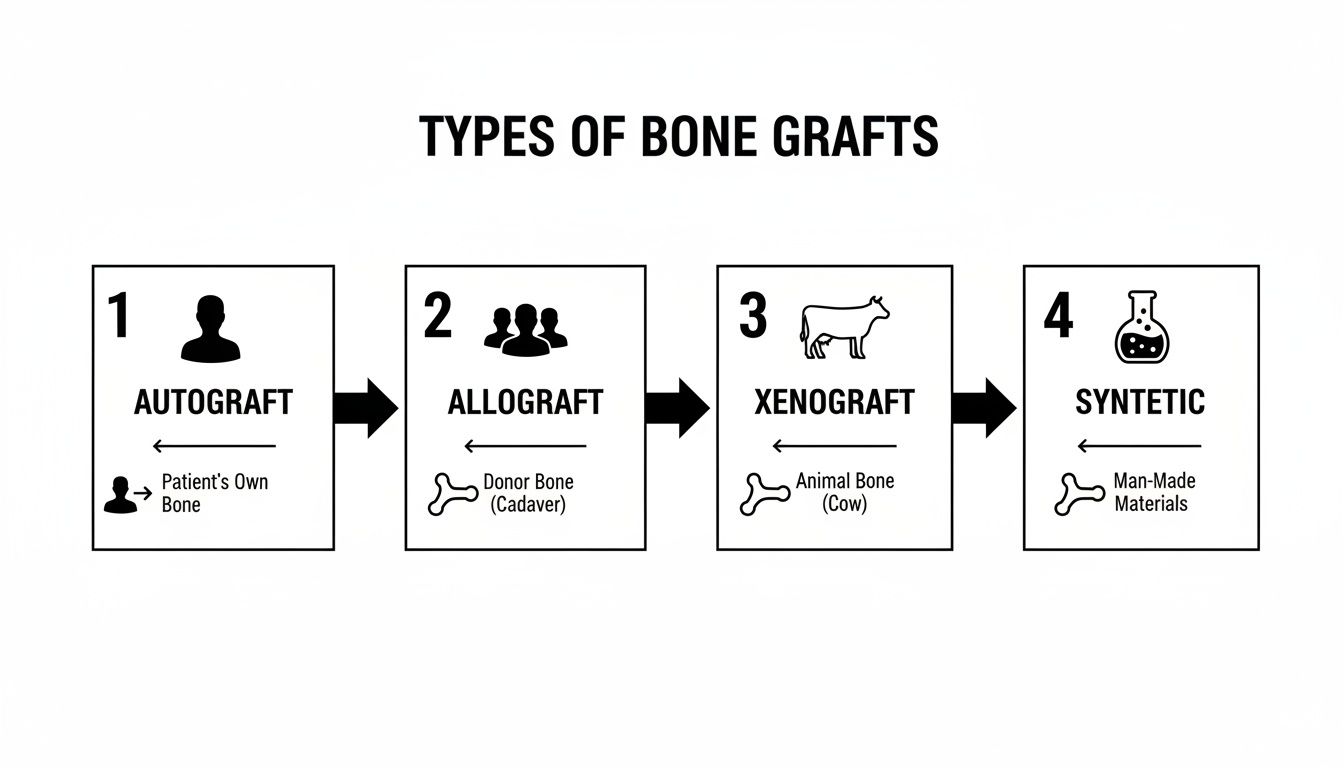
This visual highlights how personalized modern dentistry has become, enabling us to choose the ideal solution for each patient's unique needs.
With the graft material securely in place, the final steps are performed to ensure an optimal outcome.
Informative Insight: Once the procedure is complete, the true healing process begins. The graft material is not merely a filler; it actively signals your body to build new, living bone. Over the next few months, your natural bone will gradually grow into and replace this scaffold, creating a strong, dense foundation ready to support a dental implant for a lifetime.

The success of your bone graft is determined during the recovery phase. The procedure lays the groundwork; your role is to protect the site and create the optimal environment for your body to heal. This post-procedure journey is a partnership between you and our team, ensuring your new bone becomes the solid foundation your future dental implant requires.
While initial swelling and discomfort typically subside within one to two weeks, the crucial work happens beneath the surface over the next several months as your body transforms the graft material into a dense part of your jawbone. Patience and adherence to aftercare instructions are your most powerful tools during this time.
The first two days are critical. Your focus should be on managing discomfort, minimizing swelling, and protecting the surgical site.
Following these initial steps will promote healing and improve your comfort level.
Your diet and oral hygiene practices are major factors in a smooth recovery. The primary goal is to be gentle and avoid anything that could disturb the healing site.
For the first few days, consume soft, nutrient-rich foods like smoothies (without a straw), yogurt, mashed potatoes, and lukewarm soups. Avoid hot, spicy, crunchy, or hard foods that could irritate the site or dislodge the graft.
Oral hygiene is equally important. Brush your other teeth as usual, but be extremely gentle around the surgical area. Begin rinsing gently with a warm saltwater solution a few times a day, starting 24 hours after your procedure. This is the best method for keeping the area clean without aggressive brushing.
The long-term success of your future implant depends on this healing phase. Bone grafting is a highly predictable procedure that enables many people who would otherwise not be candidates to receive implants. Studies show that grafting can dramatically improve dental implant outcomes, boosting success rates from as low as 65% in bone-deficient patients to over 95%.
Actionable Insight: Your commitment to aftercare turns a successful procedure into a successful, long-lasting implant. By following these guidelines, you are actively participating in building the strong, healthy foundation your smile deserves.
To protect your investment, avoid these specific actions during recovery:
By following these critical instructions, you provide your body with everything it needs to heal efficiently and create the solid bone required for your new dental implant.
While a straightforward bone graft is often sufficient, some areas of the mouth, like the upper back jaw, present unique challenges. This area is located directly beneath the sinus cavities. When a tooth is lost there, bone loss can occur from two directions: resorption from the gum line and downward expansion of the sinus cavity into the empty space. This often leaves insufficient bone to place an implant securely.
Specialized grafting techniques like the sinus lift and ridge augmentation address these challenges, allowing us to confidently place implants in areas that were once considered unsuitable.
The maxillary sinus is an air-filled space behind your cheeks, with your upper jawbone forming its floor. When an upper back tooth is lost, this "floor" can become thin and fragile, unable to support a dental implant.
A sinus lift, or sinus augmentation, is designed to solve this problem. During the procedure, the sinus membrane is gently lifted back to its original position. Bone grafting material is then carefully packed into the newly created space between the jaw and the sinus.
Over the next few months, this graft material transforms into strong, dense bone, creating a thick, solid foundation ready to anchor an implant for life. This is a common and predictable procedure for patients seeking to replace their upper back teeth.
Bone loss can also occur horizontally, causing the jawbone ridge to become thin and narrow. After a tooth is extracted, the bony ridge that once supported its root can atrophy, leaving inadequate width to place an implant. Ridge augmentation is the solution.
This type of bone graft focuses on rebuilding the original contour of the jaw, restoring its width and sometimes its height. It reinforces the jawbone, making it wide and robust enough to support a new implant post. This is critical not only for strength but also for achieving a natural-looking final tooth.
Informative Insight: Bone grafting is a common component of implant dentistry. A major analysis found that bone grafting is necessary in approximately 50.3% of all implant cases. The frequency is even higher for the highly visible upper front teeth, where 77.2% of implant sites require a graft for an optimal aesthetic outcome. You can discover more insights from this study on the National Center for Biotechnology Information's website.
Procedures like sinus lifts and ridge augmentations are a testament to advancements in dentistry, making stable, beautiful, and long-lasting smiles accessible to nearly everyone, regardless of initial bone loss.
After understanding the what and why of bone grafting, the next logical question is about the cost. While there is no single answer, we can break down the factors that influence the final price, helping you plan for this essential investment in your oral health.
The total cost reflects the specific, personalized care required to rebuild a strong and healthy foundation for your future dental implant.
The final investment for your bone graft depends on several key variables, each contributing to a tailored procedure for a successful, long-lasting outcome.
Actionable Insight: View a bone graft not as a separate expense, but as a crucial step that protects the long-term value of your dental implant. This procedure makes it possible to enjoy a strong, durable, and healthy smile for a lifetime.
At Clayton Dental Studio, we believe that finances should not be a barrier to excellent dental care. We are committed to price transparency and offer flexible options to make your treatment affordable.
For patients without dental insurance, our Humble Savings Plan provides significant discounts on a wide range of procedures. We also partner with trusted financing companies like CareCredit and Cherry, which offer flexible, low-interest payment plans. Our team is here to review all options with you and help you find the best solution for your budget.
It's natural to have questions after learning you may need a bone graft. Here are answers to some of the most common inquiries we receive from our patients.
The procedure itself is not painful. We use a local anesthetic to ensure the area is completely numb. You may feel some pressure, but you will not feel pain during the graft.
Post-procedure soreness and swelling are normal and typically manageable with over-the-counter pain relievers and by following our aftercare instructions.
On average, you will need to wait four to nine months for the graft to heal before the implant can be placed. This waiting period is crucial for success. It allows your body to replace the graft material with your own strong, new bone, creating a solid foundation that will support your implant for years to come. Your specific timeline will depend on your individual healing and the extent of the graft.
Bone grafting is a highly predictable procedure with a success rate typically over 95%. The risks are low, but as with any minor surgery, there is a small chance of infection or bleeding.
Informative Insight: The most significant risk, though rare, is graft failure, where the material does not fully integrate with your natural bone. The best way to mitigate this risk is to choose an experienced dental team and meticulously follow all aftercare instructions.
In some cases, yes. If only a minimal amount of bone is needed for added stability, it may be possible to place the graft and implant in the same visit. This is typically done when filling small gaps around an already secure implant.
However, for most patients with significant bone loss, a two-step approach is safer and more effective. Performing the bone graft first and allowing it to heal completely gives your implant the best possible chance for long-term success by ensuring it is anchored into solid, regenerated bone.
Ready to find out if a bone graft can pave the way for your new, confident smile? The team at Clayton Dental Studio is here to answer all your questions with a personalized consultation. Visit us online or call today to schedule your appointment and take the first step toward a healthy, lasting smile.