

Book Your Appointment Today!
Our staff will reach out to you shortly
Thank you! Your submission has been received!
Oops! Something went wrong while submitting the form.


If the thought of a dental appointment makes your heart pound, you are not alone. Dental anxiety is a common experience, often rooted in past events, a sense of vulnerability, or fear of the unknown. It ranges from mild unease to a debilitating phobia that can prevent people from seeking necessary care.
While general anxiety is manageable with the right approach, a true phobia can feel paralyzing. Understanding this distinction is the first step toward finding a solution that works for you. This guide provides actionable strategies and informative insights to help you manage your fear and prioritize your oral health.

The primary danger of dental anxiety is the cycle of avoidance it creates. Postponing routine visits allows minor, treatable issues to escalate into complex problems requiring more invasive and costly interventions. This table illustrates the progression:
As demonstrated, avoidance doesn't solve dental problems—it amplifies them, leading to increased pain, expense, and complexity.
Skipping dental care has consequences that extend far beyond your mouth. Your oral health is intrinsically linked to your overall systemic health. Untreated oral infections, such as gum disease, can allow harmful bacteria to enter your bloodstream, contributing to serious medical conditions:
Ignoring your oral health is a risk to your total well-being. A comprehensive global study revealed that approximately 15.3% of adults experience significant dental anxiety. This group faces a 40% higher lifetime cost for dental care, primarily due to the need for complex emergency procedures instead of routine preventative care.
The key is to view this as a manageable health challenge, not a personal failing. Understanding the importance of regular visits is crucial; our guide on how often you should visit the dentist explains how these appointments prevent the very outcomes many anxious patients fear. Partnering with an empathetic dental team is the first step to breaking the cycle.
Gaining a sense of control is a powerful tool against dental anxiety, and it starts before your appointment. Proactive steps can shift your mindset from apprehension to preparedness, creating a foundation for a positive experience. The process begins with selecting a dental practice that prioritizes patient comfort.
Not all dental practices approach patient care the same way. When researching dentists, look for language on their websites that highlights "compassionate care," "gentle dentistry," or "experience with anxious patients." An office that prioritizes comfort will make it a central part of its identity.
Your first phone call is a valuable assessment tool. The interaction with the front desk staff offers insight into the office culture. Are they rushed, or do they sound patient and understanding?
Use these specific questions to evaluate their approach:
Their responses will indicate whether they view your anxiety as a valid concern they are prepared to manage. A warm, reassuring tone is a positive sign.
Investing time to find the right dentist is the most critical step in overcoming dental anxiety. A compassionate team acts as a partner in your health, transforming a source of fear into a place of trust.
After scheduling with a team you trust, employ these strategies in the 24 hours before your visit to prepare your mind and body for a calm experience.
First, schedule strategically. If your anxiety builds throughout the day, book an early morning appointment. This "get it done" approach prevents hours of anticipatory stress.
On the day of the visit, be mindful of your diet:
Finally, bring a supportive friend or family member. Their presence in the waiting room can provide comfort and reassurance. These practical steps empower you, shifting the dynamic from feeling powerless to being prepared. You can explore our new patient special to plan a low-pressure first visit.
You have arrived at your appointment—a significant accomplishment. The next step is to maintain your composure while in the dental chair. Fortunately, several simple and effective techniques can help you stay calm and feel in control.

These are not just mental tricks; they are practical methods for managing your body's physiological stress response. By implementing them, you can prevent anxiety from escalating and ensure your visit is as comfortable as possible.
Anxiety often causes shallow, rapid breathing, signaling panic to your brain. You can interrupt this feedback loop by controlling your breath. A highly effective method is box breathing, a technique used in high-stress professions to maintain calm.
Follow these simple steps, even while reclined in the dental chair:
Performing a few cycles of box breathing can effectively slow your heart rate and lower blood pressure. It is discreet, requires no equipment, and puts you in control.
The effectiveness of box breathing lies in its rhythm. Focusing on the steady four-count pattern provides a concrete task for your mind, diverting attention from anxious thoughts and grounding you in the present moment.
Distraction is a powerful strategy, particularly if the sounds of dental instruments are a primary trigger. Noise-canceling headphones can be invaluable, allowing you to create a personal, sound-shielded environment.
Fill that quiet space with engaging audio content:
The objective is to give your brain a more engaging task than worrying about the procedure.
A significant component of dental anxiety is the feeling of having no control. You can eliminate this feeling by establishing a stop signal with your dentist before treatment begins. This is a simple, pre-arranged, non-verbal cue, such as raising your left hand, that communicates "I need a break immediately."
Agreeing on this signal guarantees that you can pause the treatment at any time, for any reason. The knowledge that you have this power can dramatically reduce anxiety before the procedure even starts. It fosters a sense of safety and respect.
Fear of the unknown is another major anxiety trigger. "Tell-Show-Do" is a communication technique designed to eliminate surprises and build trust through a structured, three-step process:
This method is highly effective. It is frequently used with children—where randomized trials found it reduced anxiety by 43%—and is equally beneficial for adults. It transforms a potentially frightening situation into a predictable, guided experience. You can learn more about how dentists are easing patient fears with proven techniques like this.
Open and honest communication is your most powerful tool for managing dental anxiety. Voicing your concerns transforms the dentist-patient dynamic from a clinical transaction to a collaborative partnership focused on your well-being. Knowing what to say and when to say it can be challenging, but preparing a few talking points can make a significant difference.
While saying "I'm nervous" is a good start, providing specific details gives your dental team actionable information to help you. Identify your specific triggers: Is it the sound of the drill? The feeling of being reclined? A memory of a past negative experience? Pinpointing your fears allows you to ask for precisely what you need. This is not complaining; it is self-advocacy. A compassionate dentist wants this information to tailor their approach and provide the safest, most comfortable care possible.
The best time to communicate your fears is before treatment begins, either during an initial consultation or at the start of your appointment. You do not need to share traumatic details, but a concise, constructive overview is invaluable.
Think of it as providing a user manual for your comfort. Here are practical examples:
Your past experiences are valid. Sharing them helps your dentist understand what to avoid. Frame it constructively: "I had a previous experience where I felt rushed, which increased my anxiety. Taking a few moments for breaks would make a significant difference for me."
Initiating the conversation is often the most difficult part. The key is to be direct, polite, and clear. Using specific language opens the door to a more supportive and collaborative appointment.
Here are some conversation starters you can adapt:
Using precise language like this enables your dentist to provide targeted support. This transforms the appointment from a passive experience into a team effort focused on your health and comfort. For more ideas, our guide on the top 10 questions to ask your dentist to build a trusting relationship offers additional insights.
When coping techniques are insufficient to manage severe dental anxiety, modern dentistry offers safe and effective sedation options. For individuals with intense fear, sedation is an empowering tool that makes essential healthcare accessible. It allows you to receive necessary treatment without enduring significant emotional distress, helping to build confidence for future visits.
These methods are designed to induce a state of deep relaxation while you remain conscious and in control. The goal is to create a calm, positive experience that re-frames your perception of dental care.
Understanding the available options is key to reducing fear. Most sedation used in a general dental setting is conscious sedation, meaning you are awake and responsive but feel completely relaxed. The most common, safe, and effective choices include:
Nitrous Oxide: Commonly known as "laughing gas," this is the mildest form of sedation. It is administered by breathing a mixture of nitrous oxide and oxygen through a small nasal mask. It takes effect quickly, inducing a sense of calm, and wears off just as rapidly once the mask is removed, allowing you to drive yourself home.
Oral Sedatives: For a deeper level of relaxation, your dentist may prescribe an oral sedative medication to be taken approximately one hour before your procedure. You will remain awake but will feel very drowsy and relaxed. Many patients have little to no memory of the appointment, which can be a significant benefit. The effects are long-lasting, so you must arrange for someone to drive you to and from your appointment.
The selection process begins with a conversation with your dentist. This flowchart illustrates how discussing your triggers helps identify the most suitable solution.
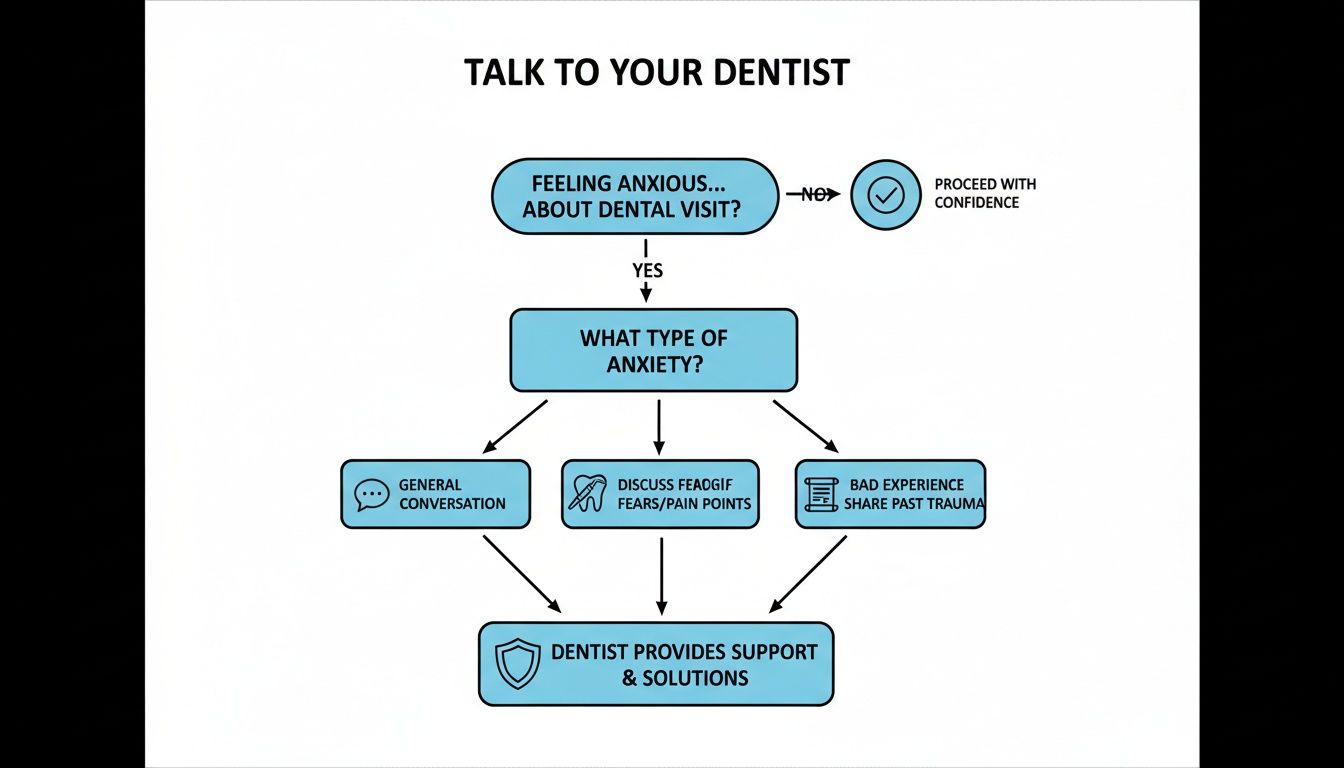
Every solution is tailored to your needs. Your dentist can develop a personalized comfort plan based on your specific fears, whether they relate to pain, sounds, or past experiences.
This table provides a clear comparison of common sedation methods to help you prepare for that discussion.
Understanding these distinctions will help you make an informed decision with your dental team.
Modern dental technology has also made significant advancements in patient comfort. These innovations directly address common anxiety triggers by making procedures faster, quieter, and more precise. Quieter dental instruments, for example, mitigate the high-pitched sound that is a classic trigger for many.
Furthermore, any technology that reduces your time in the dental chair is a benefit for anxious patients.
Digital imaging is a prime example. It is significantly faster than traditional film X-rays, meaning less time with uncomfortable sensors in your mouth and a more efficient appointment overall.
These tools work together to create a less clinical and more patient-centric environment. The less time you spend feeling vulnerable, the better your experience will be.
Choosing the right comfort option is a collaborative decision made with your dentist. A thorough discussion about your fears and comfort levels is essential. A good dental team will explain all available options, their benefits, and what you can expect, without pressure.
Your safety and comfort are paramount. When administered by a trained professional, dental sedation has a proven track record of safety and success. By working with your dentist, you can create a plan that allows you to receive the care you need, free from fear.
Even with a solid plan, specific questions and worries may arise. Addressing these concerns directly can demystify the dental experience and build your confidence before an appointment. Below are clear, informative answers to some of the most common questions about dental anxiety.
Yes, it is extremely normal. Dental anxiety and dental phobia affect millions of people. Research indicates that more than one in five Americans avoids dental visits due to fear. These feelings are often rooted in a past negative or painful experience, particularly during childhood. Other common causes include a fear of losing control, sensory triggers like clinical sounds and smells, or a specific phobia, such as of needles. Acknowledging that your fear is a common and valid response is the first step toward managing it.
This is a common misconception. The vast majority of sedation methods used for dental anxiety are forms of conscious sedation. You will not be "knocked out" or unconscious. Instead, you will be guided into a state of deep relaxation. You will feel calm and perhaps drowsy but will remain awake, able to breathe on your own, and capable of responding to your dentist's questions.
Think of conscious sedation as dimming the lights, not turning them off. It allows you to receive necessary care without the associated fear, helping to build positive memories of dental visits.
Options like nitrous oxide or oral sedatives are designed to reduce anxiety while ensuring you remain safe and responsive. General anesthesia, which induces unconsciousness, is typically reserved for major oral surgeries and is not used for managing anxiety during routine dental care.
A compassionate dental team is prepared to handle this situation. The most effective tool is a pre-arranged stop signal. By agreeing on a simple, non-verbal cue—such as raising your hand—you establish a clear way to communicate that you need an immediate break. When you give the signal, all procedures stop without question.
This agreement places control back in your hands, which can help prevent feelings of panic. If you sense anxiety escalating, use your signal. The dental team will then assist you by:
Your dental team is your partner. We anticipate that anxious patients may need pauses and are here to provide support without judgment, always working at a pace that feels safe for you.
Yes, for many people, it is entirely possible. Dental anxiety does not have to be a permanent condition. It can be managed, reduced, and often overcome by building a new history of positive and safe dental experiences.
Each appointment where you feel heard, respected, and in control helps to counteract old fears. This process gradually rewires your brain's response to the dental environment. The more you experience gentle, compassionate care, the less power your fear will hold. It is a gradual process that starts with finding the right dentist, using effective coping techniques, and communicating your needs openly. With each positive visit, you regain confidence, transforming dental care from a source of dread into a routine part of maintaining your health.
At Clayton Dental Studio, our practice is built on a foundation of understanding and compassion. We know that overcoming dental anxiety begins with trust, and we're committed to earning yours. If you're ready to take the next step toward fear-free dental care, we invite you to schedule a visit with our team. Let us show you how different a dental appointment can feel. Learn more about our patient-first philosophy and book your appointment today at https://www.claytondentalstudio.com.