

Book Your Appointment Today!
Our staff will reach out to you shortly
Thank you! Your submission has been received!
Oops! Something went wrong while submitting the form.


After a professional teeth whitening treatment, your smile looks incredible. Now, the real work begins: maintaining that brilliant result. This isn't about a one-time fix; it's about incorporating specific, actionable habits into your daily life to protect your investment and keep your smile shining.
Think of your bright smile as a newly polished car. You wouldn't drive it through the mud without a plan to wash it. Similarly, your teeth require consistent, daily actions to prevent new stains from setting in.
Protecting that radiant smile is easier than you think. This guide provides a practical playbook for how to maintain white teeth, focusing on three core pillars of lasting brightness.

Here's what we'll cover:
The demand for a confident, white smile is significant. The global teeth whitening market was projected to reach USD 7.99 billion by 2026, with whitening toothpastes accounting for over 42% of that market. This shows a clear public investment in achieving and maintaining whiter teeth.
These products work by using mild abrasives to polish away daily surface stains. For optimal results, an electric toothbrush can be a powerful ally, proven to remove 21% more plaque than a manual one. When combined with regular professional cleanings, which can prevent up to 80% of staining progression, you create a formidable defense against discoloration. You can learn more about these dental market trends from industry reports.
The secret to a lasting white smile isn't a single treatment, but the small, consistent actions you take every single day.
To get started, here is a quick-reference guide that boils everything down to the core habits you need to implement immediately.
This table simplifies the process, giving you the core strategies to implement immediately. Think of it as your daily checklist for a radiant smile.
Following these simple steps every day creates a powerful defense against discoloration, ensuring the results from your whitening treatment last as long as possible.
Maintaining a brilliantly white smile depends on your daily habits. An effective routine is more than just brushing twice a day—it involves using the right tools and techniques to turn a simple habit into a powerful defense against new stains.
When you integrate these small actions into your morning and evening, you protect your whitening investment without it ever feeling like a chore.
Your choice of toothbrush is fundamental. A common misconception is that medium or hard bristles clean better. In reality, they can abrade your enamel, making your teeth more susceptible to staining and sensitivity.
For this reason, a soft-bristled toothbrush is non-negotiable. It is the best choice for preserving enamel and protecting your gums.
Your brushing technique is equally important. Avoid aggressive back-and-forth scrubbing. Instead, use gentle, circular motions, angling the brush at a 45-degree angle toward your gum line. This effectively cleans away plaque without causing unnecessary wear.
When it comes to toothpaste, different formulas serve different purposes:
A practical approach is to alternate: use a whitening paste in the morning to combat new stains and a sensitivity paste at night to protect and soothe your teeth while you sleep.
The goal isn't to scrub stains away—it's to gently polish them off before they have a chance to set. This subtle shift in mindset makes a huge difference in how to maintain white teeth for the long run.
Did you know brushing only cleans about 60% of your tooth surfaces? The other 40% is between your teeth, a prime spot for plaque to accumulate and cause a yellowish appearance.
This is why daily flossing is absolutely essential. It removes debris your toothbrush can't reach, preventing yellow tartar from forming between teeth. If you find traditional string floss difficult, don’t give up. A water flosser is an excellent alternative that many patients find easier and more motivating for daily use.
Finally, complete your routine with an effective mouthwash. The key is to choose an alcohol-free, antiseptic formula. Alcohol can cause dry mouth, which reduces saliva—your body’s natural defense against bacteria and stains. An antiseptic rinse, on the other hand, kills stain-causing bacteria without this harsh drying effect.
These habits—proper brushing, daily flossing, and smart rinsing—work together as a system to actively prevent discoloration from dulling your smile. To see how this daily care fits into the bigger picture, you can learn more about the benefits of a professional dental cleaning in Humble, TX on our website.
Maintaining a white smile extends beyond your bathroom sink and into your kitchen. While a solid hygiene routine is crucial, your dietary choices directly impact how quickly new stains appear. This is your practical "white teeth diet," filled with actionable swaps and tips that deliver real results.
You don't need to eliminate all your favorite foods, but knowing the primary offenders helps you strategize.

This diagram shows how brushing, flossing and rinsing team up to fend off everyday stains.
A few small adjustments can make a significant difference:
For a deeper dive into consumer behavior and emerging whitening products, explore these teeth whitening product market insights.
One of the simplest tricks? Use a straw. It drastically reduces how much pigment hits your front teeth.
Instead of just avoiding certain foods, you can actively choose ones that support a brighter smile.
Crunchy fruits and vegetables like apples, celery, and carrots act as natural abrasives. Their fibrous texture helps scrub away plaque and surface stains with every bite.
Dairy products like cheese and yogurt are rich in calcium and phosphates. These minerals help remineralize enamel and neutralize acids that can lead to staining.
As you refine your daily habits, these food swaps will help keep your teeth noticeably whiter. Here’s a quick reference:
Staining Drinks Vs. Smile-Safe Swaps
Swapping just one beverage or meal component each day can contribute significantly to a brighter, more confident smile.
You’ve invested time and money in achieving a whiter smile; the last thing you want is for everyday habits to reverse your results. Even with a perfect oral hygiene routine, certain lifestyle choices can silently sabotage your efforts by reintroducing stains and weakening your enamel.
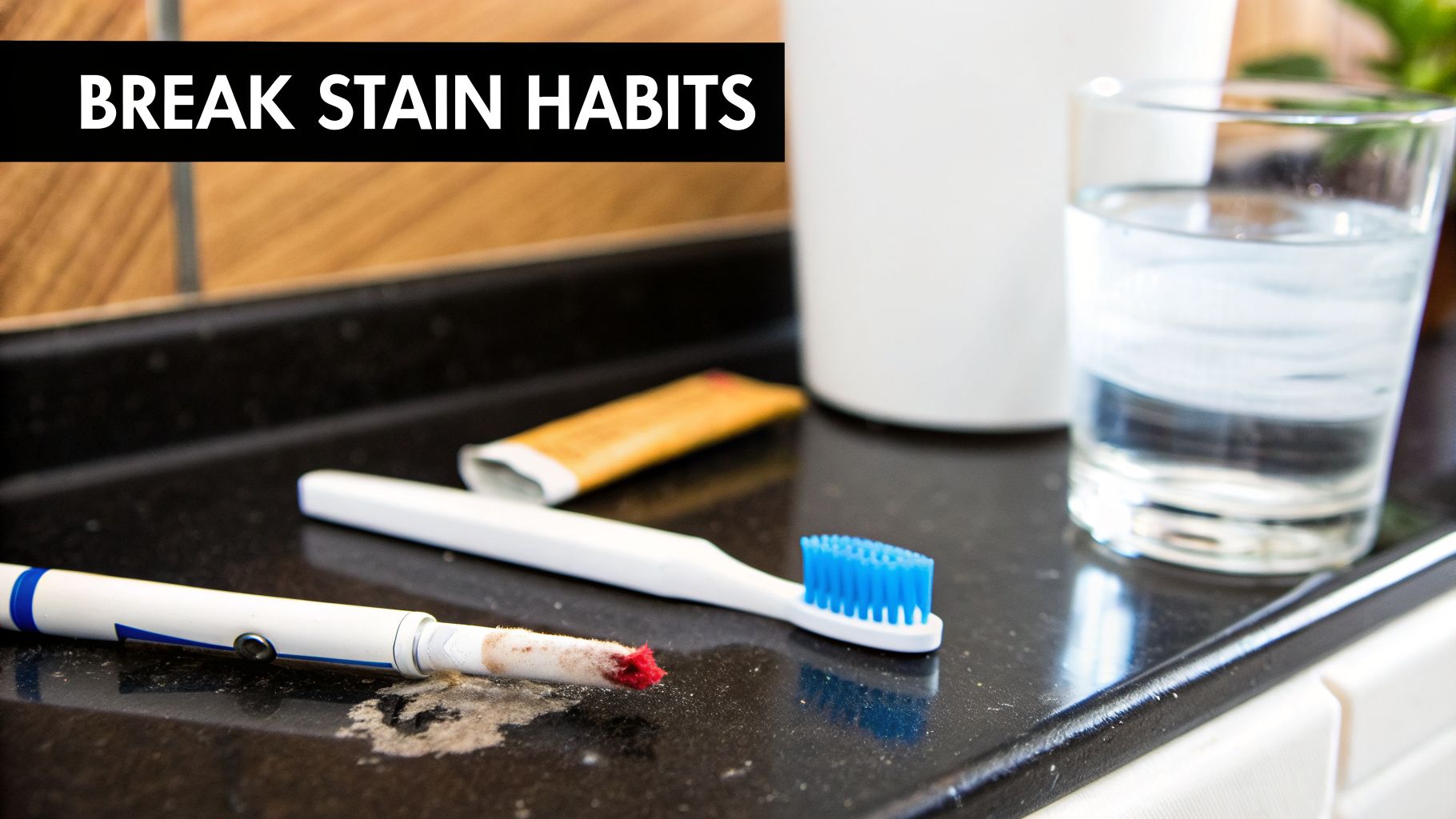
The most significant offender is tobacco. Whether from smoking, vaping, or chewing, the nicotine and tar create deep, stubborn yellow and brown stains that are notoriously difficult to remove. This habit is known to yellow teeth 3x faster than non-smoking. For the 13% of U.S. adults who smoke, quitting is the single most impactful step you can take to protect your smile.
It's not just major habits that cause problems. Seemingly harmless nervous tics can also compromise your smile. Do you chew on ice, pen caps, or your fingernails when you're stressed or concentrating?
This constant grinding can create microscopic cracks in your tooth enamel. While invisible to the naked eye, these tiny fissures are perfect hiding spots for pigments from food and drinks, leading to stains that seem to appear from nowhere. These cracks can also weaken the tooth's structure, potentially causing larger issues later. If you're already noticing sensitivity, you can learn more by reading our guide on common teeth whitening side effects.
Your enamel is strong, but it's not invincible. Treating your teeth gently and breaking these small, damaging habits is a key part of keeping your smile bright and preventing future problems.
One of the most effective yet overlooked tools for smile maintenance is water. Staying hydrated is crucial because it promotes saliva production. Saliva acts as your body's natural rinse cycle, washing away food particles and neutralizing harmful acids before they can stain your teeth or erode enamel.
Beyond drinking water, a few other simple habits can make a surprising difference:
These small lifestyle adjustments are powerful because they work in tandem with your professional care, creating a robust defense system to keep your smile brilliant.
While your daily routine is your first line of defense, a partnership with your dental team is the key to long-term success. Your at-home care is the daily maintenance; professional visits are the expert tune-ups that keep everything in optimal condition. This collaboration is essential for anyone serious about maintaining white teeth.
Even with meticulous brushing and flossing, you cannot remove tartar at home. Tartar is plaque that has hardened and bonded to your teeth, and no amount of brushing will remove it.
Routine six-month cleanings are your secret weapon against a dulling smile. During these appointments, our hygienists use specialized instruments to gently remove stubborn tartar and then polish your teeth to a brilliant shine. This process buffs away new surface stains from coffee, tea, and other sources before they can penetrate deeper into your enamel.
Beyond the cosmetic benefits, regular cleanings are a cornerstone of your overall oral health. By removing plaque and tartar, we actively prevent gum disease and decay, ensuring the foundation of your smile remains strong and healthy. This preventive approach is what truly protects your cosmetic investment.
Your six-month cleaning is more than just a cleaning—it's a preventive measure that polishes away new stains, removes stubborn tartar, and ensures your cosmetic investment is protected.
Even with diligent home care, whitening results will naturally fade over time. The key is to be proactive and schedule a touch-up before your smile fully reverts to its previous shade. A professional touch-up is a quick and highly effective way to restore that initial "wow" factor.
So, how do you know it's time? Key signs include:
As a general guideline, we recommend a touch-up every 12 to 18 months, though this can vary based on your diet and lifestyle. We can help you create a personalized maintenance schedule. If you're weighing your choices, our guide to professional teeth whitening options is a great place to start.
Sometimes, discoloration is not on the surface. These intrinsic stains are located deep within the tooth structure and do not respond to traditional whitening methods. They can be caused by certain medications taken during childhood, trauma to a tooth, or genetics.
For these situations, we have other excellent cosmetic solutions. Dental bonding is ideal for covering an isolated discolored spot, while porcelain veneers can provide a complete and permanent smile makeover by creating a new, flawlessly white surface. These advanced treatments offer a definitive solution for deep-seated stains, ensuring you can achieve the bright, confident smile you desire. Your dentist is your greatest ally on this journey.
Even with a solid plan for how to maintain white teeth, questions are bound to arise. It's normal to wonder about the specifics of long-term care after investing in a professional whitening treatment.
Here are clear, straightforward answers to the most common questions we hear from our patients.
This is the top question, and the answer largely depends on you. With professional whitening, results can last anywhere from six months to three years. The primary factor influencing this timeline is your daily lifestyle.
For example, a daily coffee drinker or smoker may notice fading within the first year. Conversely, if you consistently follow the tips in this guide—diligent hygiene, a low-stain diet, and regular cleanings—you can extend your results closer to the three-year mark. As a general rule, we recommend a professional touch-up every 12 to 18 months to maintain peak brightness.
The longevity of your whitening results isn't set in stone. Your everyday choices directly impact how long you can enjoy that brilliant, post-treatment shine.
Many over-the-counter (OTC) products can be excellent for maintenance. Whitening toothpastes and mouth rinses are effective for managing new daily surface stains from food and drinks.
However, caution is needed with stronger at-home products like whitening strips or bleaching gels. Overuse can lead to significant tooth sensitivity and gum irritation. It is always best to consult your dentist before incorporating any new whitening product into your routine. We can recommend safe and effective options for your specific needs, ensuring you don't inadvertently damage your enamel or cause discomfort.
When performed by a trained dental professional, teeth whitening is a very safe procedure that does not damage your tooth enamel. The whitening agents used in a dental office are formulated and applied in a controlled environment to ensure your teeth are protected.
The most common side effect is temporary sensitivity, which typically subsides within a day or two. Enamel damage or severe pain usually results from misusing or overusing high-concentration at-home kits without professional guidance. This is why a pre-treatment consultation is essential—to ensure your path to a whiter smile is a safe one.
This is a critical question to address before beginning any whitening treatment. Whitening agents only work on natural tooth enamel. They will not change the color of dental restorations such as crowns, veneers, or composite fillings.
If you whiten the natural teeth around these restorations, it can create a noticeable color mismatch. For anyone with existing dental work on their front teeth, it is crucial to discuss your goals with us first. A strategic plan might involve whitening your natural teeth to your desired shade, and then replacing the older restorations to match, creating a seamless and uniform smile.
Ready to protect your bright smile with a team that puts you first? The experts at Clayton Dental Studio are here to help you create a personalized maintenance plan. Schedule your consultation today and let us help you keep your smile brilliant for years to come.