

Book Your Appointment Today!
Our staff will reach out to you shortly
Thank you! Your submission has been received!
Oops! Something went wrong while submitting the form.


Dental anxiety is a common and valid concern. For many, the fear of pain or discomfort can be a significant barrier to receiving essential oral healthcare. Fortunately, modern dentistry offers a range of anesthesia and sedation options to ensure a comfortable, stress-free experience. This guide provides actionable information to help you find a qualified dentist who uses anesthesia and choose the right option for your needs.
The concept of a dental appointment can trigger anxiety, but advancements in anesthesia have transformed patient care. Today's sedation options are designed to manage both physical discomfort and the emotional stress associated with dental work, making vital treatments accessible to everyone.
The growing patient demand for comfort-focused care is reflected in market trends. The global dental anesthesia market was valued at approximately $2.42 billion in 2025 and is projected to reach $3.94 billion by 2035. This growth underscores the importance of these options in contemporary dentistry. You can explore more data on this market trend to understand its expansion.
This guide will break down the types of anesthesia available in a dental practice, from local anesthetics for minor procedures to general anesthesia for major surgeries. Understanding these options is the first step toward having an informed discussion with your dentist.
Anesthesia and sedation exist on a spectrum, with each level tailored to different procedures and patient anxiety levels. The goal is not a one-size-fits-all solution but a customized approach to ensure your safety and relaxation.
Here are the primary categories you will encounter:
Actionable Insight: Anesthesia is a tool for managing both pain and anxiety. Whether you need to numb a single tooth or manage significant dental phobia, a specific solution exists. Your search for a "dentist that use anesthesia near me" is the first step toward reclaiming your oral health without fear.
Determining the most appropriate type of dental anesthesia is a collaborative process between you and your dentist. The decision is based on your comfort level, medical history, and the specific dental procedure you need. The primary objective is to select an option that ensures you feel safe and completely at ease.
This process begins with a thorough pre-appointment evaluation. During this consultation, your dentist will discuss your medical history, any medications you are taking, and your previous experiences with anesthesia. This conversation allows the dental team to identify the safest and most effective option for your unique circumstances, whether you are a child needing mild sedation for a filling or an adult undergoing extensive cosmetic work.
The following flowchart illustrates the typical decision-making process. It maps patient anxiety levels to corresponding anesthesia solutions, ensuring a comfortable experience for every individual.
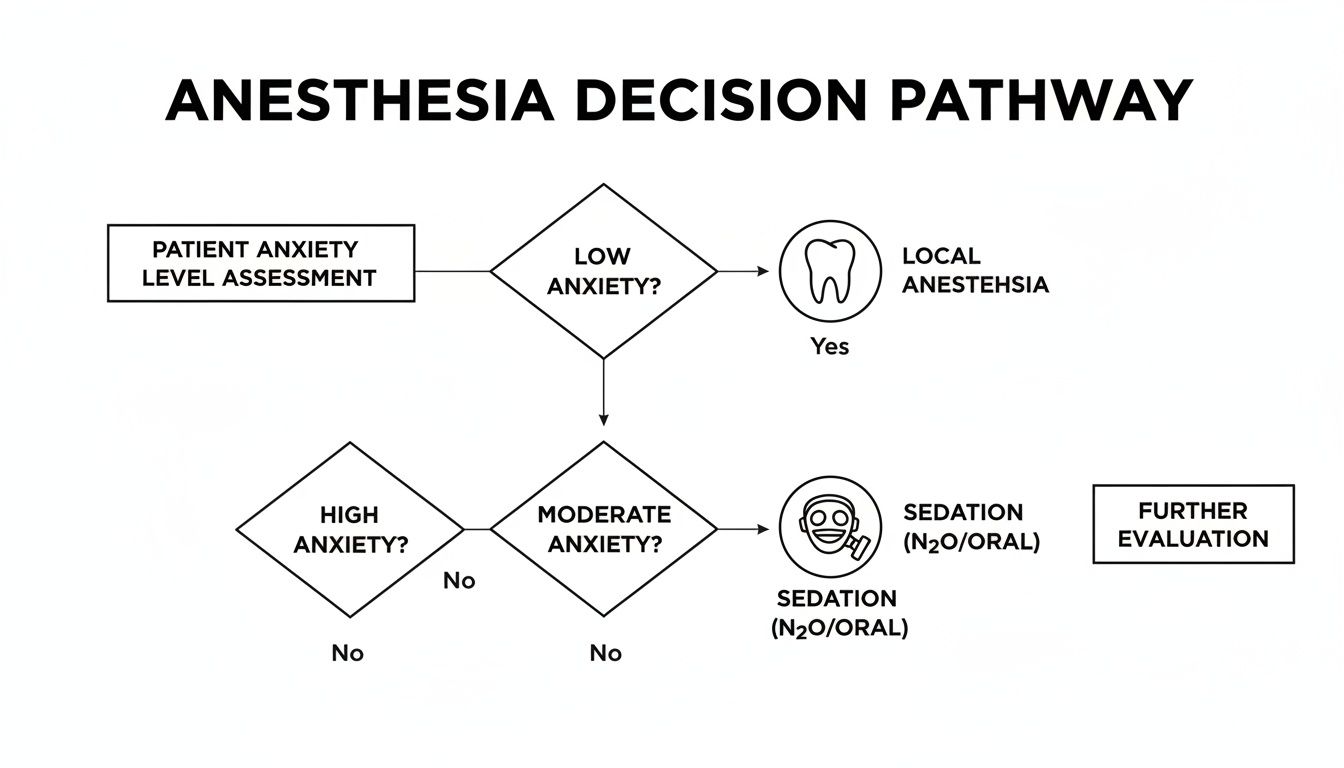
This chart demonstrates that for every level of anxiety, a corresponding solution is available to ensure that fear does not prevent you from receiving necessary dental care.
To prepare for your consultation, it is helpful to understand the primary anesthesia options. When searching for a "dentist that use anesthesia near me," you are looking for a practice with the expertise to provide the right choice for your specific needs.
The selection of anesthesia is analogous to choosing the right tool for a job; the level of sedation must match the procedure and your personal requirements.
An open dialogue with your dental team is the foundation of a positive experience. Understanding your options beforehand empowers you to advocate for your own comfort, ensuring you feel confident and in control of your treatment plan.
The table below provides a clear breakdown of common dental anesthesia and sedation options. Use it as a reference to understand what to expect and what questions to ask your dentist.
| Type of Anesthesia | Level of Consciousness | How It's Administered | Best For | Recovery Time |
|---|---|---|---|---|
| Local Anesthesia | Fully awake and aware | Injection at the treatment site | Routine procedures like fillings, crowns, and root canals | Wears off in a few hours |
| Nitrous Oxide | Awake but very relaxed and calm | Inhaled through a nose mask | Mild to moderate anxiety, simple procedures, children | Immediate; effects wear off in minutes |
| Oral Sedation | Drowsy but responsive | A prescribed pill taken before the appointment | Moderate anxiety, longer or more complex procedures | Several hours; requires a driver home |
| IV Sedation | Deeply relaxed; may fall asleep and have little memory of the procedure | Administered directly into a vein | High anxiety, dental phobia, major surgeries (implants, extractions) | Full day; requires a driver and supervision |
Each option serves a distinct purpose, from numbing a small area to ensuring you can rest peacefully through a major procedure. Discussing these with your dentist will help determine the optimal choice for a positive and comfortable experience.
Modern patient comfort extends beyond the type of anesthetic used; it also involves the technology that makes its delivery safer, more precise, and less intimidating. When you search for a "dentist that use anesthesia near me," you are effectively looking for a practice that invests in these advancements to enhance the patient experience.
These are not merely cosmetic upgrades but functional tools designed to reduce chair time, improve diagnostic accuracy, and minimize discomfort.

Significant progress in this field is driven by patient demand for more comfortable and less anxious dental visits. The global market for dental anesthesia is projected to grow from $2.33 billion in 2026 to $3.02 billion by 2030, a trend directly influenced by the availability of new delivery systems and improved anesthetics. You can read more about the growth of dental anesthesia technology to see how it is reshaping patient care.
Modern dental technology functions as an integrated system to ensure a smooth, pain-free visit. For example, AI-assisted digital X-rays provide high-resolution images instantly, enabling faster diagnosis and more accurate procedure planning, which translates to more efficient care for you.
Here are a few impactful advancements to look for:
When a dental practice invests in these tools, it signals a strong commitment to patient well-being. This technology is about improving every aspect of your visit, from diagnosis to recovery, to be as comfortable as possible.
These innovations are actively used in forward-thinking practices to improve patient outcomes daily. You can learn more about our approach to dental anxiety and comfort to see how we leverage these technologies for our patients. Choosing a dentist who embraces these advancements is a key step toward ensuring a positive and comfortable dental experience.
A general search for "dentist that use anesthesia near me" is a good starting point, but specificity yields better results. Consider the level of sedation you may need. For instance, if you anticipate needing more than nitrous oxide, use targeted search terms like “IV sedation dentist Houston” or “sedation dentistry Humble” to find practices specializing in these advanced comfort options.
Once you have a list of potential dentists, their website is your primary research tool. A professional and well-organized site often reflects a practice that prioritizes the patient experience. Look for a dedicated page that clearly explains the types of sedation they offer, such as nitrous oxide, oral sedation, or IV sedation.
Analyze the language and tone. Does the content speak directly to patients with dental anxiety? A team genuinely committed to patient comfort will often provide information about their specialized training and philosophy on stress-free dentistry.
Most importantly, verify their credentials. Any dentist providing IV sedation must have completed extensive, specialized training and hold proper certification. A reputable practice will display these credentials on their website, providing assurance that you are in expert hands.
Patient reviews provide invaluable insights, but you must know what to look for. Go beyond star ratings and read comments for specifics about how the team manages patient comfort and communication.
A great sedation dentist is not only an expert in the procedure but also an expert in managing fear. Look for reviews with comments such as, "I was terrified, but the team made me feel completely relaxed," or "They took the time to explain everything and answered all my questions."
Use this checklist when evaluating a dentist's website and reviews:
Finding the right sedation dentist requires some research, but it is a worthwhile investment to find a team that is both qualified and compassionate. To see what a patient-focused practice looks like, you can learn more about how to find a great dentist in the Houston area. This groundwork will help you find a dental practice where you feel safe and understood.

Your consultation is a critical opportunity to ensure you are choosing the right provider for a safe and comfortable experience. This is the time to ask detailed questions that go beyond a simple "Do you offer sedation?" to gain true peace of mind.
A good dentist will welcome your questions and provide clear, reassuring answers. Asking the right questions helps you evaluate their expertise, their commitment to safety, and whether their approach aligns with your needs.
Begin by inquiring about credentials and safety protocols. This is especially important if you are considering deeper forms of sedation like IV sedation, which requires advanced, specialized training.
Here are essential questions to ask:
The emphasis on safety is paramount. The World Health Organization reports that 2.4 billion people globally have untreated dental caries, a key factor driving the widespread adoption of dental anesthesia. This need has spurred the development of safe and effective sedation options. You can discover more insights about the role of anesthesia in modern dentistry.
Once you are confident in their safety standards, turn your attention to the logistics of your appointment. Understanding what to expect before, during, and after the procedure can alleviate anxiety stemming from the unknown.
Asking detailed questions about aftercare confirms that your dentist is focused on your well-being from the initial consultation until you are fully recovered.
Do not hesitate to ask practical questions:
With these answers, you can proceed with confidence, knowing you have found a "dentist that use anesthesia near me" who is not only capable but also genuinely caring.
It is natural to consider the cost of sedation dentistry. However, concerns about affordability should not prevent you from receiving necessary and comfortable care. Understanding how insurance and other payment options work can help alleviate financial stress.
For insurance purposes, the key term is "medical necessity." While standard local anesthetic for a filling is almost always covered, more advanced sedation options often require additional justification. For example, IV sedation may be deemed medically necessary for complex oral surgery or for a patient with a documented condition that makes standard treatment impossible.
The first step is to contact your insurance provider directly. Inquire about their specific coverage for different types of sedation, such as nitrous oxide, oral sedation, and IV sedation. Your dentist's financial coordinator is also an invaluable resource, as they can help interpret your benefits and explain your coverage.
The office can also submit a pre-treatment estimate to your insurance company. This provides a "price preview" of the entire treatment plan, giving you a clear estimate of your out-of-pocket costs before you commit to the procedure.
If your insurance does not cover sedation or if you do not have dental insurance, many modern practices in the Humble and Atascocita area offer practical financial solutions.
Do not be deterred by an initial cost estimate. Many dentists are committed to making care accessible and provide several options to manage treatment costs.
Here are common alternatives to explore:
By exploring these financial pathways, you can schedule your dental treatment with the peace of mind that the financial aspect is managed.
It is normal to have questions when considering sedation dentistry. An informed decision is the first step toward a comfortable and anxiety-free dental visit.
These are some of the most common questions we hear from patients in the Humble and Kingwood areas, along with straightforward answers.
Yes, when administered by a dentist trained and experienced in pediatric sedation, it is very safe. Protocols and dosages are meticulously calculated based on a child’s age, weight, and overall health.
For most children, a light sedation option like nitrous oxide (laughing gas) is sufficient. It has an excellent safety record and is highly effective at helping children relax and remain still, making the experience less intimidating for them and less stressful for parents. Always confirm that a dentist has extensive experience using sedation with pediatric patients.
The primary goal is a pain-free experience. This is achieved through a two-part comfort system. First, sedation dentistry calms your mind and alleviates anxiety. Second, even while you are deeply relaxed, a local anesthetic is used to completely numb the specific area being treated.
This dual approach offers the best of both worlds: the sedation keeps you calm, while the local anesthetic ensures you feel no physical pain. Patients undergoing IV sedation or general anesthesia will be completely unaware and will not feel any pain.
The recovery timeline depends entirely on the type of sedation used.
The answer depends on your specific insurance plan. Local anesthetic is almost always covered. For other forms of sedation, many plans require a clear "medical necessity."
This may apply to major oral surgery (e.g., impacted wisdom teeth) or for patients with a documented medical condition or severe dental phobia that prevents them from receiving necessary care. It is crucial to have your dentist's financial coordinator verify your benefits with your insurance provider before your appointment. This will clarify what to expect and allow you to explore other financing options if needed.
Ready to have a comfortable, stress-free dental visit? At Clayton Dental Studio, we put your comfort first with a range of safe and effective anesthesia options. Schedule your consultation today at https://www.claytondentalstudio.com.