
Book Your Appointment Today!
Our staff will reach out to you shortly
Thank you! Your submission has been received!
Oops! Something went wrong while submitting the form.


The vet says your dog needs dental work, and your mind jumps straight to the bill. You may have gone in expecting a quick exam and walked out holding an estimate that feels hard to process. That reaction is normal.
Many pet owners aren't upset because they don't care. They're upset because they care a lot, and they're suddenly trying to weigh pain relief, safety, and money all at once.
Affordable dental care for dogs starts with a mindset shift. The goal isn't to find the cheapest possible option. The goal is to find the safest care that fits your budget, while avoiding choices that look inexpensive now but create bigger problems later.
A common scenario goes like this. Your dog is still eating, still wagging, still acting mostly normal. Then your veterinarian checks the mouth, points out tartar, gum inflammation, maybe a loose tooth, and recommends dental treatment. You hear "anesthesia," "X-rays," and "possible extractions," and everything starts sounding expensive.
That moment can make people freeze. Some delay. Some start searching for the lowest advertised cleaning. Some assume dental care is optional if the dog seems comfortable.
But you have more room to think than it first feels like.
Dogs often hide oral pain well. A dog can keep eating and still have meaningful dental disease. So the best next step isn't panic or bargain hunting. It's getting clear on three things: what your dog likely needs, what each part of the estimate does, and where you can save without lowering safety.
If you're trying to understand what a proper dental appointment involves from start to finish, this plain-language overview of what happens during dental cleaning can help you think through the process in a calmer, more practical way.
First priority: Separate urgent treatment from everything else. If your dog has trouble eating, facial swelling, bleeding, or obvious oral pain, cost planning still matters, but delaying care matters too.
The reassuring part is this. Dental care isn't one single decision. It's a series of decisions. You can ask for a detailed estimate. You can compare clinics. You can start home care today. You can ask what must be done now and what can be staged later.
That approach gives you back control.
A veterinary dental estimate can look intimidating because it combines diagnosis, anesthesia, cleaning, and treatment into one event. Unlike a human dental cleaning, your dog can't sit still, open on command, rinse, or tolerate instruments under the gumline while awake.
Professional dog teeth cleaning typically ranges from $350 to $500 for routine procedures, but can exceed $1,500 with advanced care, and that may include blood work, extractions, and medications, according to PetMD's dog teeth cleaning cost guide.
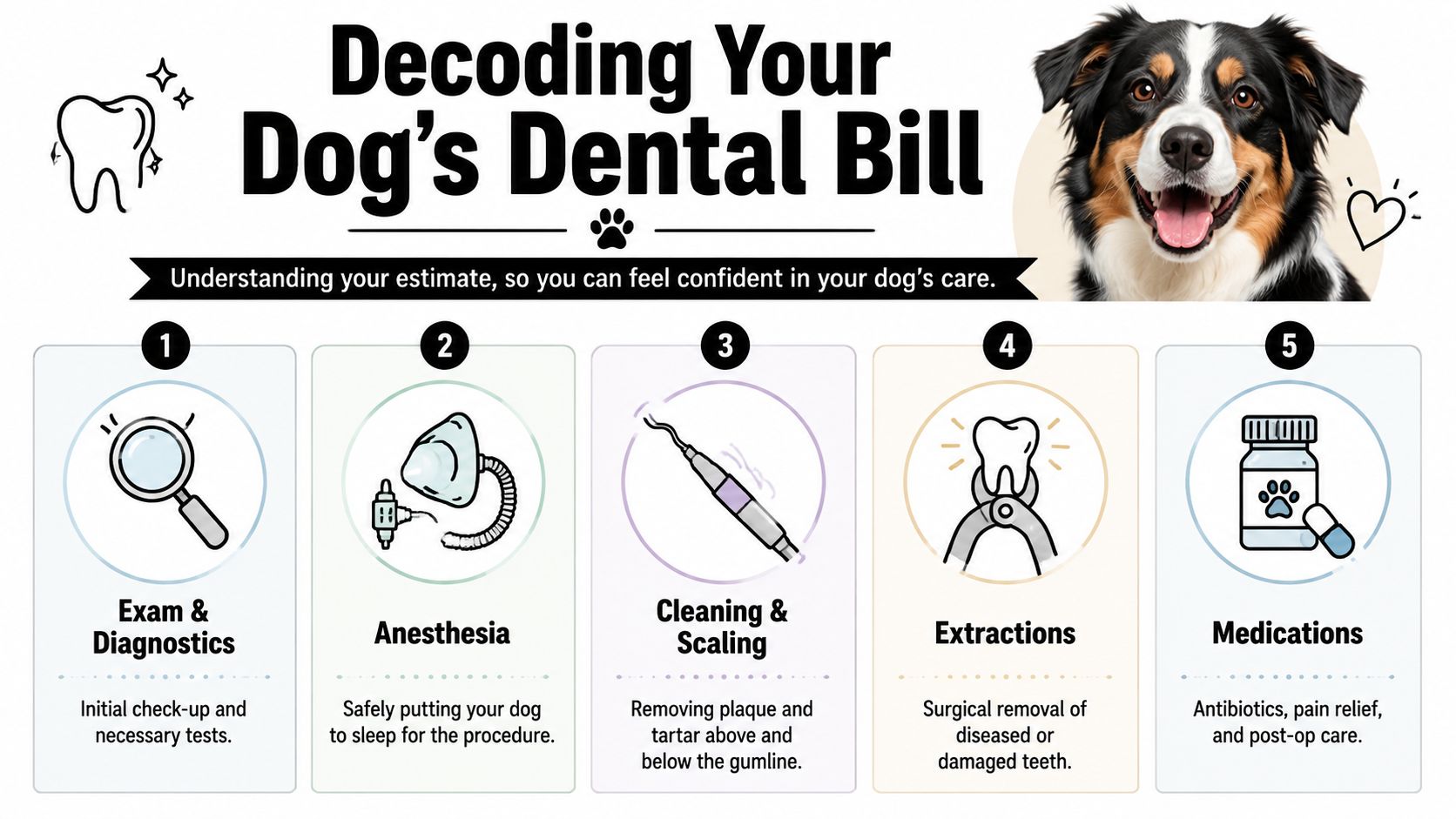
Here are the line items that often confuse owners most:
Exam and diagnostics
This is the front-end assessment. It may include the physical exam and pre-anesthetic blood work. PetMD notes blood work can add $75 to $200 in some cases.
Anesthesia
This isn't an add-on for convenience. It's what allows a complete, safe dental procedure. Your dog has to stay still for cleaning below the gumline, radiographs, probing, and any treatment.
Cleaning and polishing
This removes plaque and tartar, then smooths the tooth surface to slow new buildup.
Dental X-rays
These help the veterinary team see what isn't visible above the gumline. A mouth can look manageable on the surface and still have deeper disease.
Extractions and medications
If a tooth is too diseased to save, extraction becomes treatment, not an upsell. PetMD reports extractions can range from $500 to $2,500 per tooth, while medications may add $35 to $85.
The biggest cost swing usually comes from what the team finds once they can fully examine the mouth. A routine cleaning is one thing. Multiple diseased teeth, surgical extractions, infection control, and post-op pain management are another.
A useful way to think about it is this:
| Estimate item | Why it matters |
|---|---|
| Pre-anesthetic testing | Checks whether the team needs to adjust the plan for safety |
| Anesthesia | Makes a complete dental procedure possible |
| Radiographs | Finds hidden disease |
| Cleaning | Removes current buildup |
| Extractions | Treats painful or unsalvageable teeth |
| Medications | Supports recovery and comfort |
If you're addressing your dog's dental issues and trying to judge whether a quote is reasonable, focus less on the final total and more on whether the estimate explains what is included.
Ask for an itemized estimate and a plain-language explanation of which parts are expected, which are possible, and which costs depend on what they find during the procedure.
That same habit helps when you're comparing options for people in your own household too. A simple framework for how to afford dental work can make cost conversations feel less overwhelming, whether the patient has two legs or four.
The cheapest dental treatment is the one your dog never ends up needing.
That isn't wishful thinking. Dental disease is the most common health issue in dogs, affecting 80% by age 3, and two-thirds of owners neglect basic dental hygiene, according to the AKC Canine Health Foundation's dental health resource.
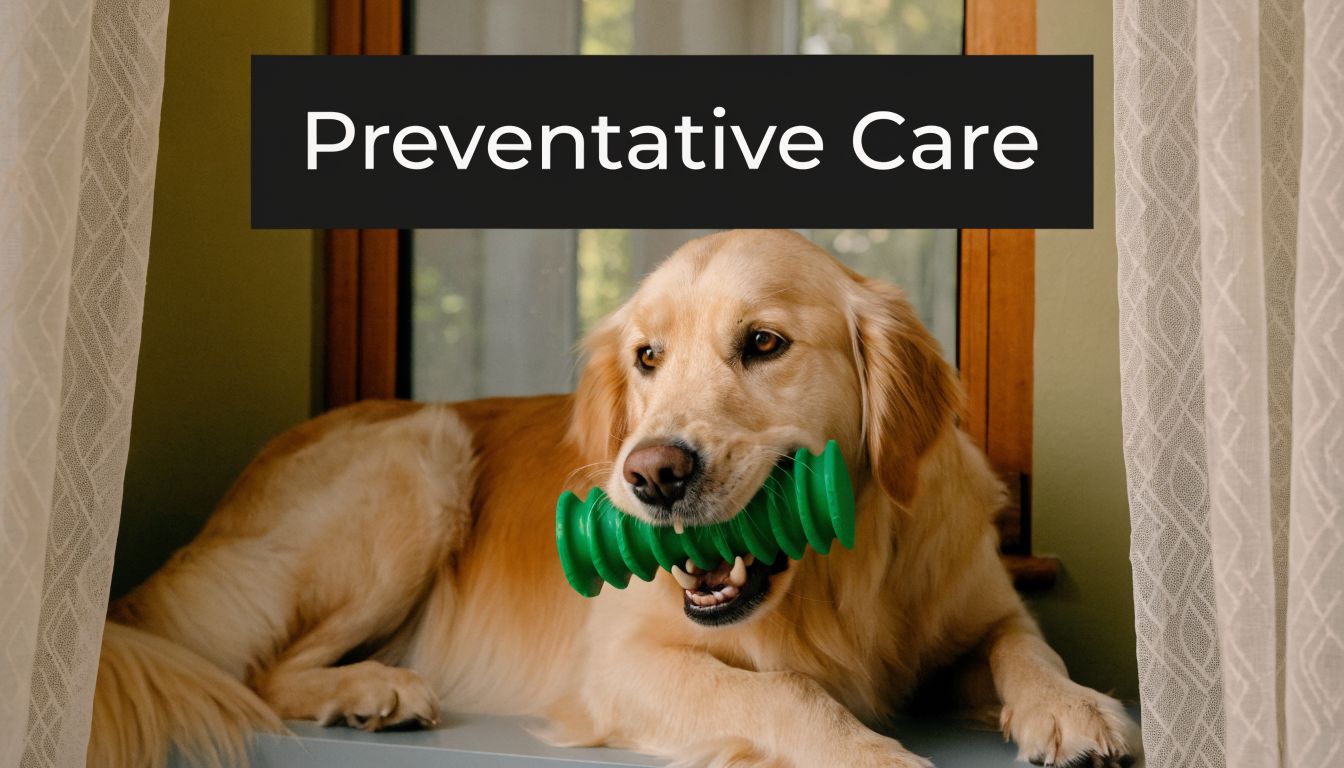
Owners sometimes hear "brush your dog's teeth" and file it under nice idea, unrealistic in real life. But home care isn't a bonus. It's the part of affordable dental care for dogs that gives you the most control.
A controlled study summarized in this PMC article on home dental protocols found that brushing every other day with enzymatic toothpaste reduced supragingival deposits by 28 to 36% and gingival inflammation by 15 to 20% after 8 weeks in unscaled dogs. The same source notes low-cost tools like a $10 per month VOHC-approved chew routine or a $5 finger brush can achieve up to 40% control over plaque deposits.
That matters because prevention can keep a mild problem from becoming a procedure that includes multiple extractions, medications, and recovery care.
You do not need a perfect dog or a perfect routine. You need consistency.
Start small
Use a finger brush or soft pet toothbrush and canine toothpaste. Spend a few days just letting your dog lick the toothpaste, then touch the outer teeth briefly.
Focus on the outside surfaces first
That's where many dogs tolerate brushing best. Even short sessions help.
Add a dental chew if brushing is hard
VOHC-approved chews can support mechanical cleaning between brushings.
Use water additives carefully
These can help some dogs, especially if brushing is inconsistent, but they work best as support rather than replacement.
If you want extra ideas on building a routine with food-safe, habit-based strategies, this natural dog teeth cleaning guide is a helpful complement to veterinary care.
A dog who tolerates 30 seconds of brushing several times a week is already in a better position than a dog who gets nothing between professional visits.
A short visual can also help if your dog resists handling around the mouth:
Today. Not after the next cleaning.
Even if your dog already has tartar, daily or near-daily home care can slow additional buildup after treatment and may reduce how quickly problems return. If you're thinking in budget terms, prevention works like maintenance on a car. It's less dramatic than repair, but far less costly than neglect.
For families trying to understand how preventive thinking lowers future treatment pressure, this page on preventative dental care in Humble shows the broader logic well. Regular maintenance usually costs less than delayed treatment.
Sometimes prevention isn't enough because the disease is already there. Then the question changes from "How do I avoid this?" to "How do I handle this cost without making a rushed decision?"
A lot of owners think the only options are paying in full or saying no. That's not the full picture. The Pearly Bites overview notes that many owners don't know about financing choices beyond upfront payment, and points to the rise of in-house membership plans and third-party financing such as CareCredit or Cherry. It also describes cost as a major reason pet owners delay care.

Each tool solves a different problem.
| Option | Best for | Main question to ask |
|---|---|---|
| Pet insurance | Unexpected future issues | Does the policy cover dental illness, accidents, or only limited scenarios? |
| Wellness or membership plan | Predictable preventive care | Does it include cleanings, exams, or service discounts? |
| Third-party financing | Large current bill | What are the payment terms and total repayment cost? |
Insurance works best when you buy it before a problem is documented. Once dental disease is already present, coverage may be limited or excluded depending on the policy. Read the dental section carefully. Some plans handle accidents differently from illness, and waiting periods matter.
If your dog is young and healthy, insurance may be worth exploring as part of your long-term safety net. If your dog already needs treatment now, insurance is usually less helpful for the immediate bill.
These plans are different from insurance. They often spread preventive costs across the year and may include discounts on other services. That can be useful if your dog needs regular exams and dental maintenance.
This model works best for owners who want predictable monthly budgeting instead of large surprise charges.
CareCredit and Cherry are common examples people encounter in both human and pet care. They may let you move forward with treatment now and pay over time. That can be appropriate when your dog is painful and delaying care would likely mean worse disease later.
Money-saving rule: Financing can be helpful, but only if you understand the full repayment terms before you sign.
Before choosing any payment option, ask:
The right answer depends on whether you're trying to prepare for future care, smooth out routine costs, or handle a dental problem that can't wait.
If your estimate is more than you can manage, your next move isn't to type "cheap dog dental cleaning near me" and hope for the best. Search with a filter. You're looking for lower-cost care that still follows good veterinary standards.

Start with organizations that are built to expand access, not just advertise low prices.
Veterinary schools and teaching hospitals
These may offer supervised care and can sometimes be worth checking if you live near a program.
Humane societies and SPCAs
Some have clinics, referral programs, or lists of local low-cost providers.
Nonprofit veterinary clinics
These often focus on preventive services, surgery, and community-based care.
Your regular veterinarian
Ask whether they know of any local assistance programs, rotating low-cost dental days, or charitable funds.
A lower fee only helps if the care is legitimate. Use a short checklist when you call.
Ask whether the clinic:
If the answers are vague, keep looking.
Low-cost clinics can reduce the price of treatment, but home care reduces how often you need treatment in the first place. The same PMC review cited earlier reported that $10 per month VOHC-approved chews or a $5 finger brush can provide up to 40% control over plaque deposits when used consistently, making later cleanings potentially less frequent or less involved.
That means your best budget strategy is usually a combination:
Lower-cost care should still sound organized, transparent, and medically grounded. If a clinic can't explain its process clearly, that's a warning sign.
You can also ask one useful question that many owners miss: "If I can't do everything at once, what is the most important step to do first?" A good clinic will help you prioritize rather than shame you for your budget.
The biggest mistake owners make isn't caring too little. It's trusting a low price that hides major omissions.
The clearest example is anesthesia-free dentistry. It can sound appealing because it seems gentler, simpler, and less expensive. But the core problem is that it doesn't deliver the same medical service as a full veterinary dental procedure.
The AVMA pet dental care guidance explains why anesthesia-based dental care is the gold standard. General anesthesia is needed for subgingival scaling and radiography, and 70 to 80% of dental pathology may be hidden below the gumline. Non-anesthetic dentistry can't address that, which is why the AVMA and AAHA recommend against it.
A visible tartar scrape can make teeth look cleaner while painful disease remains underneath. That's not treatment. That's cosmetic improvement.
When owners hear "my dog is too old for anesthesia" or "we can clean the teeth while your dog is awake," they're often being asked to trade medical completeness for a lower upfront fee. The problem is that hidden disease doesn't stop progressing because the visible tartar was removed.
Not every bad value is anesthesia-free dentistry. Watch for these too:
No itemized estimate
If a clinic won't break down the expected charges, it's hard to compare responsibly.
No discussion of dental X-rays
A clinic doesn't have to promise every dog the same treatment plan, but it should explain how hidden disease is evaluated.
Pressure to book immediately without explanation
Urgency should come from your dog's condition, not from sales pressure.
No clear plan for extractions or pain control
Dental treatment can turn into surgical care. The clinic should be ready to explain that possibility.
If the selling point is only "cheaper," ask what is being left out.
Safe affordable dental care for dogs isn't about rejecting cost-saving options. It's about rejecting shortcuts that remove the parts of care your dog needs.
When you boil all of this down, the path forward is usually simpler than it first seems. You don't need to solve every dental issue today. You need a plan you can start today.
Begin home care now
Even a basic routine with a finger brush, pet toothpaste, or VOHC-approved chew is better than waiting for the "perfect" time.
Ask your veterinarian for an itemized estimate
You want to know what is included, what might change during the procedure, and which parts are essential now.
Build your money strategy before the next emergency
That may mean insurance for future issues, a membership plan for preventive care, third-party financing, or a dedicated pet savings fund.
Compare alternatives carefully
If the first estimate is too high, check reputable low-cost clinics, nonprofits, and veterinary school resources. Compare quality, not just price.
Walk away from unsafe bargains
If a clinic can't explain anesthesia, radiographs, follow-up care, or pain management, keep looking.
Ask every clinic the same practical question: "What is the safest way to help my dog within my budget?"
That wording changes the whole conversation. It tells the team you're committed to care, but you need help making it workable. Good veterinary professionals respond well to that. They can often help prioritize treatment, discuss timing, and suggest realistic next steps.
Affordable dental care for dogs is possible. Not always cheap. Not always convenient. But possible, especially when you focus on prevention, transparency, and medical quality instead of the lowest sticker price.
If you're weighing costs, treatment options, or financing for your family's dental care, Clayton Dental Studio offers the kind of transparent pricing, preventive mindset, and flexible payment support that helps people make confident decisions without pressure.