

Book Your Appointment Today!
Our staff will reach out to you shortly
Thank you! Your submission has been received!
Oops! Something went wrong while submitting the form.


A lot of people start looking up zoom teeth whitening houston when something specific is coming up. A wedding. A job interview. Family photos. A reunion where they know cameras will be everywhere. Others aren't preparing for an event at all. They're just tired of seeing coffee, tea, or age-related yellowing every time they look in the mirror.
That search usually leads to a flood of options. Whitening strips at the pharmacy. Generic kits online. Social media ads promising dramatic changes. Then there's in-office whitening, which sounds faster but also raises fair questions. Will it work on your teeth? Will it make them sensitive? Is it worth paying for professional treatment instead of trying something at home first?
Those are the right questions to ask. Whitening isn't one-size-fits-all, and the most helpful approach is an honest one. Some smiles respond very well to Zoom. Some need gum or cavity treatment before whitening. Some patients are better served by take-home trays, bonding, or veneers if they want a different kind of cosmetic change.
A common Houston scenario is simple. Someone has a wedding, work event, graduation, or family photos coming up and wants a noticeable change without spending two or three weeks testing strips or online kits that may or may not deliver much.
That is where Zoom often fits well. It is an in-office whitening option for patients who want a professionally supervised visit, same-day improvement, and a clearer understanding of what their teeth are likely to do before they spend the money. If you want a practical overview of how professional teeth whitening works and what affects the results, that background helps set realistic expectations.
Patients usually ask about Zoom for one of four reasons:
In practice, the appeal is not just speed. It is predictability.
Zoom can whiten many healthy natural teeth very nicely, especially when the darkening is related to age, food, drink, or smoking. It does have limits. It will not whiten crowns, veneers, or existing bonding, and it will not correct uneven tooth shape, chipped edges, or deep internal discoloration in every case.
Sensitivity is the concern I hear most often, and it deserves a direct answer. Some patients feel little to nothing. Others get temporary zingers during or after treatment, especially if they already have recession, exposed root surfaces, or a history of sensitivity with cold foods and drinks. That does not automatically rule out Zoom, but it may change the plan, the strength used, or whether take-home whitening makes more sense.
A good whitening consultation should feel straightforward. You should leave knowing whether Zoom is a good fit, what kind of improvement is realistic for your smile, what the likely cost range will be, and how to reduce post-treatment sensitivity if you decide to go ahead.
Philips Zoom is a professional, light-activated whitening system used in the dental office. The basic idea is straightforward. A whitening gel is placed on the teeth, then a specialized light helps activate the process so stain molecules can be broken down more efficiently.
Philips states that Zoom WhiteSpeed can produce up to 8 shades whiter in less than one hour, and that the hydrogen peroxide gel works by penetrating enamel and dentin to oxidize stain molecules rather than abrading the tooth surface, as explained in Your Dentistry Guide's Philips Zoom summary.
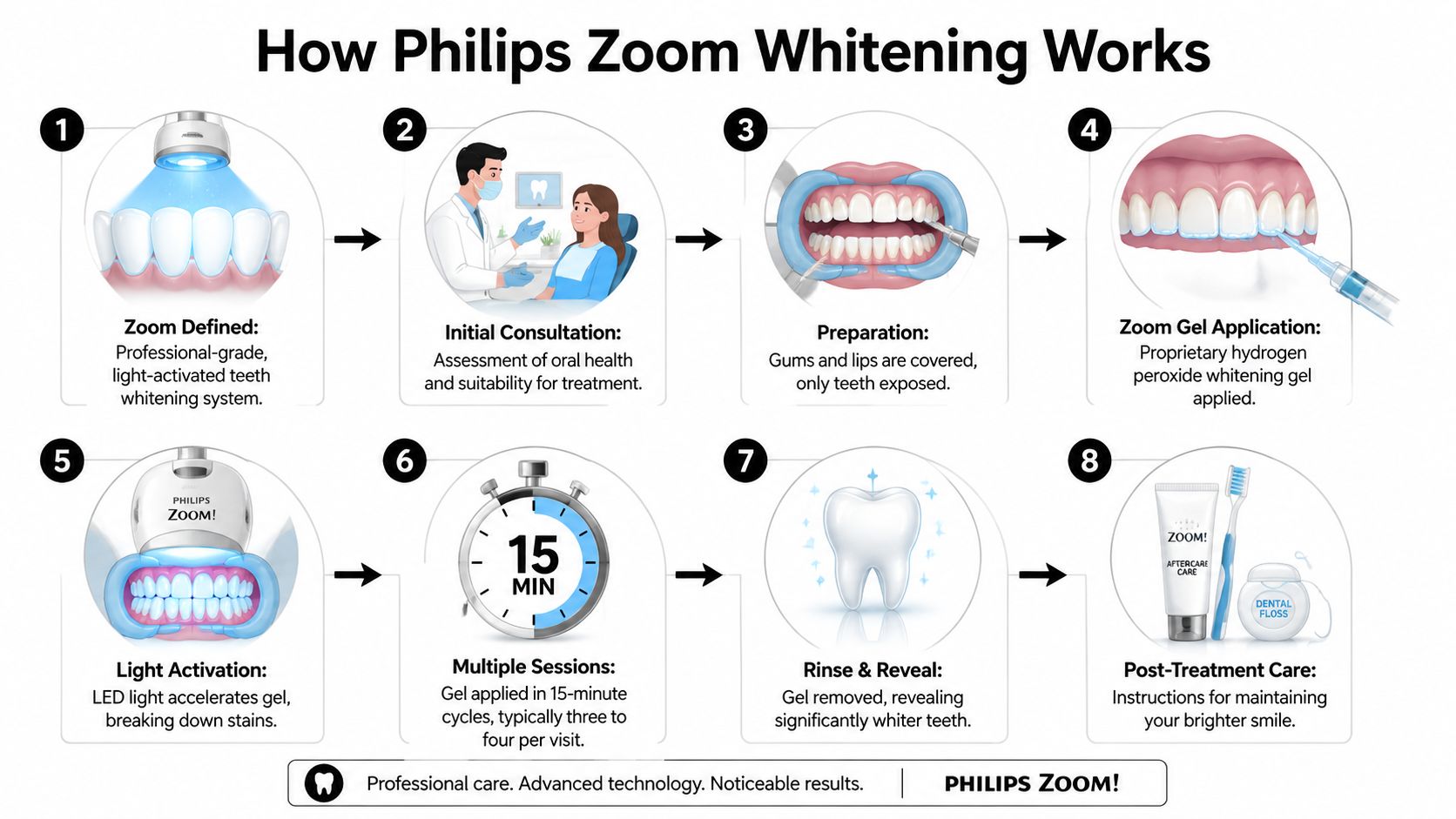
Think of Zoom as a chemical stain-lifting treatment, not a scrub. Whitening doesn't sand or scrape the teeth. The gel releases oxygen species that move into the tooth structure and lighten the compounds that make teeth look darker.
That matters because many common stains aren't sitting only on the surface. Coffee, tea, wine, tobacco, and normal aging can create discoloration that basic whitening toothpaste can't do much about.
The light doesn't “paint” the teeth white. Its role is to support and accelerate the whitening reaction. In practical terms, that's why in-office treatment feels so different from over-the-counter options. You're using a stronger, professionally applied system under controlled conditions instead of waiting for lower-strength products to work slowly at home.
If you want a deeper look at how professional systems compare with other methods, this guide on teeth whitening effectiveness is a useful companion.
Patients usually notice three practical differences:
Practical rule: Zoom works best when the goal is fast whitening of natural teeth, not a total cosmetic makeover of every material in the mouth.
You have an event coming up, you want a whiter smile quickly, and your biggest question is simple. What happens at the appointment?
Many patients ask that before they schedule, especially if they are worried about sensitivity or have never had cosmetic treatment before. A Zoom visit is usually straightforward, but it should never feel rushed or vague.
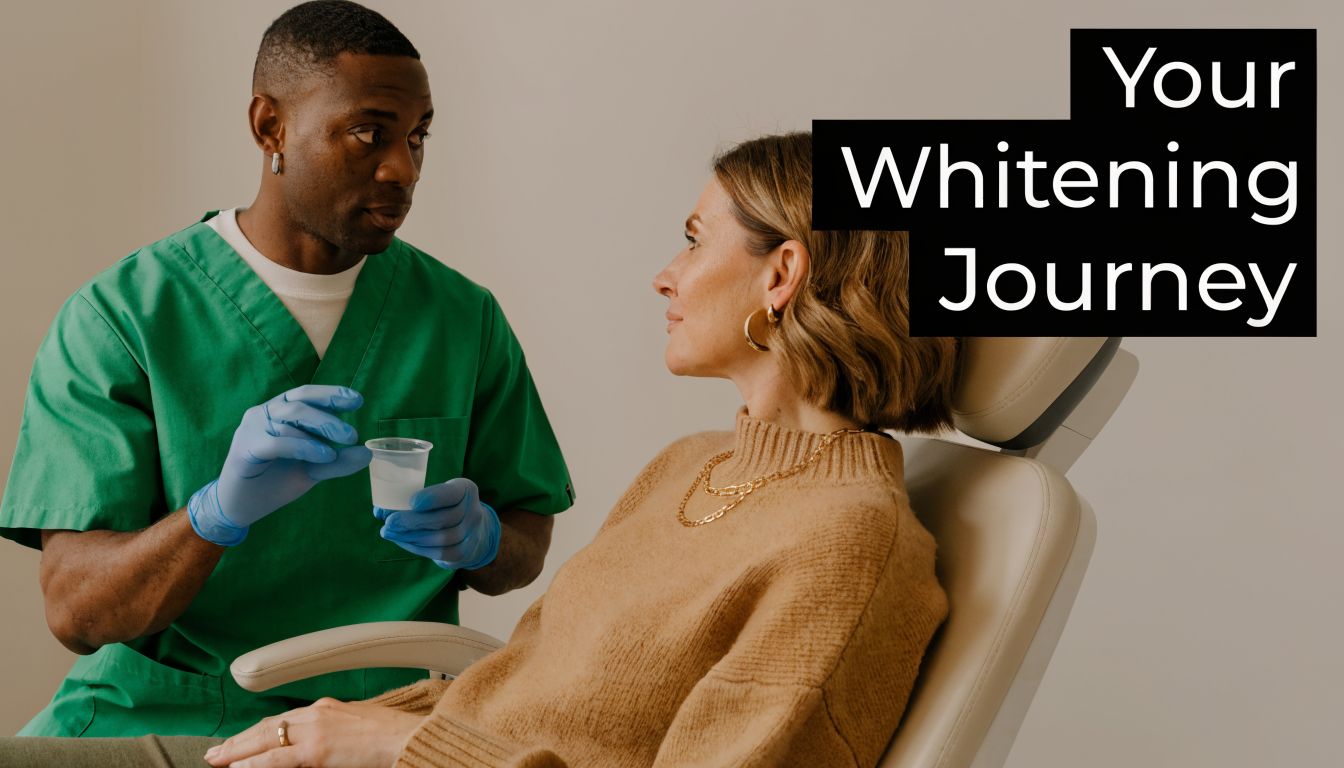
In Houston practices, Zoom is typically done in a single office visit. Many patients see a noticeable improvement the same day, though the final shade depends on the starting color of the teeth, the type of staining, and how reactive the teeth are during treatment.
The first step is the part patients tend to underestimate. The exam comes first.
Your dentist checks for cavities, leaking fillings, gum irritation, recession, worn enamel, and exposed root surfaces. Those details affect both comfort and results. If a tooth is already sensitive, whitening it without a plan can turn a cosmetic visit into a miserable afternoon.
We also talk through what whitening can and cannot change. Natural enamel can lighten. Crowns, veneers, bonding, and tooth-colored fillings do not whiten the same way, so mismatched front teeth are a real possibility if that is not addressed ahead of time.
A starting shade is usually recorded. That matters because patients often remember their teeth as darker than they were, then judge a good result too harshly.
Once the teeth are cleaned and ready, the lips and gums are covered so the whitening gel stays on the enamel and off the soft tissue. Then the gel is placed on the front teeth that show when you smile.
The active phase is usually done in timed rounds. The light is positioned, the gel works for a set period, and the team checks in between cycles to see how your teeth are responding. If sensitivity starts building, the appointment can be adjusted. That flexibility is one of the main advantages of having whitening done in the office instead of trying to push through discomfort at home.
The middle of the visit usually looks like this:
Some patients feel nothing. Others notice brief zingers, which are quick, sharp sensitivity sensations during or shortly after treatment. That is common, and it usually fades, but it is worth discussing before the appointment if you already know your teeth run sensitive.
For a visual overview of how patients experience the process, this short video is helpful.
After the last cycle, the gel is removed and the teeth are rinsed. The dentist compares your new shade to the starting point, reviews what changed, and explains what to expect over the next day or two.
This is also when practical aftercare matters most. Teeth can be temporarily more prone to picking up color right after whitening, and sensitivity can peak later the same day. Patients do better when they leave with clear instructions, not just a mirror and a smile.
A good Zoom appointment feels organized from start to finish. You know what is happening, why each step matters, what the likely result is, and what trade-offs come with getting faster whitening in one visit.
The right candidate for Zoom usually has healthy teeth and gums and wants to improve discoloration on natural enamel. It tends to work best when the staining is related to food, beverages, tobacco, or normal aging. If your teeth look more yellow or brown than gray, whitening is often a more predictable fit.
That said, the most important part of whitening isn't the gel. It's the exam first.
Zoom is often a strong option if you:
A good candidate also has realistic expectations. Whitening can brighten teeth. It doesn't reshape teeth, close gaps, repair chips, or change the color of dental restorations.
Honest guidance matters here. According to Cleveland Clinic, patients with cavities, worn enamel, or exposed roots may need dental treatment before whitening, a point highlighted in Pearl Shine Dental Clinic's discussion of Zoom whitening concerns.
That matters because the same issues that make teeth sensitive also make whitening less comfortable and sometimes less appropriate. If you have untreated decay, active gum disease, significant recession, or irritated gums, the right first step usually isn't whitening. It's stabilizing your oral health.
If your teeth hurt before whitening, whitening usually isn't the first solution.
Some patients are disappointed by whitening because nobody explained this clearly enough: Zoom only whitens natural tooth structure. It won't lighten crowns, veneers, or bonded areas.
That creates two common situations:
In those cases, the plan may involve whitening first and then updating visible restorations later if color matching matters.
Temporary sensitivity is the concern I hear most often from whitening patients, and it's a reasonable one. Some people feel brief zingers during treatment or short-term sensitivity to cold afterward. Others feel very little.
What helps most is screening beforehand and matching the treatment to the patient, not forcing every patient into the same protocol. If someone already has recession, enamel wear, or irritated gums, that changes the approach. Sometimes the safest recommendation is to delay whitening. Sometimes it means switching to a slower option or using desensitizing support before and after treatment.
A common question in the consult room is simple: “What am I paying for, and is Zoom worth it in Houston?”
The honest answer depends on your goal. If you want the fastest visible change under professional supervision, Zoom usually earns its higher fee. If your top priority is keeping the upfront cost lower and you are comfortable waiting longer for results, take-home trays or store-bought products may make more sense.
Prices vary from one Houston office to another. The fee can change based on the whitening system used, whether an exam is included, and whether you receive take-home products for maintenance. That is why ranges are more useful than one fixed number.
| Method | Average Cost (Houston) | Time to Results | Typical Result |
|---|---|---|---|
| Zoom in-office whitening | Often about $400 to $700 | One visit | Stronger, faster improvement for many patients |
| Professional take-home trays | Often about $200 to $400 | Several days to a few weeks | Gradual, more controlled brightening |
| Over-the-counter strips | Usually under professional treatment fees | Days to weeks | Mild to moderate change, sometimes less even |
Those numbers matter, but the trade-off matters more.
Zoom costs more because you are paying for chair time, clinical supervision, gum protection, and a stronger in-office system designed to produce a noticeable change quickly. Take-home trays cost less because the work is spread out over time and done largely at home. Strips are the least expensive entry point, but they are also the least customized option.
In a dental office, whitening is not just a box of gel. The appointment usually includes:
That last point matters to many Houston patients. Sensitivity is often the deciding factor. A slower option can be the better value if your teeth are already reactive to cold or you have exposed root surfaces. A one-visit treatment can be the better value if you have an event coming up and want a noticeable change without managing trays for two weeks.
If you are still comparing categories, this guide to professional teeth whitening options explains the differences in more detail.
Zoom often fits patients who want efficiency, have a deadline, or have already tried strips without much improvement. It also helps patients who do better with in-office guidance than with a home routine.
Take-home trays often fit patients who want more control over the pace, especially if sensitivity is a concern. They can also be a practical choice for people who prefer to spread out treatment and cost.
Over-the-counter products can be reasonable for mild staining or for someone testing whether whitening is even a priority. The limitation is predictability. Results are often less even, and they do not come with a dental exam to catch reasons whitening may disappoint.
Clayton Dental Studio also discusses payment timing with patients who are planning cosmetic care. Depending on the treatment plan, options may include the Humble Savings Plan, CareCredit, and Cherry.
Zoom is usually the better value when speed, supervision, and a more predictable in-office result matter more than choosing the lowest price.
The first couple of days after whitening matter. Teeth are more likely to pick up new stain during that window, so aftercare isn't busywork. It protects the result you just paid for.
The easiest rule is to choose light-colored foods and drinks for a short period after treatment. Patients often call this a “white diet.” The idea is simple: if something would stain a white shirt, it can stain freshly whitened teeth more easily too.
A practical short list:
Whitening doesn't lock your teeth into one color forever. Daily habits still matter. Patients who keep results looking better usually don't do anything complicated. They're just consistent.
Helpful maintenance habits include:
If you want to understand how habits affect longevity, this article on how long teeth whitening lasts gives a useful framework.
Patients sometimes undo good whitening by going straight back to the same habits the same day. Strong coffee, red wine that evening, or repeated smoking can shorten the fresh look quickly. Another mistake is overusing whitening products afterward because you're chasing an even brighter shade.
The better strategy is maintenance, not overcorrection.
“Better” depends on what you value most. Zoom is usually the better fit if you want a faster in-office result and don't want to manage a home routine. Professional take-home trays can be a better fit if you prefer a gradual approach or want more flexibility.
The result can be excellent with either option when the patient is a good candidate. The difference is less about one being universally superior and more about whether you want speed or pace.
Professional whitening is designed to lighten stains through a chemical process, not by grinding away tooth structure. The key issue isn't enamel damage from the concept of whitening itself. The primary concern is whether the patient's teeth are healthy enough to be whitened comfortably and whether the treatment is used appropriately.
That's why the exam comes first. A patient with sound enamel and healthy gums is very different from a patient with recession, untreated decay, or visible wear.
That doesn't automatically rule out whitening, but it does change the conversation. If you already react strongly to cold air, ice water, or sweet foods, the dentist should evaluate why before recommending Zoom.
Management may include:
For most patients, if sensitivity happens, it's temporary. The experience is usually described as short-lived cold sensitivity or brief zingers rather than ongoing pain. If someone has more than mild discomfort, that's a reason to check in with the office rather than trying to self-manage indefinitely.
The goal isn't just whiter teeth. The goal is whiter teeth that still feel comfortable.
No. Whitening changes natural teeth, not restorative materials. If you have visible dental work, especially in the front, you should know that before treatment so you're not surprised by a color mismatch afterward.
Sometimes that mismatch is minor and acceptable. Sometimes it means whitening should be paired with a later plan to replace older visible restorations.
There isn't one schedule that fits everyone. Safe timing depends on your stain habits, your baseline sensitivity, the condition of your enamel, and the method being used. The right answer is individualized, not automatic.
In practice, the healthiest approach is to whiten based on need and professional evaluation, not on a fixed habit or social media trend. If your smile still looks good, more whitening isn't always better.
That's one reason a consultation matters. Some discoloration responds beautifully. Some doesn't. Deep gray staining, old restorations, or cosmetic concerns related to tooth shape and symmetry may need a different solution.
When whitening isn't the ideal answer, that isn't a failure. It's good diagnosis.
If you want a smile that looks cleaner and brighter without weeks of trial and error, Zoom is worth considering. The treatment is built for people who want visible change in a short appointment and want that process handled under professional supervision.
The most important next step isn't booking whitening blindly. It's having your teeth evaluated first so the plan matches your mouth. If your discoloration is a good fit for Zoom and your teeth are healthy, whitening may be a simple cosmetic upgrade. If not, it's better to know that before you spend time and money on the wrong option.
A consultation should answer a few direct questions:
That kind of conversation helps patients make calm, informed choices. It also prevents the most common disappointment in whitening, which is expecting one treatment to solve a problem it was never designed to fix.
If you're in Humble, Atascocita, Kingwood, or the greater Houston area, the right starting point is a one-on-one exam with clear guidance, realistic expectations, and a plan that respects both appearance and oral health.
If you're considering Clayton Dental Studio for zoom teeth whitening houston patients often ask about, schedule a consultation to find out whether your teeth are a good match for in-office whitening, what kind of result is realistic, and how to minimize sensitivity while protecting your long-term oral health.