

Book Your Appointment Today!
Our staff will reach out to you shortly
Thank you! Your submission has been received!
Oops! Something went wrong while submitting the form.


You leave the dental office and your face feels strange. One side of your lip won’t quite cooperate, your words sound a little off, and drinking water suddenly requires more concentration than it should.
That feeling is common after dental treatment. It’s also temporary. The local anesthetic did its job during your procedure, and now your body is gradually clearing it out.
Individuals searching for how to unnumb your mouth after the dentist want two things at once. They want the numbness gone sooner, and they want to make sure they don’t accidentally hurt themselves while they wait. Both matter.
The safest approach is simple. Use a few gentle methods that may help circulation, avoid the common mistakes that lead to cheek bites or burns, and know when it’s time to call your dental office.
A very typical scene goes like this. You get into the car after a filling or crown, touch your lip to make sure it’s still there, then realize you can’t quite tell where your cheek ends and your teeth begin. If you try to talk right away, your mouth may feel heavy or clumsy.
That doesn’t usually mean anything is wrong. It means the numbing medicine is still working in the soft tissues around the area that was treated.
For adults, the biggest annoyance is often practical. Eating feels awkward. Smiling for a photo feels uneven. Going back to work or hopping on a video call can feel less than ideal.
For children, the bigger issue is safety. Kids often interpret numbness as something to chew, poke, or test. That’s when lip biting, tongue chewing, and swelling can start. Parents usually don’t expect that part until they see it.
Practical rule: A numb mouth is more of a safety issue than a comfort issue. Protect the area first, then work on helping the sensation fade.
There are safe ways to encourage recovery at home, and there are limits to what home care can do. Gentle massage, warmth on the outside of the face, and light movement may help. Aggressive rubbing, very hot food, and chewing “to test it” usually create more problems than solutions.
The key is to treat numbness as temporary but important. Respect it while it lasts. That’s how you get through those post-appointment hours with less frustration and fewer avoidable injuries.
Local anesthetics work by temporarily blocking nerve signals. In plain language, the medicine keeps pain messages from traveling normally, which allows your dentist to work without causing sharp discomfort. After the procedure, the medicine doesn’t switch off all at once. It wears off gradually as your body clears it.
That’s why a tooth can feel one way, while your lip, cheek, or tongue still feels thick and unfamiliar. Different tissues recover at different times.
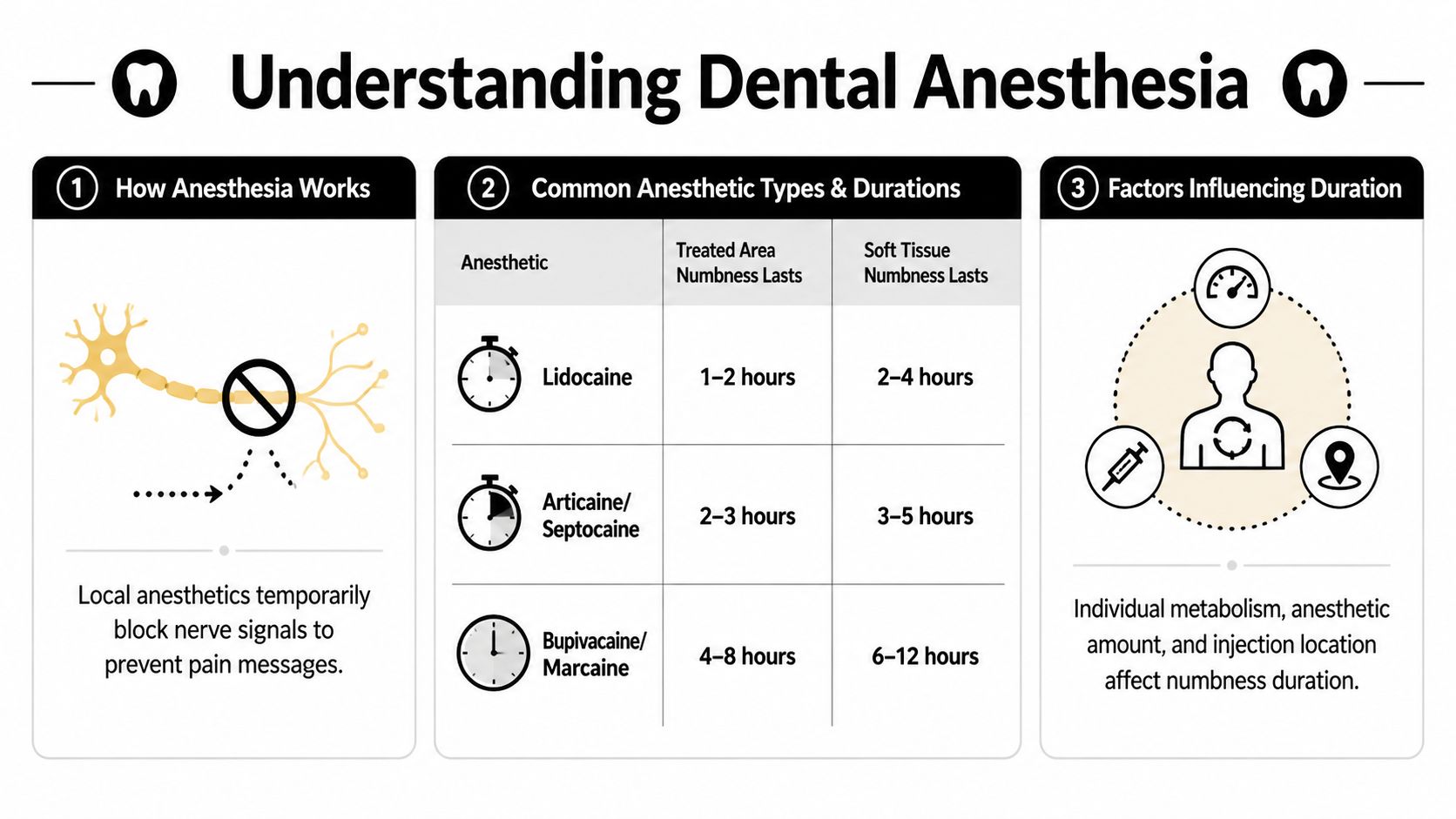
The part that surprises many patients is that soft tissue numbness often outlasts the dental work itself. The tooth may no longer feel profoundly numb before your lip or cheek feels fully normal again.
Several things influence how long this lasts:
If you’d like a patient-friendly overview of lidocaine timing, this Guide to lidocaine effectiveness is a useful general reference. For a dental-specific explanation of what patients often notice afterward, this overview of how long dental numbing lasts can also help set expectations.
Most patients feel much better once they know that a numb lip or cheek after treatment is expected, not alarming by itself.
It helps to think in categories rather than chasing the exact minute it should wear off.
Common pattern: Shorter-acting injections may fade in a few hours, while longer-acting anesthetics and deeper nerve blocks can last much longer, especially in the lips, cheeks, and tongue.
A simple filling may leave you numb for a shorter window than a more involved procedure. A lower-jaw injection may also feel more dramatic than a small upper-tooth injection because the area affected can be broader.
What matters most is the direction of travel. The numbness should gradually improve. You may notice tingling, then partial sensation, then a return to normal control of your lips and cheeks. That slow progression is usually reassuring.
If you want to encourage the anesthetic to wear off sooner, the most sensible home approach is to gently increase circulation. An evidence-informed multimodal protocol can achieve a 30-50% reduction in numbness duration with gentle massage in 5-10 minute cycles, a warm compress at 40-45°C for 15-20 minutes hourly, and light activity to raise circulation, according to this summary of post-dental numbness strategies.
That doesn’t mean you should attack the area or try every trick at once. The goal is gentle stimulation, not irritation.
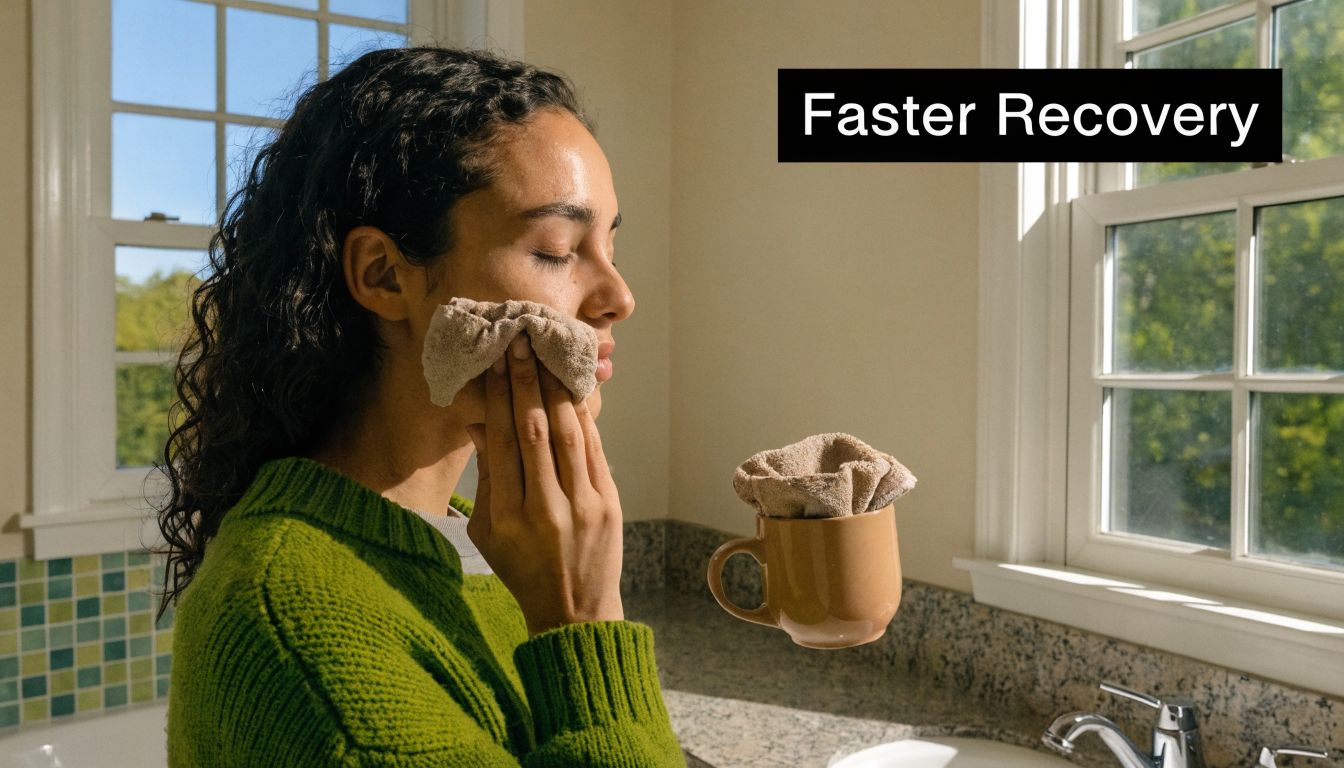
Use clean hands. Place your fingertips on the outside of your cheek, jawline, or lip area and make light circular motions. Keep the pressure mild. If the injection site feels tender, work around it rather than directly over it.
This is a good method when the area feels “thick” but not painful. It’s not a good method if you’ve had a fresh extraction and the tissues are sore or easily irritated.
Try it like this:
A warm compress can be helpful because warmth encourages blood flow. The key word is warm, not hot. Since numb skin can’t judge temperature normally, always test the cloth or heat source on your wrist first.
A damp washcloth often works well. Hold it against the outside of the face, not inside the mouth. Reheat as needed, but keep the temperature comfortable.
If you prefer a reusable heat pack, these safety tips for microwavable heat packs are worth reviewing before you use one on a numb area.
If your procedure involved an extraction, incision, or swelling, follow your dentist’s instructions first. In some situations, a warm compress is appropriate later, but not immediately.
Patients recovering from oral surgery often benefit from more procedure-specific instructions, especially if they’re tempted to do too much too soon. This tooth extraction recovery guide is a helpful example of how post-op care changes when healing tissues are involved.
Here’s a quick demonstration of the general idea behind easing numbness safely:
A short walk around the house or outside can help. So can gentle stretching. You don’t need intense exercise. In fact, after many dental procedures, strenuous activity isn’t a great idea.
Think easy movement, not a workout.
A practical sequence looks like this:
Rest alone won’t do much to speed numbness along. Gentle circulation-focused care is more useful.
What doesn’t work well? Forceful rubbing, poking the numb area with your teeth, and drinking very hot liquids to “wake it up.” Those approaches create risk without giving you much benefit.
This is the part many people underestimate. A numb mouth isn’t just inconvenient. It can be easy to injure yourself without realizing it.
A significant but often under-discussed risk of post-procedural numbness is accidental injury, especially for pediatric patients. Without normal sensation, patients can unknowingly bite or chew the lip, cheek, or tongue, causing cuts and swelling. Clear food rules and child monitoring are important for prevention, as noted in this guidance on reducing numbness after dental treatment.
The first mistake is eating like nothing happened. Hard, crunchy, chewy, or sticky foods make accidental biting much more likely. If you eat before sensation returns, keep it soft and simple, and chew very carefully if your dentist has said it’s okay.
The second mistake is testing temperature with your mouth. Hot coffee, soup, or reheated leftovers can burn numb tissues because your normal warning system isn’t working well.
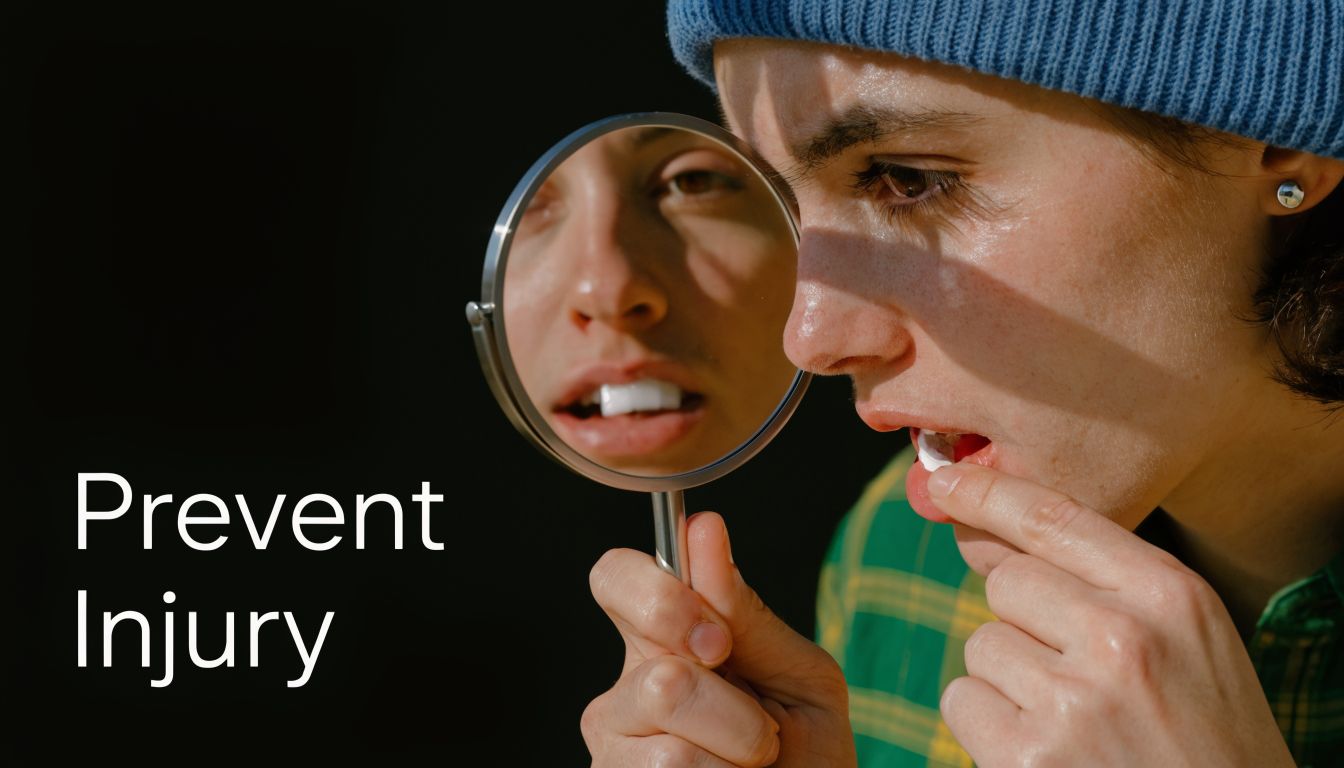
If you can't feel it well, don't chew on it and don't expose it to heat.
Children often don’t connect “numb” with “be careful.” They connect it with “I want to keep touching this.” That’s why supervision matters after fillings, extractions, or other procedures involving local anesthesia.
A child who keeps sucking, biting, or rubbing the numb lip can create a pretty dramatic sore spot. Later, parents sometimes worry it’s an infection when it is a self-inflicted injury from the numb period.
If a child does create a sore area, basic mouth sore care may help while you monitor healing. This guide to self-care and prevention for ulcers offers practical tips for irritation inside the mouth.
Most numbness fades on its own. A key consideration is when it stops looking routine and starts needing a phone call.
If the numbness is still clearly present and not steadily improving after several hours, contact your dental office. If it lasts into the next day, definitely call. The same is true if the feeling changes in a concerning way instead of fading.
Call your dentist if you notice any of these:

For patients with prolonged numbness or those who need a rapid return to normal function, dentists can administer phentolamine mesylate (OraVerse). Clinical studies show it can reduce soft tissue numbness duration by 80-90%, and 85% of patients regained normal lip sensation within 60 minutes compared with 5 hours without treatment, based on this clinical overview of OraVerse.
That option matters for two reasons. First, it shows that not all lingering numbness has to be managed with waiting alone. Second, it’s one more reason to call instead of guessing if you’re worried.
Some problems just need reassurance. Others need a dentist to evaluate whether the numbness is lingering longer than it should.
If the situation feels urgent, or if you’re not sure whether what you’re experiencing counts as normal recovery, this dental emergency guidance can help you decide your next step.
A frustrating recovery can still be useful if it helps you plan better for your next visit.
Tell your dentist how numbness affected you this time. If you had trouble getting back to work, speaking clearly, managing a child’s post-op period, or avoiding accidental lip biting, say so before your next procedure. That information helps your dentist make more personalized decisions.
You can ask practical questions such as:
That conversation is especially helpful for families. Kids, teens, and busy adults all react differently to numbness, and the best plan isn’t always the same for every patient.
The most effective approach is simple. Know what normal feels like, use gentle at-home methods when appropriate, protect the numb area from injury, and call if the recovery seems off. That turns an annoying side effect into something manageable.
If you need personalized advice after a dental procedure, or you'd like a team that takes comfort and post-visit instructions seriously, Clayton Dental Studio is here to help. Dr. Navneet Kamboj and the team provide compassionate family and cosmetic dentistry for patients in Humble, Atascocita, Kingwood, and the greater Houston area, with clear guidance before, during, and after treatment.