

Book Your Appointment Today!
Our staff will reach out to you shortly
Thank you! Your submission has been received!
Oops! Something went wrong while submitting the form.


A dental abscess requires immediate professional treatment. To resolve it, a dentist must drain the infection and address its source, which typically involves either a root canal to save the tooth or an extraction if the damage is too extensive. While waiting for your appointment, you can take specific steps to manage pain, but home remedies will not cure the infection.
This guide provides actionable steps for identifying an abscess, managing symptoms safely at home, knowing when to seek emergency care, and understanding the professional treatments that will provide a permanent solution.
A dental abscess is a pocket of pus in or around a tooth, caused by a bacterial infection. It is not a simple toothache; it's a serious condition that requires immediate dental care to prevent the infection from spreading.

Key signs of a dental abscess include:
The pain can be debilitating, often radiating to your ear or neck, making it difficult to function.
Understanding the type of abscess helps your dentist determine the most effective treatment plan.
In both cases, your immune system responds by sending white blood cells to fight the infection. This battle creates pus, and the resulting pressure causes severe pain.
Actionable Insight: An untreated abscess will not heal on its own. The infection can spread to your jawbone, surrounding soft tissues, and even into your bloodstream, leading to a life-threatening condition called sepsis.
Ignoring an abscess is a significant health risk. While they are a common problem—affecting around 200,000 Americans annually—delaying treatment can lead to severe complications.
When the infection spreads systemically, it can cause sepsis, a condition with a mortality rate as high as 40% in severe cases. You can learn more about the critical nature of these infections from in-depth research.
Your symptoms are not just annoyances; they are urgent warnings. Throbbing pain, swelling, and fever signal a medical emergency that requires immediate professional attention. Seeking prompt treatment is essential for both pain relief and your overall health.
While waiting for your emergency dental appointment, you can take specific first-aid measures to manage the pain and swelling. These steps are for temporary relief only and are not a substitute for professional treatment. The goal is to make yourself more comfortable without worsening the condition.
Focus on soothing the area and reducing inflammation with these safe methods:
Critical Warning: Never attempt to pop or drain the abscess yourself. Doing so can force bacteria deeper into your jaw or surrounding tissues, causing the infection to spread rapidly and leading to a more severe health crisis.
Knowing what not to do is crucial to prevent further pain and complications.
Following these do's and don'ts will help you manage the pain until you can receive professional care.
A dental infection can become a systemic medical emergency. Go directly to the hospital ER if you have dental pain along with any of these symptoms:
The ER can provide IV antibiotics and manage life-threatening complications, but they cannot treat the underlying dental problem. You will still need to see a dentist afterward.

Use this table to make an informed decision:
SymptomGo to the Emergency Room (ER)Go to an Emergency DentistSwellingSpreading to your neck or eye; making it hard to breathe/swallow.Confined to the gum, jaw, or a small area of the cheek.PainUncontrollable, radiating pain along with a high fever.Intense, throbbing pain localized to one tooth or area of the gum.FeverHigh fever (above 101°F).No fever or a low-grade fever.General HealthFeeling very ill, confused, dehydrated, or have a rapid heartbeat.Symptoms are only in and around your mouth.Visible SignsWidespread facial swelling.A pimple-like bump on the gum, a cracked tooth, or swollen gums.
The ER is for life-threatening symptoms, while an emergency dentist is for treating the source of the dental problem.
If your symptoms are localized to your mouth and not life-threatening, an emergency dentist is your best choice. They are the only professionals equipped to provide a permanent solution.
Actionable Insight: Going to the ER first often results in paying for two visits—one for temporary relief at the hospital and another for definitive treatment at the dental office. Calling an emergency dentist first can save you time and money.
Book an emergency dental appointment if you experience:
An emergency dentist can properly diagnose the issue, drain the infection, and perform the necessary procedure (root canal or extraction) to eliminate the source and provide lasting relief. Learn more about how a 24-hour emergency dentist in the Houston area manages these situations.
Understanding the treatment process can help reduce anxiety. Here is what you can expect when you visit a dentist for an abscess.

The first step is a thorough diagnosis to identify the source and extent of the infection.
This drainage is a critical first step, but the underlying infection still needs to be fully treated to prevent recurrence.
Antibiotics are a vital part of treatment but are not a standalone cure. They control the spread of bacteria, reduce swelling, and prevent the infection from becoming systemic.
However, antibiotics cannot reach the source of the infection sealed inside a dead tooth. Without physically removing the infected tissue through a dental procedure, the abscess is guaranteed to return once you stop taking the medication.
Treating a dental abscess effectively hinges on eliminating the infection source swiftly. Delays can lead to serious complications and even hospitalization—affecting 1 in 2,600 US residents annually. The cornerstone of management is always operative intervention. Learn more about the urgency of addressing dental abscesses from recent statistics.
After draining the abscess, your dentist will recommend one of two definitive treatments to resolve the infection permanently. The choice depends on the health and structural integrity of the affected tooth.
Root Canal Therapy to Save Your Tooth
A root canal is the preferred option to save a natural tooth. The procedure involves:
After a root canal, a crown is typically placed to restore the tooth's strength. This procedure allows you to keep your natural tooth and maintain your bite. For more details, read our guide on root canal therapy in Humble, TX.
Tooth Extraction as an Alternative
If a tooth is too damaged by decay or infection to be saved, an extraction may be necessary to protect your overall health. If a tooth is removed, your dentist will discuss replacement options like a dental implant or bridge to restore function and prevent adjacent teeth from shifting.
Your dentist will explain the pros and cons of each option for your specific situation, empowering you to make an informed decision.
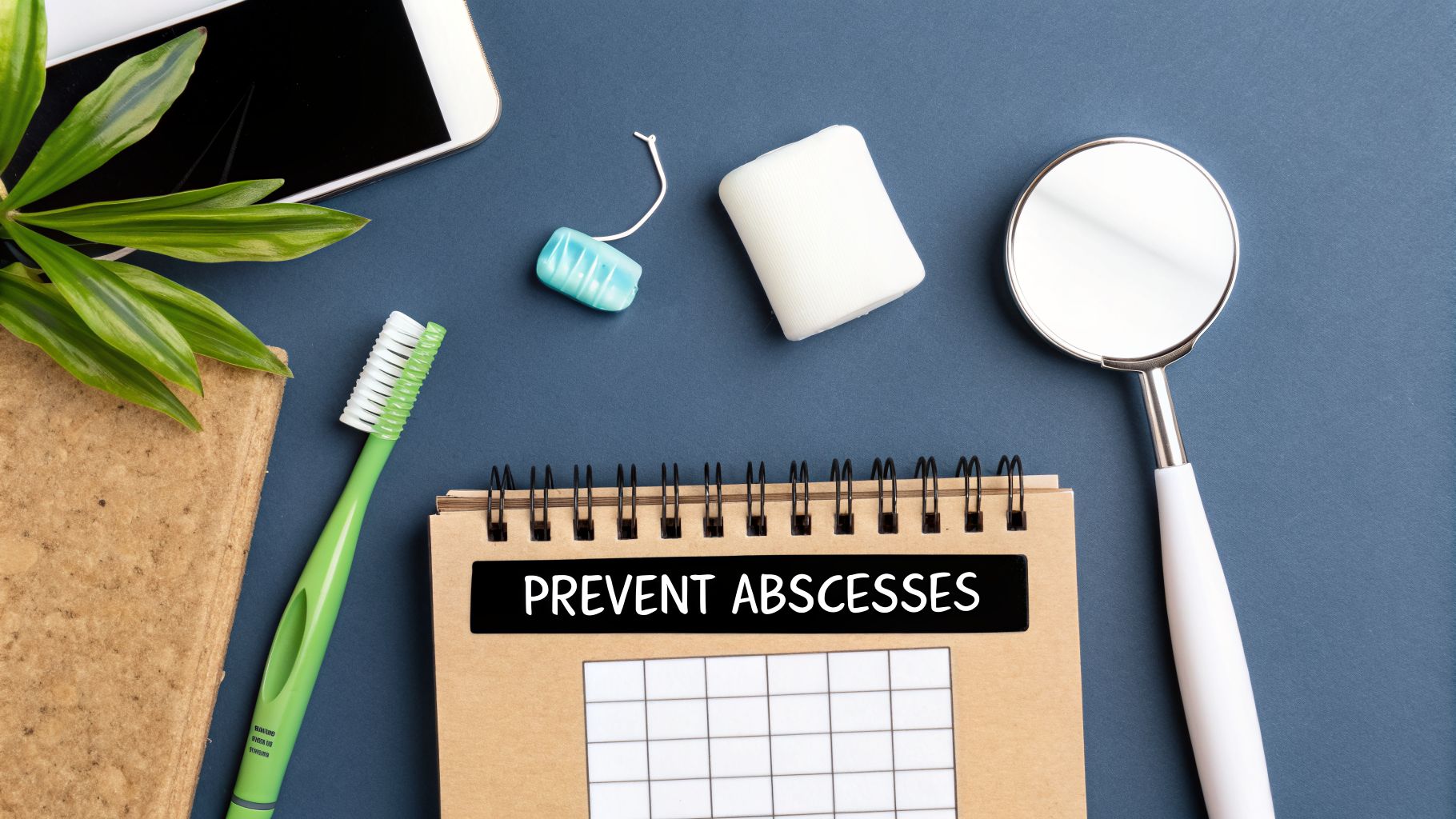
After treatment, preventing another abscess is the top priority. A proactive approach involves a combination of diligent home care, a tooth-friendly diet, and regular professional check-ups.
An effective daily routine physically removes the plaque that fuels harmful bacteria.
What you eat directly affects your oral health. Sugary and acidic foods and drinks create an ideal environment for decay-causing bacteria.
Actionable Insight: Limit sugary drinks like soda and sports drinks to mealtimes. Rinse with water immediately afterward to neutralize acids and wash away sugar, significantly reducing your risk of decay.
Regular dental check-ups are your best defense against future emergencies.
Think of your twice-yearly dental visits as an insurance policy against the pain, cost, and stress of another dental emergency.
Concerns about cost should not prevent you from seeking urgent care. Delaying treatment due to financial worries almost always leads to more complex, painful, and expensive problems later.
Acting fast is the most financially responsible choice. Immediate professional care for an abscess is far less costly than a potential hospital visit. Research shows that prompt intervention to drain an abscess and start antibiotics costs around $250 USD on average, whereas delayed treatment can lead to much higher hospitalization costs. You can explore the findings on how professional intervention keeps costs down.
If you are uninsured, in-house savings plans like our Humble Savings Plan offer an affordable alternative. These membership plans provide significant discounts on all treatments, including emergency procedures, for a low annual fee. They eliminate the complexities of traditional insurance, such as deductibles and waiting periods, offering a predictable way to manage dental costs.
Third-party financing, such as CareCredit, allows you to pay for immediate treatment over time with manageable monthly installments. Many plans offer 0% interest promotional periods, making it possible to handle an emergency without a major financial blow. The application is quick, providing an immediate decision so you can focus on your recovery. For a cost breakdown of specific procedures, check out our guide on emergency root canal costs.
Here are answers to some of the most frequent questions patients have about dental abscesses.
No. Antibiotics are essential for controlling the infection and preventing it from spreading, but they cannot remove the source—the infected tissue inside the tooth. Without professional dental treatment (a root canal or extraction), the abscess will return after you finish the medication.
Relief from the most severe pain is almost immediate after treatment. The full recovery time depends on the procedure:
Your dentist will provide specific aftercare instructions to ensure a smooth and speedy recovery.
The most intense pain you'll feel is from the untreated abscess itself, not the procedure to fix it. Modern dentistry is focused on providing comfortable, pain-free treatment.
No. The goal of treatment is to relieve your pain. Before any procedure, your dentist will use local anesthetic to completely numb the area. You will not feel pain during the treatment. Any post-procedure soreness is typically mild and manageable with ibuprofen. Do not let fear prevent you from getting the relief you need.
Are you experiencing the painful symptoms of a dental abscess in the Humble or Greater Houston area? Don't wait for the problem to get worse. At Clayton Dental Studio, we offer same-day emergency appointments to get you out of pain fast. Contact us today to schedule your visit and start your journey back to a healthy, pain-free smile. Find out more at https://www.claytondentalstudio.com.