

Book Your Appointment Today!
Our staff will reach out to you shortly
Thank you! Your submission has been received!
Oops! Something went wrong while submitting the form.


A normal day can turn fast. You bite into lunch, feel a sharp crack, and suddenly one side of your mouth is throbbing. Or your child wakes up crying with swelling near a tooth, and now you are trying to decide whether to search for an emergency clinic in Atascocita TX, call a dentist, or head straight to a medical ER.
Dental emergencies create a specific kind of panic because pain, uncertainty, and timing all hit at once. Patients are not asking for perfect information in that moment. They just want to know what to do next, what can wait, and what could make things worse.
From a dental standpoint, the right first steps matter. They can protect a tooth, limit infection, and make treatment simpler once you get professional care. Calm, quick action usually works better than rushing to the wrong place or trying random home remedies.
A lot of emergencies start in ordinary moments. Dinner. Practice. School pickup. You feel pain, notice bleeding, or realize a crown has come off, and your mind immediately goes to the worst-case scenario.

For families in this area, the confusion is understandable. Atascocita has medical urgent care centers, freestanding ERs, and hospital-connected emergency rooms. But a dental problem is different from a general medical problem, and that difference affects where you should go first.
People often do one of two things. They wait too long because they hope the pain will settle down, or they go to a medical facility that can stabilize symptoms but cannot complete the dental repair they need.
That delay can matter. A cracked tooth can worsen. An infection can spread. A knocked-out tooth has the best chance when you act quickly and preserve it properly before leaving home.
Tip: If the problem involves a tooth, filling, crown, gums, or bite pain, think dental first unless you also have trouble breathing, severe uncontrolled bleeding, or major facial trauma.
If you are trying to find care close to home, start with a dental office that handles urgent cases and can evaluate the tooth. If you need a local point of reference, this Atascocita-area dentist location guide can help you orient your next step.
The goal in the first hour is simple. Protect the area, control pain safely, avoid home fixes that create bigger problems, and get to the right provider.
Good first aid does not replace treatment. It buys time and reduces damage while you are getting ready to leave.
If a permanent tooth gets knocked out, handle it carefully.
Avoid wrapping the tooth in a dry tissue. Dry storage lowers the chance of saving it.
A severe toothache can come from decay, infection, a cracked tooth, gum irritation, or pressure around the nerve.
Putting aspirin on the gum tissue is a classic mistake. It does not fix the cause, and it can irritate the tissue.
A more detailed walkthrough is available in this guide on what to do in a dental emergency.
A quick visual may help if you are helping a child or another family member:
Not every chip is dramatic, but every crack deserves caution.
If the crack is sharp, dental wax can sometimes cover the edge temporarily. If you do not have dental wax, avoid touching it and keep pressure off that tooth.
This usually feels strange before it feels painful. Then temperature sensitivity sets in.
Key takeaway: The best home response is conservative. Clean it, protect it, reduce pressure, and get evaluated. DIY repairs often create a harder problem to fix.
At this stage, many Atascocita families lose time. A medical ER and an emergency dentist do different jobs.
A medical ER is the right choice for life-threatening symptoms or major trauma. A dentist is the right choice for most urgent tooth-related problems.
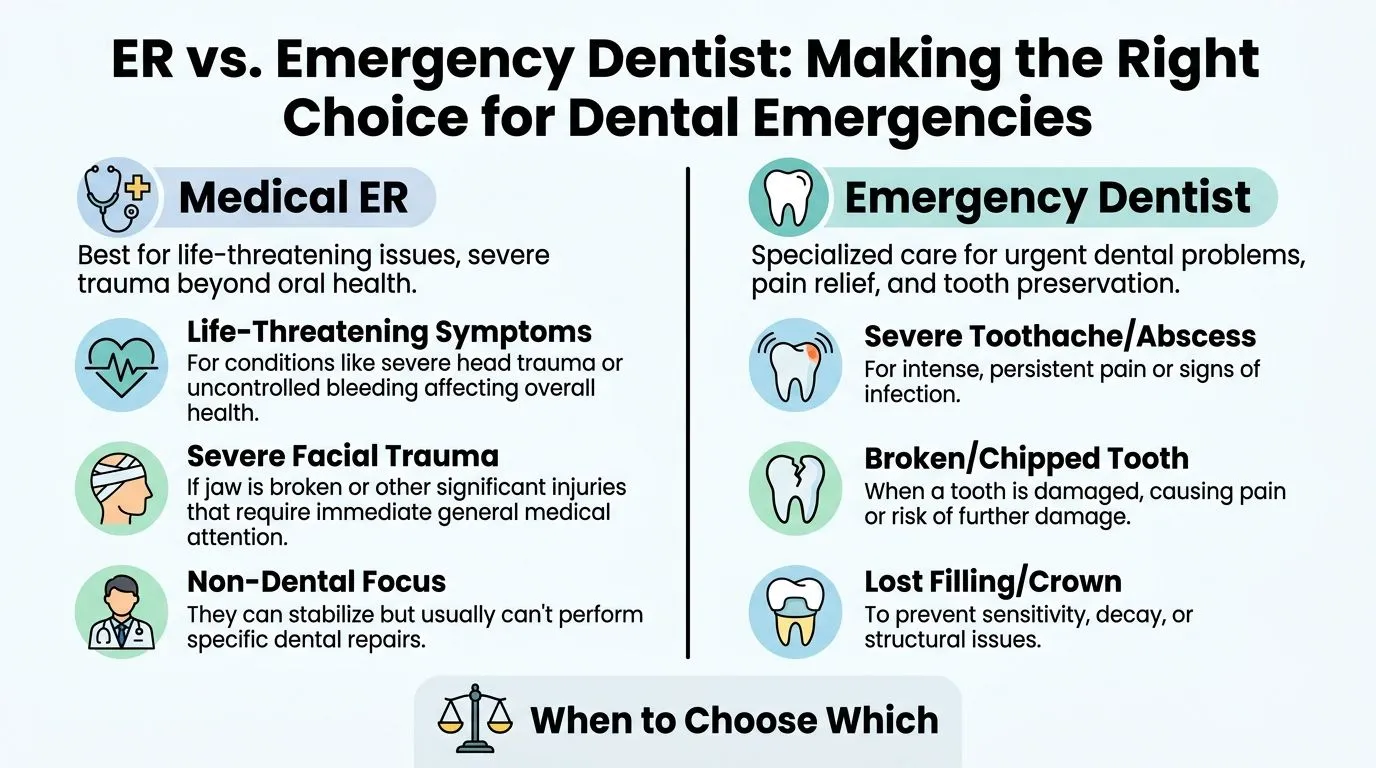
Go to a medical ER if you have:
Family First ER in Atascocita operates as a 24-hour emergency clinic open 365 days a year at 19143 W Lake Houston Parkway, Atascocita, TX 77346, and the site notes that traditional urban hospital ER waits can exceed 163 minutes while medical ERs are not equipped for definitive dental treatment (Family First ER Atascocita).
Go to an emergency dental clinic for:
A dentist can diagnose the specific tooth, numb the area properly, and start the treatment that solves the problem.
One local option for urgent dental needs is 24-hour emergency dentist information for the Houston area, which can help if you are trying to decide how to get care quickly.
Symptom / SituationGo to Medical ERGo to Emergency Dental ClinicTrouble breathing from facial or oral swellingYesNoSevere facial trauma or suspected broken jawYesNoHeavy bleeding that does not stopYesNoKnocked-out tooth without other major injuriesNoYesBroken crown, filling, or toothNoYesSevere toothache or abscess painNoYesSwelling localized around a tooth or gumsUsually noYes
Practical rule: If the danger is to your breathing, bleeding control, or overall facial injury, choose the ER. If the danger is to the tooth, nerve, or surrounding dental structures, choose a dentist.
When you need same-day dental care, the easiest path is a direct call to the office. The front desk can usually help faster when they know exactly what happened, how long it has been going on, and whether swelling or trauma is involved.
Keep it simple. You do not need a perfect explanation.
If you are calling for a child, mention their age and whether they can tolerate cold liquids, close their teeth together, or point to the painful area.
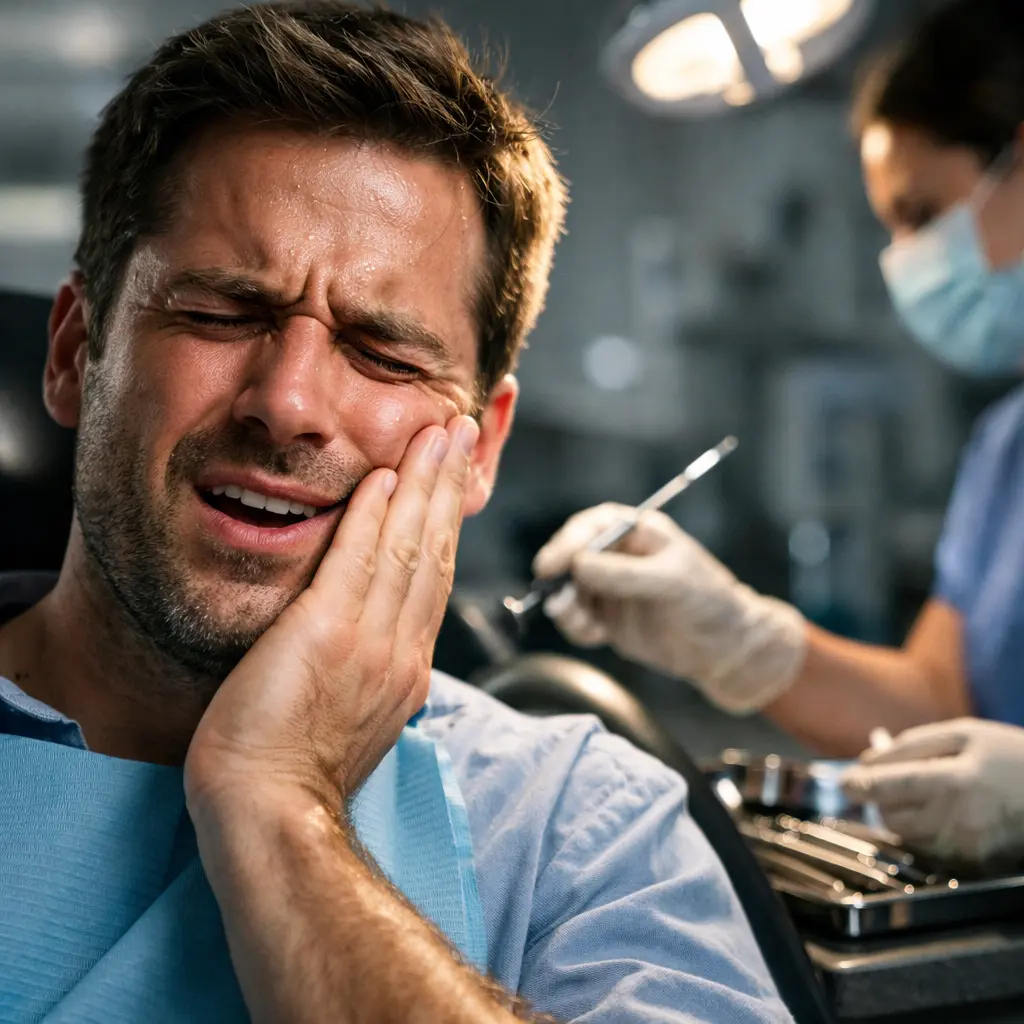
Clayton Dental Studio is located across from the Walmart at 12235 Will Clayton Parkway, Suite #4, Humble, TX 77346. For many Atascocita families, that landmark is easier to remember than a suite number when you are in pain and trying to leave quickly.
Three things make same-day emergencies go more smoothly:
If you are in too much discomfort to explain much, start with the plain version. “I have swelling and a broken tooth,” or “My child has severe tooth pain.” That is enough to begin.
The first priority in an emergency visit is not a long lecture. It is comfort, diagnosis, and a clear plan.
At arrival, the team will usually focus on what changed, how intense the pain is, whether you can bite down, and whether swelling is spreading. Those details often tell us whether we are dealing with a nerve problem, a fracture, an infection, or irritation from a lost restoration.
For many emergencies, imaging is what turns uncertainty into a treatment decision. Modern emergency dental protocols use digital AI-powered X-rays to reduce diagnostic time by up to 70%, which helps the team move quickly into pain relief and treatment planning. The same source notes that this can support immediate stabilization and, when appropriate, treatments such as same-day CEREC crowns, with long-term success rates over 95% (digital AI-powered X-rays and same-day CEREC crown data).
That speed matters in real life. It means less guessing, fewer delays, and a faster answer to the question every patient asks first, which is, “Can you get me out of pain today?”
In a true emergency visit, comfort is not an afterthought.
Depending on the cause, the first active step may be:
If the issue is a deep cavity or infected nerve, the visit may involve the first stage of root canal treatment or a plan to move directly into definitive care. If the issue is structural, a same-day restoration may be possible depending on the tooth and the fracture pattern.
Patients tend to feel calmer when they know what is urgent and what can wait a little. That is how treatment decisions should be handled.
You should expect a straightforward conversation about:
This is also where a full-service office matters. A practice such as Clayton Dental Studio can evaluate urgent pain, use digital imaging, and provide services including emergency dentistry, same-day CEREC crowns, fillings, bridges, and implants under one roof, which reduces the back-and-forth that often adds stress for families.
What works: Fast diagnosis, numb first, then fix what is driving the pain.
What does not work: Delaying imaging, guessing at the source, or treating only symptoms without addressing the tooth.
Most emergency visits end with a lot less uncertainty than they began. The pain may not vanish instantly in every case, especially when infection or inflammation has built up, but patients usually leave with something they did not have when they arrived: a real diagnosis, treatment started, and a plan they can follow.
That shift matters. Fear tends to drop when the problem finally has a name and a next step.
Cost stops many people from calling soon enough. That hesitation is understandable, but delaying treatment often turns a smaller repair into a more involved one.
When you contact the office, ask:
Clear answers matter more than broad promises. In urgent care, people need to know what is possible today.
For patients without insurance, in-house plans can make preventive and restorative care easier to manage over time. The Humble Savings Plan is designed for patients who want an alternative path to routine care and discounts without relying on traditional dental insurance.
Flexible financing can also matter in emergencies. Third-party options such as CareCredit and Cherry can help spread treatment costs into manageable payments, which is especially useful when pain does not arrive on a convenient budget.
Practical advice: Ask the office team to separate the urgent need from the long-term plan. Many patients feel less overwhelmed when they know what must happen now versus what can be completed in phases.
When patients avoid care because of money worries, they often return later with more pain, more damage, and fewer simple options. Transparent pricing, membership plans, and financing do not remove every challenge, but they do make it easier to act before the problem escalates.
The visit is only part of the job. The hours after treatment matter too.
Your instructions will depend on the procedure, but a few basics help in many situations:
If you received numbing medication, be careful with hot drinks and accidental cheek or tongue biting until sensation returns.
Many communities, including parts of Atascocita, rely heavily on urgent care instead of preventive services. The bigger issue is not just convenience. It is the cycle that forms when people seek care only after pain becomes severe. The local care gap summary tied to urgent-care-dependent populations notes that integrating affordable prevention can help families break that pattern, especially because untreated dental problems are linked to broader health concerns (preventive dental care gap in urgent-care-reliant communities).
Routine cleanings, exams, early imaging, and small repairs do not feel urgent. That is exactly why they work. They catch cracks before they split, cavities before they reach the nerve, and gum problems before they trigger swelling or infection.
If your household has been bouncing from pain episode to pain episode, the answer is usually not just “be more careful.” The answer is a prevention plan you can keep up with.
That may mean regular checkups, a night guard if someone grinds, faster treatment for loose fillings, and an affordable membership plan that makes routine visits realistic instead of optional.
Bottom line: Emergency treatment solves today’s problem. Preventive care is what keeps your weekends, meals, and sleep from getting interrupted by the next one.
If you need urgent dental help, contact Clayton Dental Studio to request prompt guidance and same-day evaluation when available. If your issue involves severe facial trauma, uncontrolled bleeding, or trouble breathing, go to a medical ER first.