
The best way to fix a chipped tooth depends on two key factors: the size of the chip and its location. A minor, cosmetic chip on a front tooth requires a different approach than a large fracture on a molar used for chewing. The first can often be resolved in a single visit, while the second needs a more robust solution to restore the tooth's strength and function.
The best way to fix a chipped tooth depends on two key factors: the size of the chip and its location. A minor, cosmetic chip on a front tooth requires a different approach than a large fracture on a molar used for chewing. The first can often be resolved in a single visit, while the second needs a more robust solution to restore the tooth's strength and function.
The feeling of a sharp, uneven edge on a tooth can be alarming. The most important first step is to stay calm. A chipped tooth is a common dental issue, and your actions in the first few hours can prevent further damage and simplify the repair process.
Your immediate goals are to keep the area clean and protect your mouth from the tooth's new sharp edges. Start by gently rinsing your mouth with warm salt water. This cleanses the area and can help soothe irritated gums.
Taking prompt, correct action is crucial. These practical steps will help you manage the situation until you can see a dentist. For a more detailed walkthrough, see our guide on what to do during a dental emergency.
- Rinse Gently: Swish with a warm saltwater solution—use about a 1/2 teaspoon of salt in a glass of water. This helps cleanse the area without harshness.
- Save the Piece: If you find the broken tooth fragment, keep it. Place it in a small container with milk or your own saliva. In some cases, the original piece can be reattached.
- Manage Pain: An over-the-counter pain reliever like ibuprofen can help with discomfort. If there is bleeding, apply gentle, firm pressure with a clean piece of gauze.
- Protect Your Mouth: To prevent cuts to your tongue or cheek from a sharp edge, you can temporarily cover it with a small piece of sugar-free gum or dental wax.
Once the immediate situation is managed, your dentist will assess the damage and explain the most suitable repair options. The right treatment is one that matches the solution to the specific problem.
Here is a summary of the most common treatments for chipped teeth.
Treatment Best For Main Benefit Dental Bonding Small, cosmetic chips A fast, affordable, one-visit solution that restores the tooth's appearance. Porcelain Veneers Chips on front teeth, especially with other cosmetic issues like discoloration or gaps. Provides a durable, stain-resistant, and highly aesthetic new tooth surface. Dental Crowns Large chips, significant cracks, or damage to back teeth (molars). Offers 360-degree protection, restoring the tooth's full strength for chewing.
After taking immediate first-aid steps, the next question is determining the best long-term solution. There is no single "best" fix for every situation. The right repair depends on the extent of the damage—how large the chip is, where the tooth is located, and your aesthetic and functional goals.
We offer several effective methods to restore a tooth, including dental bonding, porcelain veneers, and full-coverage dental crowns. Each option is designed for different scenarios, offering a unique combination of durability, appearance, and treatment time.
The choice of treatment is guided by a careful assessment of the damage. A tiny, cosmetic chip on a front tooth that doesn’t affect your bite has different needs than a major fracture on a molar that has become sensitive and weak.
This decision tree offers a visual guide to how we typically approach different types of chips.
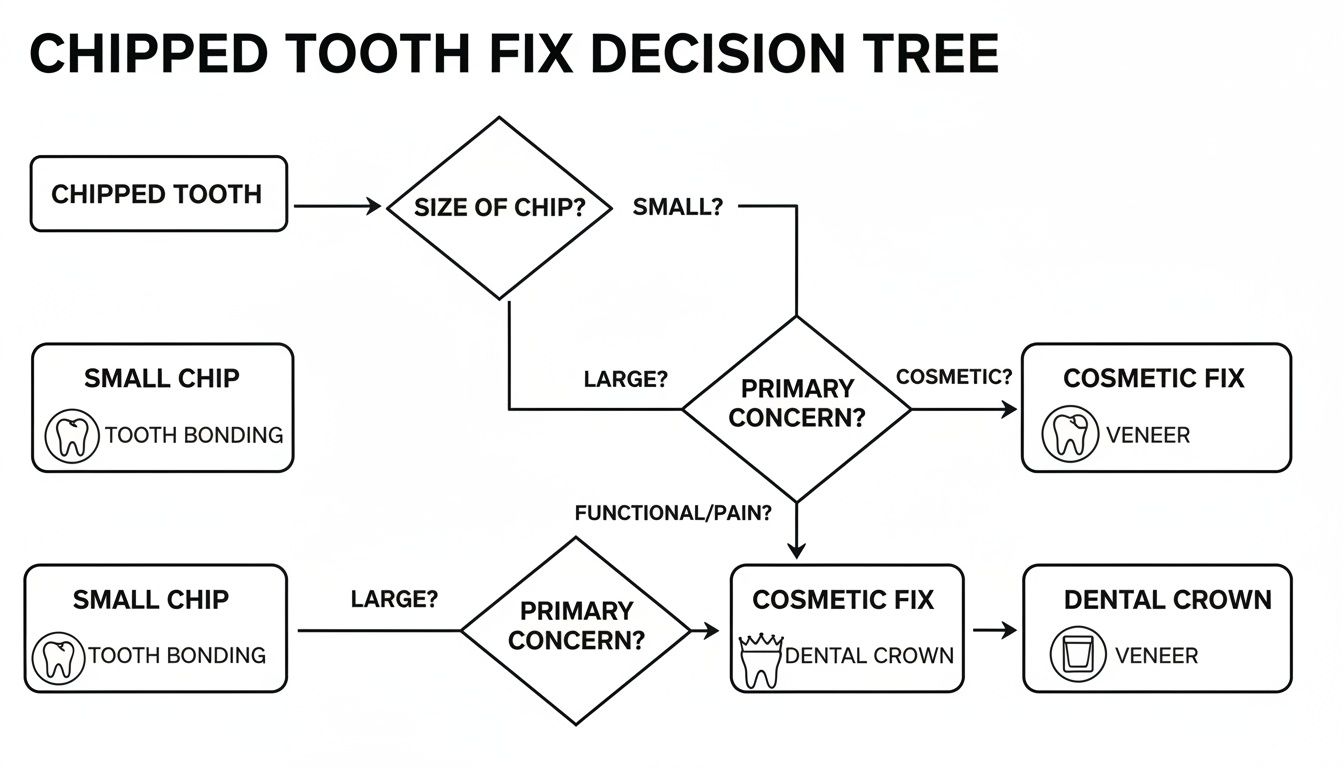
As shown, the size and severity of the chip are the primary determining factors. A small issue often requires a simple fix, while more significant damage requires a more protective restoration.
The objective is not just to patch the chip but to restore the tooth's long-term health, function, and natural appearance. The right treatment achieves all three goals.
To help you make an informed decision, it is useful to compare the options side-by-side. This table provides a clear overview of what to expect from each treatment.
Treatment Best For Aesthetic Outcome Longevity & Durability Typical Treatment Time Dental Bonding Small, low-impact chips on front teeth where aesthetics are the main concern. Ideal for minor cosmetic fixes. Good to excellent. The resin is color-matched to your tooth but can be more prone to staining over time than porcelain. Moderate. Typically lasts 3 to 10 years but is more susceptible to chipping again than veneers or crowns. Fast. Usually completed in a single visit of 30-60 minutes, with no lab work required. Porcelain Veneers Moderate chips on front teeth, especially when also addressing other cosmetic issues like stains, gaps, or minor misalignment. Excellent. Porcelain offers a superior, translucent appearance that mimics natural enamel perfectly and is highly stain-resistant. Very good. Can last 10 to 15 years or more with proper care. Stronger and more durable than bonding. Two visits. The first for tooth preparation and impressions, the second for permanent placement of the custom-made veneer. Dental Crowns Large chips, significant fractures, cracked teeth, or damage to back teeth (molars) that bear heavy chewing forces. Excellent. Modern porcelain crowns are indistinguishable from natural teeth and provide a full, beautiful restoration. Excellent. The most durable option, lasting 15+ years. A crown acts as a protective helmet for the entire tooth. One to two visits. Traditional crowns require two visits, but same-day CEREC crowns can be designed and placed in a single appointment.
Choosing the right option involves balancing your immediate needs with your long-term smile goals. A small chip is often a perfect case for dental bonding—it's a quick, simple, and affordable fix. However, if that chip is on a highly visible front tooth and you desire a flawless, long-lasting finish, a veneer may be the better investment.
For a severely broken molar, strength and protection are the priorities. A dental crown is often the only way to prevent the tooth from fracturing completely under chewing pressure. It is less about a minor cosmetic touch-up and more about saving the tooth itself—though the aesthetic result from modern materials is an excellent benefit. Discussing these trade-offs with your dentist will help you find the ideal solution for your specific situation.
For smaller, cosmetic chips on your front teeth, dental bonding is often the ideal solution. It is a quick and effective method that uses a tooth-colored composite resin to rebuild the missing part of the tooth.
The process is straightforward and typically completed in a single visit. It is an excellent choice for minor imperfections that do not compromise the tooth’s overall strength.

Bonding is most effective in specific situations where the damage is primarily aesthetic rather than structural.
Consider dental bonding if your chip is:
- Small and on the surface. The damage is limited to a tiny piece of enamel, not a large portion of the tooth.
- Located on a front tooth. Bonding is best for low-pressure areas, like your front teeth, where chewing forces are not as intense.
- Purely a cosmetic issue. If you have no pain or sensitivity and your main goal is to restore the tooth's appearance, bonding is a suitable option.
A common example is a small chip on the edge of an incisor from biting down on a fork. The procedure is minimally invasive—often done without anesthesia—and provides an immediate aesthetic improvement. We gently prepare the tooth's surface, apply the moldable resin, sculpt it to match your tooth, and then harden it with a special light. You can learn more details in our guide on what cosmetic dental bonding involves.
The main advantage of bonding is its ability to blend seamlessly. The resin is custom-matched to the exact shade of your tooth, making the repair virtually invisible.
However, there are trade-offs. While affordable and fast, bonding is not as durable as porcelain. The material can stain over time, similar to natural teeth, and may require a touch-up every 3 to 10 years. It is also more susceptible to re-chipping than a crown or veneer, which is why it is not recommended for molars that handle heavy chewing.
For a quick, attractive, and budget-friendly fix for a minor chip, dental bonding is an excellent choice. It restores your smile’s appearance without the commitment of a more extensive restoration.
While a small chip can often be fixed with a simple procedure like bonding, a more serious fracture requires a focus on long-term strength and protection. If a large piece of your tooth has broken off—especially on a molar—or if the tooth has a deep crack, a full-coverage dental crown is almost always the best solution.
A crown acts as a custom-fitted cap for your tooth. It does not just fill the damaged area; it completely encases the visible portion of the tooth down to the gumline, providing comprehensive protection.
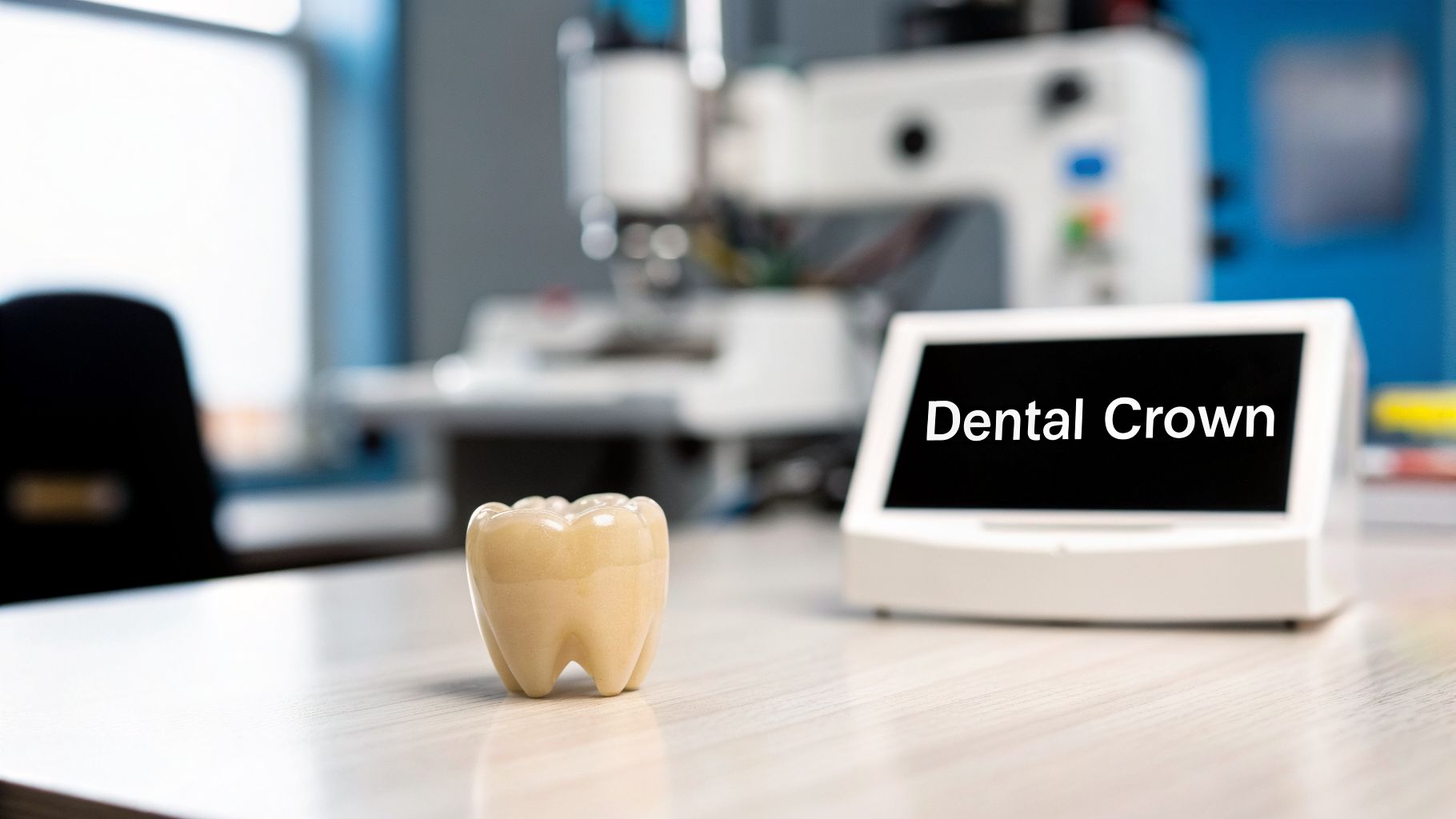
A severely chipped tooth has lost structural integrity. Normal biting and chewing forces can cause the crack to spread, leading to severe pain or the tooth splitting completely. A crown prevents this by absorbing and distributing these forces, shielding the fragile natural tooth underneath.
This is particularly important for your molars, which handle the most chewing pressure. Attempting to repair a large molar fracture with bonding or a filling is often ineffective, as these materials cannot withstand the force. A crown, however, restores the tooth’s full function, allowing you to chew with confidence.
A crown is not just a repair; it is a long-term investment to save a compromised tooth from further damage or extraction. It provides essential reinforcement when a tooth's integrity is at risk.
Research supports this approach. A 2020 Swedish study found that cracked teeth restored with full crowns had a 97% survival rate. Similarly, American Association of Endodontists (AAE) guidelines show a 94% two-year survival rate for crowned teeth, compared to only 20% for those left without a crown. You can learn more about the study on cracked tooth survival rates to review the data.
Modern crowns are typically made from high-strength porcelain or zirconia that mimics the color and translucency of natural teeth. Your restored tooth will be both strong and aesthetically pleasing, blending seamlessly with your smile.
Additionally, technology has transformed the process. At Clayton Dental Studio, we use CEREC technology to design, create, and place your permanent, custom-made crown in a single appointment. This is a significant convenience for anyone with a badly broken tooth, as it eliminates the need for a temporary crown and a second visit. You can find out more about our same-day dental crowns in our Humble, TX office.
When a chip is severe enough to weaken the entire tooth, a crown is the clear solution. It is the best way to provide a damaged tooth with the robust, lasting protection it needs to remain healthy and functional.
Ready to Schedule Your Appointment?
Dr. Kamboj and the Clayton Dental Studio team are here to help. Call us or book online today.