

Book Your Appointment Today!
Our staff will reach out to you shortly
Thank you! Your submission has been received!
Oops! Something went wrong while submitting the form.


Hearing that you might need a tooth extracted can be unsettling. Before you agree to a tooth pulling, it's crucial to understand that modern dentistry offers several powerful methods to save teeth. The primary goal of your dentist is almost always to preserve your natural tooth, as no artificial replacement can perfectly replicate its function and feel.
Your smile is a functional system where each tooth plays a vital role in supporting its neighbors and distributing chewing forces evenly. Removing even one tooth disrupts this balance and can trigger a series of negative consequences for your long-term oral health.
This is why dentists view your natural teeth as the gold standard. Preserving them maintains the intricate, natural balance your body designed.
Losing a tooth does more than just leave an empty space. Here’s what happens next:
A missing tooth isn't just an empty space; it's an active problem. The consequences, like bone loss and shifting teeth, begin almost immediately and progress over time, making future restorations more complex.
Your natural teeth offer benefits no replacement can fully replicate. Each tooth's root is anchored in the jawbone by the periodontal ligament, which is filled with nerves that provide sensory feedback. This lets you feel the pressure and texture of food for a natural chewing experience.
Keeping your tooth preserves this vital connection, along with:
Ultimately, exploring alternatives to tooth extraction is a long-term investment in your health. Saving your natural tooth preserves its unique function and structural role, providing a solid foundation for a healthy, confident smile for years. Before agreeing to an extraction, it is always worth discussing the modern methods available to save the tooth first.
The recommendation for an extraction can feel final, but it's important to know that pulling a tooth is often a last resort, not the initial plan.
Modern dentistry provides several effective alternatives to tooth extraction that can either save your natural tooth or replace it so seamlessly you’ll forget it was ever gone. Understanding these options empowers you to make an informed decision that aligns with your health goals.
When facing a compromised tooth, the treatment pathways generally lead in one of two directions: saving the existing tooth or replacing it if it is beyond repair. Your specific dental condition will determine the most appropriate route.
You will likely consider one of these three primary options:
Consider the analogy of a historic building. A root canal is like restoring the building from the inside to preserve its original structure. A dental implant is like constructing a new, perfectly matched foundation where the old one failed. A bridge is like connecting two stable walls to support a new section in between.
To clarify your choices, this side-by-side comparison outlines the key alternatives to tooth extraction. Each option is suited for different scenarios and comes with its own set of considerations.
This table provides a practical breakdown to help you prepare for a discussion with your dentist.
Now that you have a high-level map of the possibilities, we can dig into the details of each treatment. Let's explore how they work and what makes one a better fit for you than another.
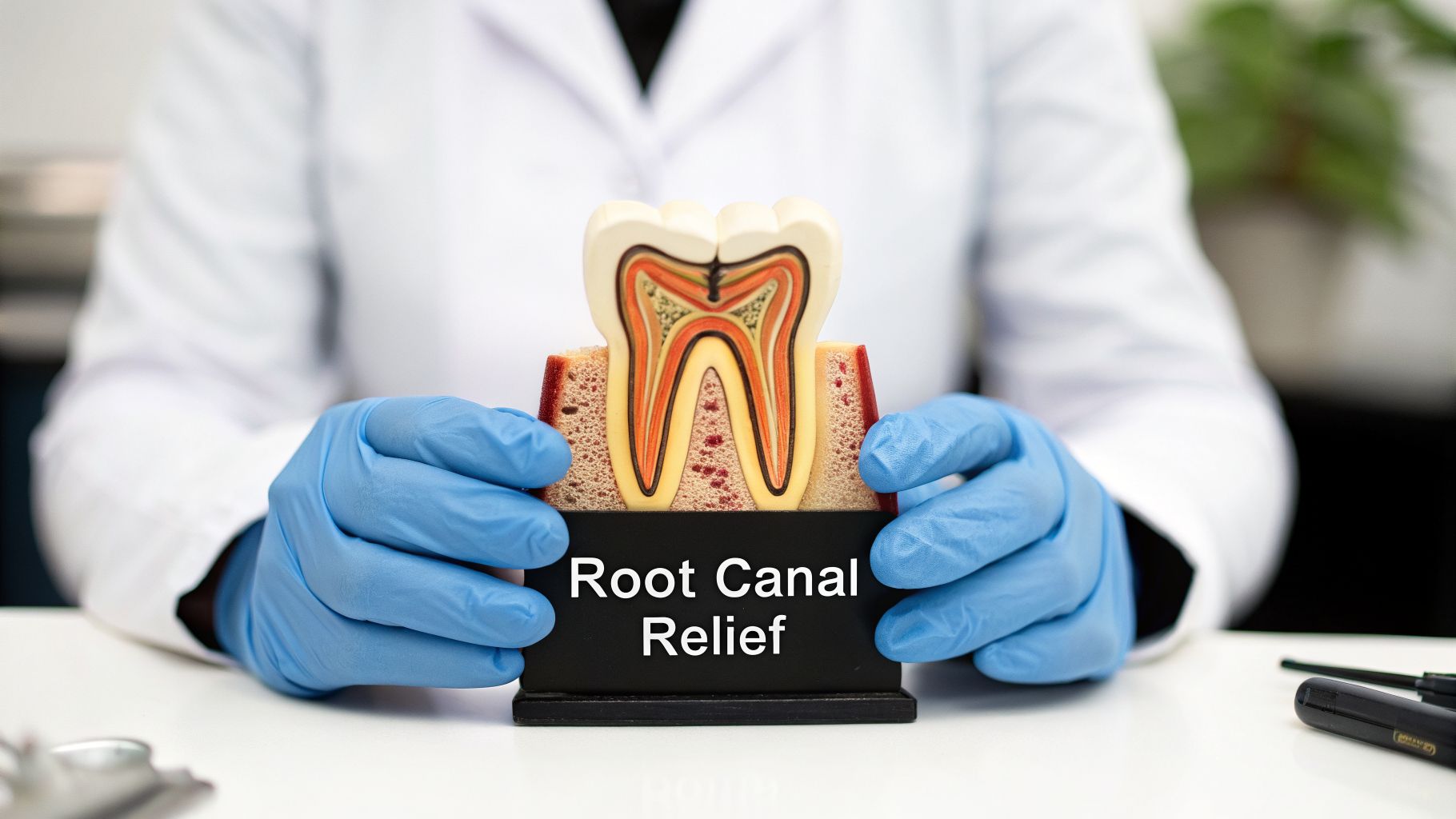
The term ‘root canal’ has an undeserved reputation for being a painful ordeal. In modern dentistry, a root canal is not the cause of pain—it’s the solution for it.
Inside each tooth is a soft core called the pulp, which contains the tooth's nerves and blood vessels. If deep decay, a crack, or an injury allows bacteria to enter this chamber, the pulp becomes inflamed and infected, causing a severe toothache.
A root canal is a procedure to save the tooth. Your dentist removes the infected pulp, thoroughly cleans and disinfects the inner chambers, and then seals the tooth to prevent future infection. The tooth is saved, the pain is eliminated, and your smile remains intact.
Your body provides clear warning signs when a tooth's pulp is infected. Ignoring these signals can lead to more severe problems, such as a painful dental abscess or the eventual loss of the tooth.
You may need a root canal if you experience:
If you recognize any of these symptoms, see a dentist promptly. You can learn more about our dedicated root canal therapy services in Humble, TX to understand how we can provide relief.
The primary benefit of a root canal is that it eliminates infection and pain while preserving your natural tooth. This offers a significant advantage over extraction. By keeping the tooth's root system in place, you continue to stimulate the jawbone during chewing, preventing the bone loss that inevitably follows an extraction.
This treatment preserves your natural bite and chewing sensation. After the procedure, the tooth is typically restored with a dental crown, allowing it to function like any other healthy tooth for many years.
Root canal therapy is a highly reliable procedure. Modern studies show success rates between 85-95% over a 10-year period. Advanced digital imaging has helped reduce the initial failure rate to below 5%. This makes it a much safer option than extractions, which can carry a 10-15% risk of spreading the infection. With over 15 million root canals performed in the U.S. annually, it is a proven and effective tooth-saving treatment.
A root canal isn't about removing a tooth; it's about removing the problem from the tooth. By cleaning out the infection, we save the entire structure, allowing it to continue its important job in your smile.
When a tooth is already missing or cannot be saved, the goal shifts from preservation to restoration. In modern dentistry, dental implants are considered the gold standard for tooth replacement because they offer a solution that most closely mimics a natural tooth.
What sets this option apart from other alternatives to tooth extraction is that it replaces the entire tooth structure, including the root.
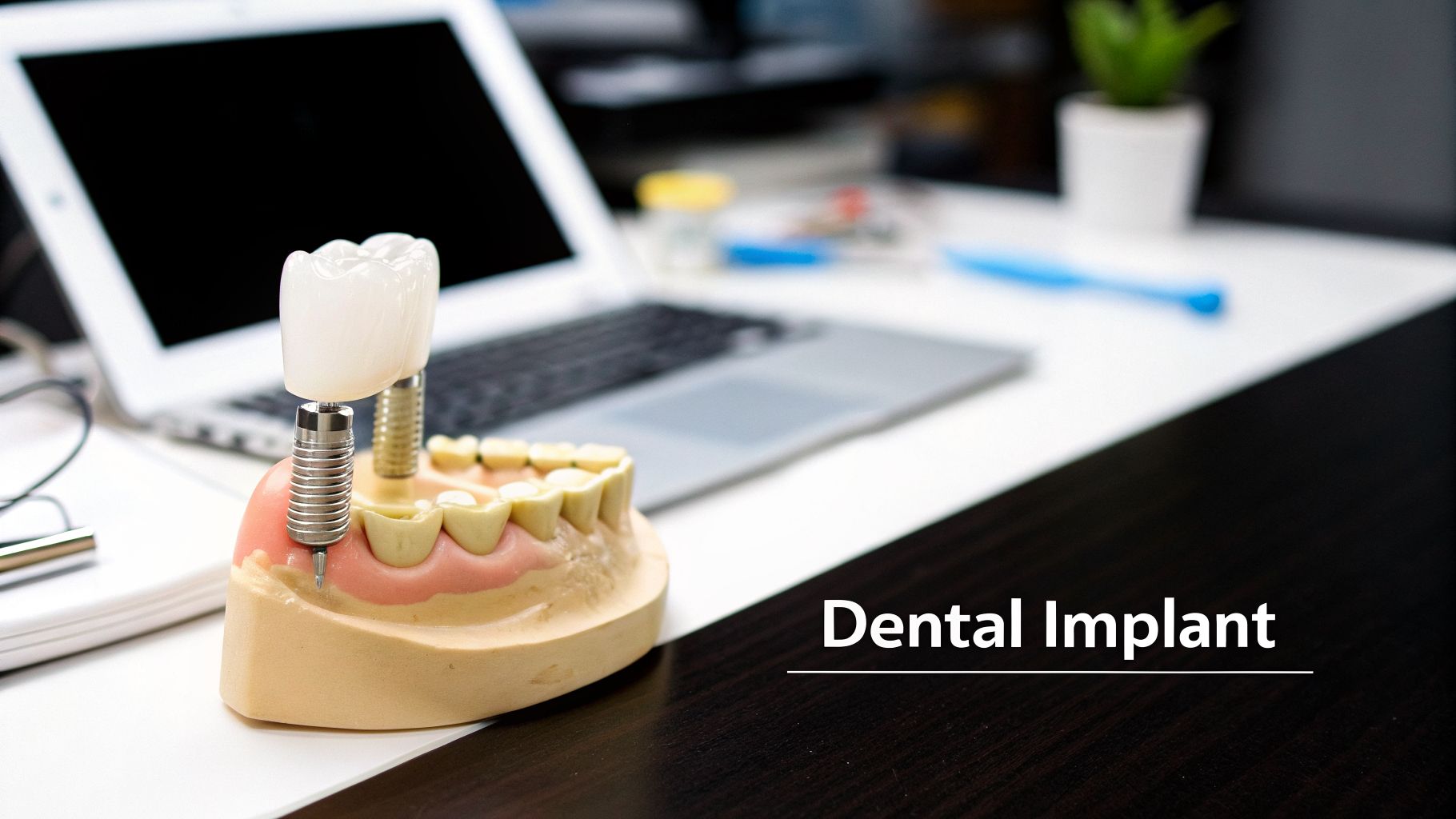
An implant functions as an artificial tooth root. It consists of a small, biocompatible titanium post that is surgically placed into the jawbone where the original tooth was located. This post serves as a strong and permanent anchor.
The success of a dental implant relies on a biological process called osseointegration, where the living bone tissue in your jaw grows around and fuses with the titanium post. This fusion creates an exceptionally strong and stable foundation, making the implant a permanent part of your jaw.
Once this bond is complete, a custom-made dental crown is attached to the implant. The result is a replacement tooth that looks, feels, and functions just like a natural one. You can chew, speak, and smile with full confidence.
The benefits of a dental implant extend beyond simply filling a gap. It is a long-term investment in your overall oral health that offers several distinct advantages.
A primary benefit is the preservation of jawbone health. After an extraction, the jawbone begins to shrink due to a lack of stimulation, with up to 25% of bone height lost in the first year alone. An implant provides the necessary stimulation to keep the jawbone strong and prevent this deterioration.
Additional key benefits of implants include:
Dental implants stand out as a premier alternative to tooth extraction because they address the problem at its root—literally. By replacing the entire tooth structure and integrating with the jawbone, they restore function and prevent the long-term bone loss that other options cannot.
The reliability of dental implants is supported by extensive research. As one of the most studied procedures in dentistry, their track record is impressive. Comprehensive studies analyzing over 158,000 implants have shown an overall survival rate of 97.79%.
Early failures during the initial healing phase are rare, occurring in only 1.56% of cases. This high success rate is a primary reason dentists recommend them as a superior long-term solution. You can discover more about these findings on implant success rates to review the data.
The process of getting an implant restores both function and aesthetics, making it an excellent choice for anyone facing tooth loss. To find out if this advanced solution is right for you, you can learn more about dental implants in Humble, TX, at Clayton Dental Studio.
When a tooth is missing, a dental bridge offers a classic and reliable solution that spans the empty space. This popular option uses the healthy teeth on either side of the gap as anchors to support a prosthetic tooth.
The process is similar to building a bridge. The two adjacent teeth, called abutment teeth, serve as the supports. A false tooth, known as a pontic, is fused between two custom-made crowns that are then placed over the abutment teeth. This creates a single, solid restoration.
This method restores both the appearance of your smile and your ability to chew properly. The entire process is also typically faster and less invasive than a dental implant procedure, making it an appealing choice for many patients.
Like any dental treatment, a bridge has both advantages and considerations. One of its main benefits is speed. While an implant can take several months to complete, a dental bridge is often designed and placed within a few weeks.
The primary trade-off, however, involves the adjacent teeth. To serve as strong anchors, these teeth must be reshaped to accommodate the crowns, which is an irreversible procedure. This means altering potentially healthy tooth structure, a factor that should be carefully considered.
A dental bridge is an excellent functional and aesthetic solution, but its success is deeply connected to the health of the teeth supporting it. These anchor teeth take on extra stress, making exceptional oral hygiene non-negotiable for the bridge's longevity.
A dental bridge can be the ideal solution in certain situations. It is an especially good choice if the teeth next to the gap already have large fillings or require crowns. In such cases, the need to alter healthy teeth is no longer a concern.
A bridge may be the best option if:
Modern bridges are remarkably durable. Success rates are approximately 85-90% over 10 years, and many last 15 years or longer with proper care. This is a significant improvement over leaving a gap, which leads to shifting teeth and bite problems in 70% of cases within five years. Despite the popularity of dental implants, bridges remain a go-to choice due to their quicker timeline, often completed in just 2-3 visits. You can discover more insights about dental restoration statistics to see how these options compare.
The key to a bridge's long-term success is meticulous oral hygiene. Because the anchor teeth are covered by crowns, they remain susceptible to decay and gum disease if not cleaned properly. You can learn more about our custom dental bridges in Humble, TX to see how we can restore your complete smile.
The goal is always to save a natural tooth. However, sometimes the focus must shift from saving a single tooth to protecting the health of your entire mouth. In certain situations, a tooth is too compromised, and keeping it would cause more harm than good.
Think of it like a compromised support beam in a house. Patching it may provide a temporary fix, but if the structural integrity is gone, it puts the rest of the house at risk. Similarly, some dental problems are so severe that removing the tooth is the only way to protect the surrounding teeth, jawbone, and your overall health.
This is not a failure but a strategic decision to contain a problem and establish a foundation for a healthier future.
Recognizing the signs that a tooth cannot be saved can help you understand why your dentist might recommend an extraction. It is about stopping a problem before it spreads.
The most common scenarios where extraction is necessary include:
When a tooth reaches this point, it essentially becomes a source of chronic infection and inflammation in your body. Pulling it isn't just about dealing with a "bad tooth"—it's about removing a direct threat to your health.
Another common reason for extractions is not related to disease or decay but to a simple lack of space. Some people have jaws that are too small to accommodate all 32 teeth in proper alignment.
This severe crowding can cause significant bite problems and make it difficult to clean the teeth effectively, increasing the risk of cavities and gum disease. In such orthodontic cases, an orthodontist may recommend strategically removing one or two teeth to create the space needed to align the others properly. This planned approach results in a smile that is not only aesthetically pleasing but also functions correctly for the long term.
Facing a major dental decision can be overwhelming, but remember that you have options and are in control of your oral health. Becoming familiar with the alternatives to tooth extraction is the best way to prepare for a productive conversation with your dentist and make a choice that fits your health, budget, and lifestyle.
The first step is always a thorough consultation. This is a comprehensive evaluation to determine the exact problem, assess the tooth’s long-term prognosis, and review every possible solution with you.
To ensure you have all the necessary information, do not hesitate to ask questions. A good dentist will welcome your engagement and provide clear, honest answers.
Here are some questions to ask:
These questions will help you look beyond the immediate fix and evaluate the long-term value and impact of each choice.
The "best" choice is not the same for everyone. It is a balance between the clinical recommendation and your personal circumstances. For example, a root canal may be the ideal clinical choice to save a tooth, but if its long-term prognosis is uncertain, an implant might offer more predictable, lasting peace of mind.
Your final decision will likely depend on several personal factors:
Making the right choice is about finding that sweet spot where what is clinically possible meets what is personally practical. Your dentist is there to provide the map, but you're the one who chooses the destination for your healthy smile.
Being proactive and seeking expert guidance is the most effective way to protect your smile for years to come. By asking the right questions and understanding all your alternatives to tooth extraction, you can make a truly informed decision that leaves you feeling secure and ready to smile.
Ready to explore your options and find the right path for your smile? At Clayton Dental Studio, Dr. Kamboj and our team are dedicated to providing honest, patient-first care. We offer comprehensive consultations to explain all your options, from saving a tooth with same-day crowns to advanced replacement solutions. Schedule your visit today and take the first step toward a healthier, more confident you.